
 Apple Podcasts
 Amazon Music
 YouTube
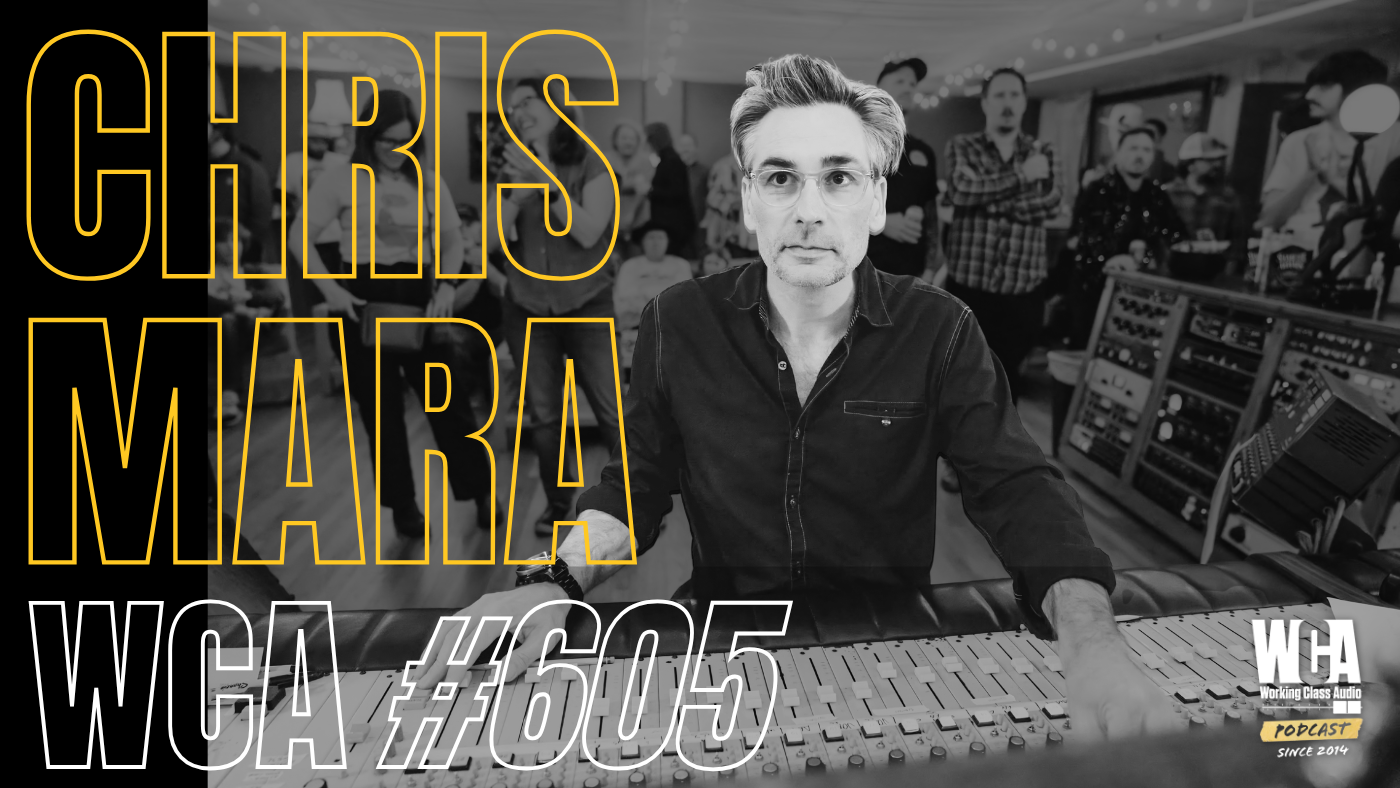
WCA #605 with Chris Mara – Building Welcome to 1979, Restoring Tape Machines, and Saying Yes to Everything
Chris Mara owns Welcome to 1979, one of the larger recording studios in Nashville, along with his wife Yoli. He joins Matt for episode 605 to talk about moving to Nashville at 20, building Mara Machines and a vinyl mastering department alongside the studio, and running it for 18 years with no partners and almost no borrowed money.
In This Episode, We Discuss:
- Growing Up in an 800-Person Wisconsin Town With No Internet and No Roadmap
- Community College Recording and Moving to Nashville at 20
- “I Am Working Class”: No Safety Net, No Umbilical Cord
- The Unpaid Internship and the Downtown Bellman Job That Funded It
- Trading Every Favor to Pull Studio Shifts
- Keys and Alarm Codes to Ten Studios
- Seeing the Same Gear Used a Million Different Ways
- Working Across Every Format: 2-Inch, RADAR, DAT, and Early Pro Tools
- The Nashville Number System and Country-Session Efficiency
- Bringing in Rock Bands and Running Them Like Pro Country Dates
- Justifying Your Existence When the Guitarist Has Pro Tools at Home
- Coming Up With Welcome to 1979 (and the Runner-Up: “Simulated Wood Grain”)
- Pitching a Studio to His Pregnant Wife for $1,100 a Month
- “You Can Break Even As Long As You Want”
- Yoli Quitting Her Job to Run the Business Side
- How Mara Machines Was Born From a Side Hustle
- Multiple Income Streams and Why They Carry the Weight
- Watching Your Overhead Before It Sinks You
- Is That Gear Going to Make You Money, or Just Sit There?
- Renting Rooms Instead of Buying Them
- Saying Yes to Everything and Learning on Someone Else’s Dime
- 18 Years, No Partners, Almost No Borrowed Money, Still Married
- The Recording Summit, Tape Camps, and Vinyl Camps
Matt’s RANT!: A Brain Dump
Links and Show Notes:
- Welcome to 1979: https://www.welcometo1979.com/
- Mara Machines: https://www.maramachines.com/
- Recording Summit: https://welcometo1979.com/events/#recordingsummit
- Tape Camp: https://welcometo1979.com/events/#tapecamp
- Vinyl Camp: https://welcometo1979.com/events/#vinylcamp
- Lij Shaw / Recording Studio Rockstars: https://recordingstudiorockstars.com/
Credits:
- Guest: Chris Mara
- Host/Engineer/Producer: Matt Boudreau
- WCA Theme Music: Cliff Truesdell
- The Voice: Chuck Smith
Video Interview
Read the Full Transcript
Matt: Chris, welcome to the podcast. Great to have you here. it’s been you’ve been on my list of people to have on for a long time. So I’m glad that our mutual friend Lij Shaw, my brother from another podcast, could introduce us. I think we’ve met in the past. I certainly I’ve known your name.
Chris: Thank you, Matt.
Matt: I’ve seen you at trade shows, you know, we’ve been around the same circles for for many years. So glad to have you on. So let’s start with the state of the state. Who are you? Where are you? And what do you do?
Chris: Thank you. My name is Chris Mara. I am based in Nashville, Tennessee. And I do a few things. my wife and I own one of the larger recording studios in Nashville called Welcome to Nineteen Seventy Nine. We’ve been doing that about eighteen years. we own a company called Mara Machines, which restores analog tape machines. We have a fairly large mastering department with two mastering rooms. We master for streaming, CD, and we do vinyl mastering, actually cut the lacquers. And then we have a large tape archival department where we transfer and archive analog tapes for all kinds of clients, labels, artists, all that kind of stuff.
Matt: Sounds like you all run a a a busy operation and have a busy life.
Chris: Yes. And I I engineer sessions from time to time. I used to do it full time and now I do select projects here and there.
Matt: Okay. And I’m spacing on your wife’s name. I’ve met her before. Yoli. Right. Okay. Yeah, we met at NAM a couple years ago and had this discussion about having you on. So that’s how long it takes me to kind of get around to to to making stuff happen.
Chris: Yeah, her name’s Yoli. Hey, no line of four times, right?
Matt: Well, so let’s get into the past. Where did you grow up?
Chris: well I haven’t yet, but I was I was raised in northern Wisconsin in the land of small towns. like and when I say small town, the town I’m from mm is eight hundred people when I was there, now it’s nine hundred. Yoli is a few miles away and a her town of four hundred and fifty or three hundred and fifty and like that. So so very rural. it’s about an hour and a half east of Minneapolis. So I migrated there pretty quickly out of high school and went to a community college for recording for two years and then promptly moved to Nashville when I was 20.
Matt: Well, have to ask in in being in such a small town of of that size, where did the idea even come from to to study recording?
Chris: You know, it and and I have to rewind a little bit. You know, this is this is I’m gonna sound like some old guy, but I I’m not that old, but but in the in nineteen ninety when I was like a freshman in high school There wasn’t the internet, there wasn’t easy access to information. You didn’t you you only knew what the guidance counselor at high school told you about the world. So there was the factories you worked at, you could go into the military, which is a big I think looking back our high school guidance counselor was made probably just a recruiter for the armed forces. or or farm. So I I worked on dairy farms th all through, you know
Matt: Mm.
Chris: elementary school and high school and loved it actually. And my friends in high school one day just decided to start a rock band and and I was like, well I’ll be your sound guy, not even really knowing what it meant. And ’cause I’d been to concerts and I just thought that was cool. And and oddly enough, our my high school shop teacher, I found out later it was a bass player and he he kind of just one day just put us to task to make to to make like a commercial you’d hear on the radio. I don’t know why. And and it dawned on me that, well, if the stuff I hear in the radio has to be made by somebody. You know what I mean? I’m I’m I’m fifteen, I don’t know anything about the world. and and it just turned into this quest to figure out
Matt: Right.
Chris: who if someone does that, I wanna do that. That sounds really cool. And I I wanted to be my first thought was to be like a a a live sound engineer and ‘Cause I loved it. I loved going into a like with this rock band we were in, you know, we’d go into a a venue, a bar, and set up a PA, and then two hours later we’re making music. I thought that was really cool. Like there’s nothing, and then there’s sound and lights. And then there’s something. And so I found this Hennepin recording HTC Hennepin Technical College. and they had a recording program. I thought, well, I’ll go to that.
Matt: And then there’s something. Yeah.
Chris: I don’t studios must be boring. So I’ll go to there and I’ll learn what compressors are and what gates are and I’ll apply that knowledge to the live sound. Well man, I got in the studio. I was like, this is really cool. Like I don’t have to move anything. it’s air conditioned. when we’re creating things. The same kind of fundamental like I don’t have to do all the work to push up the faders and hear music and mix. Right? I don’t have to dri I don’t have to load the truck, drive to the thing, ’cause I’ve been doing that a couple of years. So I I really got into that and then kind of set inadvertently set my sights to Nashville. part of our recording program was to find an internship and I start Minneapolis is a big city.
Matt: Yeah.
Chris: So started talking to studio owners in Minneapolis about being an intern and they’re like, Well, we have an intern every once in while. And I was like, Okay, you know, I’m 18 now. You know, I kinda understand I wanna do this for a living. And I said, Well, have you ever had an employee? No. Okay, and that was almost every studio. And I I was thinking, well, if they’ve never had an employee, then there’s probably not an employment opportunity here. And my roommate was was moving to Nashville and again dating myself. I had to go to the Minneapolis library and get a yellow pages for Nashville. And I was thumbing through and there was just pages and pages and pages and pages of studios. And I was like, This is where I need to be. Not a country music fan, but I’m a fa it’s like if I go there I’m going to have a high potential of getting a job and learn a lot. So, I kind of tagged along with him to Nashville. We both got internships. Mine kinda stuck and his he he moved back after three or four months and I’ve been here ever since.
Matt: Yeah. I’m wondering if subconsciously having spent a lot of time working, you know, in farm type situations d and and helping your friends in live sound where, you know, there’s a lot of physical activity that goes on. I wonder if over time you started to see that, I can actually do this sound thing without all the you know, tons of physical labor involved or minimize the physical labor and be in a comfortable environment that’s not outside, that’s air conditioned.
Chris: Right. Well, I think there there that is true. And over the years I’ve I’ve kind of reflected on a few funny things. But but mainly it was I get to walk into a room and immediately do the things I want to do in a live sound situation. Like a live sound gig is is you load the truck, you drive three hours, you unload the truck, you set everything up, you do sound check, and then you do a ninety minute show. And in a studio you walk in and you’re already doing the thing and you’re doing it for ten hours. You’re creating right and and that really appealed to me.
Matt: that that infrastructure kind of being in place and just being able to get down to business faster.
Chris: Yeah. Yep. And you’re not battling all the environments to get good sound. You’re just working on the skills of getting good sounds. yeah.
Matt: So you you headed to Nashville and was like was there a plan? Did you hit the ground running? Did you have a place to stay? Did you couch surf? How did that how did that those early days of getting established work out?
Chris: Well, I want to say first that I just love the name of your podcast and I’ve always wanted to be on it because I am working class. I I didn’t move here with a safety net. My family isn’t in a financial position to do that. I moved here and had to make it work. I had to make my own money, do my own thing. There was no umbilical cord whatsoever. and that Those traits have carried through my entire career. the most common email I get is, Hey, we’re an independent artist. I hope you understand that. And I reply, I understand it more than you know. That’s what I still am today. So kudos to the name. So I moved here, I I leased an apartment with my roommate from Minneapolis, so we split our rent. I got a job.
Matt: Thank you.
Chris: At a downtown hotel as a bellman, as a bellboy, because my internship was unpaid as it should have been. and I worked at the hotel, I worked either a Tuesday or Thursday, and I worked Saturday mornings five to three, and Sunday mornings five to three. And I
Matt: Mm.
Chris: traded every favor, I pulled every shift I could. So if a session popped up I could I had the favor bank at the hotel where I could have someone cover my shift. And I remember my interview for the internship, you know, I kinda got sat down and and was read the the the facts of life about Studio World is, you know, we work twelve hour days. I was like, okay. You know? And they’re like, sometimes seven days a week. I’m like, yeah, no problem.
Matt: Mm-hmm.
Chris: And they’re like, What do you mean, no problem? Like, well that’s just what I did on a farm, I mean. And I was a little bit cocky. I said, And this is indoors, air conditioned sitting down, this is no problem. You know? And not having any financial resources, I didn’t go out. I had no social life. I was either at the studio or in my crappy apartment. So I was at the studio. If something happened in a session I didn’t understand, I’d stay late and just figure it out or or find someone who understood that and ask them the questions and just learned and learned and learned. It was great.
Matt: where was that first internship at?
Chris: It was a place called the Recording Club, which is in Berry Hill. And now it’s a studio called Pentavarit. so it’s been fun. Bobby owns that and I’ve had some time with him and walked him through the studio as I remember it in the nineties and what we did to it. So it was kinda fun.
Matt: The Bell the Bellman gig. Was that was I mean, once again, back to the farm type work, was that completely just an odd gig to have for you? Because you c you come from a world where you’re doing a lot of physical labor and there’s I don’t know, there’s there’s there’s kind of a hands-on thing there. There’s a very, you know, physical part of that. A Bellman gig is a very different gig. How did
Chris: It isn’t isn’t. It’s it’s move fast, look around, see what’s going on, hustle, you know. it was hot ’cause cause this hotel was downtown and the biggest money maker was the tour buses that would pull up with their engines running in the summer and you’re unloading all the bags from the from the bus tours, which are all the big Samsonite bags that have like the heavy, you know, sticker on it. So you got paid to bring the bags up and then back down. So my goal was to make enough money and tips to cover my expenses in in three days a week. And I did that. And I kept that job for another year after my internship, a year and a half, for that safety net, you know.
Matt: What happened what happened after the internship?
Chris: so after the internship they started using me as a freelance assistant engineer. So I got hired and and they were kind enough to introduce me to some friends that owned other studios. So back back this is in the mid nineties, this is nineteen ninety-five. The studio scene was real active on the professional level. There was a lot of tracking studios, a lot of overdub work, a lot of mixing work that was all still being done in the studio. So as an assistant, there was a lot of potential for work if you were good, if you were quick and understood signal flow and could walk into a room and run and run the session as an assistant. So it wasn’t too long before I had keys and alarm codes to about ten studios and then they would they would book me on random things. So man, that was such a great time in my life and I wish I wish everyone could experience it because for four four or five years I was in a different studio almost every day seeing a different person using the same equipment with different people doing different things. And sometimes the engineer I’d work at w at one studio would take me with him or her to another studio and I would see them operate differently. And or I would be in the same studio seeing it operated differently by different people. So so the takeaways for me was there are no rules. This stuff gets used a million different ways. It all sounds great. that
Matt: Mm-hmm.
Chris: And and and the people I worked for would change how they worked depending on what the session needed. If we were recording we were recording on different formats, two-inch analog tape one day, radar one day, Pro Tools one day, kind of this is early on. Pro tools was really, really complicated then. digital audio tape, was it eight ads, was it d88s, was it the dash machines, which are real to real all these things. And you had to know like the tricks of each of those, and then you had to develop techniques that worked across all formats. And I I I don’t see that I don’t see that willingness to change how you engineer much anymore. especially as a studio owner, I see people this is how I do things. And and and I I kind of mourn for those days where people were flexible and would engineer produce differently based on what was needed and that kind of thing. So
Matt: Yeah. I I love when you when you’re talking about having keys and alarm codes to 10 different studios because the key, the set of keys in the alarm code, that’s like the the major trust factor right there. Just in in in those those two items, it it tells us that the studio owner trusts you and you’re welcome to come and go as you please.
Chris: Yeah, yeah.
Matt: You know, as as as the as the sessions c you know come and go. I just I love that. well so you spend a number of years assisting and and learning and growing. when do things start to take a turn in the direction of you being at the helm of sessions? And when does the concept of welcome to 1979 present itself?
Chris: Yeah. Yeah. Okay. So so I think I assisted full time for four or five years and then there there started to be the overlap years where I would get an engineering gig. again, you know, the studio managers, you know, if if if they call you and you say yes more times and you say no, then you’re on their list, right? And then inevitably they’ll need an engineer on you know, the worst possible vocal session ever or a percussion overdub or something. And then you start getting those. which is great. because you know, you get to learn engineering in a in a lower impact environment. You know, recording tamarine, you know, is not make it or break it, it has to be good. You’re doing all the mechanics, right? So so I was doing that for a year or so, kind of bouncing back and forth. It was interesting, I was making more money as an assistant on the bigger projects because I had my assisting career had gone up to working on big records. And then I would get an engineering gig and it was kinda like as an assistant, I was like a senior in high school and as an engineer I was a freshman in college, is kinda how I thought of it. But it was like great, you know. and then I started I
Matt: Yeah.
Chris: I was picking up some I would I would go find my own I I really liked working with bands. I was their age. You know, I was probably twenty-two at this time, twenty-three, twenty-four. So I’d go find rock bands like, hey, I have access to all these studios, right? That that you probably couldn’t really book. You could, but I already know So I would find a rock band. that had a budget and then I would talk to a studio manager and say, Hey, can I have next weekend in the studio for X amount of dollars and I’ll just come in, I’ll leave cash on the console when I’m done and they’re like, sure. You know. So it started working like that. And the this Nashville studios I was working at were just awesome. And a three or four piece rock band, it was like a kid in a candy store. There was just so much gear and so much space. And then I started developing I I I’d like to think it was a conscious effort to say, These studio managers are booking me as an assistant, but I’m coming in in engineering and they’re making money. Then I’m going to be an engineer in their brain. I don’t know if I was doing that consciously or I was just trying to make some money and start engineering. But then that started happening. They would start booking me on engineering gigs more than assisting gigs. And I I’d take anything and they knew that, you know. So and it really helped build my resume because the stuff that I was recording with these rock bands were in professional.
Matt: Mm.
Chris: studio environment so I had a better shot of making it sound good. I’m not saying it all sounded great right off the bat but but I had been assisting so long I knew every you know I knew what mics to use on what and how to do stuff and then it was up to me.
Matt: Right. Right. So one one question about Nashville. You know, Nashville has a reputation with the sessions where they move quick. players are super duper pro. you know, a a couple takes, three takes maybe, and and you have a a a song that sounds somewhat complete. There’s the Nashville number system. In the nineties, did that exist? Or okay.
Chris: Yes, yes, one hundred percent.
Matt: So this this is a long an ongoing thing for many, many years, obviously. Okay.
Chris: Yeah. Yeah, and that that blew my mind, you know, and I loved I love I was I was just fascinated by the by the mechanics of it all. It’s like how brilliant, you know? Like ’cause I worked on a lot of country stuff. I mean pretty much as an assistant, it was almost all I assisted was country stuff. I thought, how brilliant is this? This singer can’t really write songs. So they’re songwriters. Boom, check. Songwriters don’t can’t sing or don’t want to be front people, so check. These players don’t want to be on the road. They’re session players. And it all just worked. And I love the Nashville Number System. It’s one my favorite things I’ve ever seen. To just map out a song and just see it and it all makes sense. So my pitch when I would sit down with a rock band, I’d say, look, I work at these different studios. I’ll take them around. And I said, I work on these country records and we’re super efficient. We’re fast. And all of the things that you think take time in a studio don’t take time. Getting sounds, making sure things are coming out of speakers, all that. So if we work together, we can spend time on you getting the song right and getting the sounds you want to get. You show up I’m gonna run this like a professional country session, but we’re doing a rock band. You walk in, the mics are up, they’re checked, they’re signal, we’re going. Because I was pulling bands in from smaller markets, you know, that their local studio didn’t operate like that. They paid for setup, it was kind of laborious, you know, then there weren’t a lot of studios everywhere. So the conversation was you may think this is more money, but we’re gonna move faster to get to working on the music. So that’s what I did.
Matt: Well, and you know, the the idea of all the mics being set up, I’m assuming that, you know, studios charged more for that pre setup type situation, or it was just kind of built into the cost of of if you if you book a room, there’s gonna be people that are gonna, you know, get things ready to go so the session moves super fast. Is that accurate?
Chris: Correct. Yeah, yeah, and that’s that’s what my life was as an assistant. If I got booked on on a Tuesday, Wednesday, my Monday night, part of my rate for Tuesday and Wednesday, my Monday night was setting everything up. So I parlayed that into the rock band and that’s how I run R Studio to this day. Yeah.
Matt: Gotcha. Okay. Interesting. well, can you talk about when you first came up with with the idea to do Welcome to Nineteen Seventy Nine and strike out on your own and and have your own space in that way?
Chris: Yeah, so so I was I was doing this thing. Now fast forward a couple of years I was primarily engineering. I was turning down some assisting gigs because of my session my schedule. I was getting rusty as an assistant, I could tell. and the studios I was working at were were changing managers here and there just through life. So that’s your connection. And then you kind of start from scratch with somebody new. You know, my relationship is gone at this studio. And you know, you know, and now it’s work, right? And and so so there’s that, and then a lot of my engineering was doing publishing demos for country stuff and that was going away at a pretty rapid rate. because publishers were were downscaling their their studio budgets. They were making artists kinda record their own stuff or whatever or kinda getting into that. So And then the bands I was working with, now there’s Pro Tools, you know, and I remember vividly I was at a studio with the band, and I had Pro Tools up, and the guitar player’s like, Well, I have I have Pro Tools. And I went, man, I gotta I’ve gotta justify my existence here, right? Because he see he sees a screen that he has at home. And and a lot of the Nashville studios are great. But they’re hard to get unique sounds in. They’re made to be pretty good at a lot of things, but not really great at at the rock. Like I I like room sounds on drums and and a little nook and a cranny to put something in and get interesting sounds. That’s that’s that’s pretty hard to do in a in a professionally designed studio that’s made to sound right a certain way. especially with glass and all the booths that have glass and all that kind of stuff. Anyway, I’m not I’m not throwing shade. I’m just I’m just trying to get think about I’m working with rock bands that who are influenced by what’s on the radio and for rock stuff and it’s really interesting sounding and we’ve got to stand out or find the cool thing. So there’s that, there’s Pro Tools. I have that at home. So I started thinking, I was like, well, I mean, we’re not really using Pro Tools. Like on a country session, we would build a chorus and fly it around and and you know, comp and edit. We’re not really doing that with rock bands. They’re playing the song, we’re punching in, we’re doubling guitars. Why not record on tape? I know how to do it. I like doing it. It’s different. So we started doing that. And then a couple of studios that had tape machines. weren’t using them a bunch, so I bought my own, which I still have. And and then it just kinda started slowly, you know, necessity is is what’s the saying?
Matt: The necessity is the mother of invention.
Chris: Thank you. Yes. So I’m losing gigs based on money. Right? I meet with these bands, we get along great, and they’re like, you know what? there’s a studio. This guy we know has his own studio. We’re gonna do it there. Like great. ‘Cause I’m I’m I have my rate. We rent a studio. It’s more expensive. And my pitch wasn’t working too well as far as the the the my pitch was great, but the numbers started to get further and further apart. Right. So I was like, you know, I think it’s time to start looking for A large unique space catered to my clients. I know who my clients are. They’re Americana, they’re rock. And I’m trying to like round, peg, square hole it with the studios that are available. So I started to get an idea of what it was gonna be and started getting quotes for like Pro Tools, rigs, and stuff. And again, this is like 2005.
Matt: Mm.
Chris: So a Pro Tools rig isn’t isn’t something you can just put together in 2005. You need to go to a dealer, a Pro Tools certified dealer. Pro Tools only use their hardware. You had to get fast hard drives. So I was getting quotes for like 45 grand for a 24 I.O. And I’m like, I’m a working class guy. I don’t have that kind of money. Like that might as well have been a house. And I didn’t want to have a studio in my house because a lot of people I knew, a lot of my contemporaries, were tr transitioning from assistant engineer to engineer to like having a spare bedroom studio and they would go in and track for a couple days and then do all the overdubs and mixing for and and I liked I liked tracking more and creating it there and then a day or two of overdubs and then mixing for a couple days was kind of my jam. So then this whole like studio idea started coming around, but the finances weren’t gonna make it. You know, I didn’t want to have a forty thousand dollar payment on something that I knew was gonna just be thrown away in three years. The the computer and all that. Cause I had seen enough studios buy that stuff and in six months it’s outdated and I just didn’t have the resources for that. and then it
Matt: of course.
Chris: I I’m not using this word lately. I had an epiphany. I was I was just sitting there probably in the shower and I was like, the thing I have, the thing I can’t afford, Pro Tools, will be the thing that I have. I’m gonna open a studio that does not have Pro Tools. And that’ll be the thing. And it was a great idea and I’m glad I did it. The downside is people still after eighteen years think we don’t have Pro Tools and I have five rigs. But anyway, so that was the thing. I’ve got a tape machine, I’ve got I’ve been collecting mics, I’ve got outboard gear. I started putting together like, okay, I can actually do this, right? I should back up. There was a period of time where I was looking for a partner. And after a few meetings with people, I just decided that wasn’t the way to go. I had to figure out a way to do it my own. and I’m glad I did that. So so I I had I whittled it down to I needed a space, I needed a console, I needed a few more microphones, headphones, and mic stands and cables. And I didn’t have any money. So I went to my bank and I had I had a truck that was paid for and I said What are my options? And they s I they they did a they called it I I t I they lent me five grand based on the value of my truck. And I took that five grand and I bought a console that I still have and mic stands and headphones and and found this studio the space to rent wasn’t a studio, this space, and immediately it went to work. Like put the console in there, hooked it up, and I’ll recording a band like three days later no lighting no furniture no nothing and and i was still doing sessions other studios i’d come over here wire some more install some lamps find a couch you know and all that and yeah
Matt: Ha ha ha. piece it together. I I wanted to ask, you know, at that time period. Albini with electrical, John Vanderslice out here in in San Francisco with a tiny telephone. did you look to those two examples who those were because in my mind, those are two clear examples of people who were like, you know, carrying the torch for tape. was did you pull any inspiration from them or was this were you kind of operating within like just your influence of Nashville and how to survive there?
Chris: Yeah, th the latter I was just trying to get from point A to point B as I proceeded. Yeah. It wasn’t it wasn’t a grandiose idea. it was how can I launch this with what I have. Yeah.
Matt: Mm. Yeah. Was the name already in in place in your mind?
Chris: No. when I came here to look at this space, it had all this wood in it. And my console was in nineteen seventy-eight, my tape machine was in nineteen eighty-one. You know, I needed a theme. I wanted people to understand what was going on. And and I googled it and no one had that name. Welcome to nineteen seventy-nine. My runner-up name was simulated wood grain, which I thought was
Matt: I think you chose the better names.
Chris: Yeah, I didn’t think people would get it. yeah, and yeah. Again, the only the only downside is that that people still think like I talk to people every day and they’re like, I’m waiting for something I can record on tape. I’m like, dude, we’ve got you know, all this stuff now. But but you know, it got me going and had a lot of fun and it’s been a great ride. Yeah.
Matt: And it’s more of it seems like what I what I’m hearing from you, because you you you were saying, you know, no, we’ve got Pro Tools, it’s not necessarily the format, it’s the attitude, it’s the approach of live tracking, you know, getting things done as a group as opposed to, you know, assembly within Pro Tools, like some of the country records that you had worked on.
Chris: I’d like to say yes, but the answer is no. It’s it’s more about okay, if I if I again working class audio, I had X amount of dollars to work with. Okay. Now I’m I’m I don’t even know how old I am at this point. eighteen years ago. I’m thirty two. I’ve got a one and a half year old son, my wife is pregnant.
Matt: Yeah.
Chris: I come home I’m like, hey, I think I should open a studio. I I think we should spend eleven hundred bucks on rent a month and buy gear. I might as well have been pitching buying a beach house. Do you know what I mean?
Matt: What was her response?
Chris: She’s like, Are you like, how does this make any sense? I said, Well, look, let’s call it two grand a month. If I can gain two projects a month that I would have lost, then it’s making it breaking even. And one of my first mentors when I was doing live sound Taught me you can do any gig as long as you break even. You can break even as long as you want. Because you know, I was 17. He’s like, You’ve got energy, you don’t have money. You can break even. So I said, We can break even. And then, and then if you’re breaking even, you have a shot of making money. If you’re if you’re not breaking even, you don’t really have a good shot.
Matt: Mm-hmm.
Chris: So I said just I said, give me a year to figure this out. Let me just do this. I found the spot, got a sweetheart deal on it. It needed everything, but I can I can build, I can wheel and deal. and let’s just do that. that was the pitch.
Matt: And now you two have run the studio together. Is that is that accurate?
Chris: It started we were just talking about this the other day. My my memory was a little fuzzy on it. Started it she she was a teacher. and and we had and then we had two kids and they were both in daycare. So she had daycare as that they just took it out of her check. So after two years of running the studio And engineering all the sessions outside the studio and restoring the tape machines at night. We flat out didn’t see each other. She would leave the house at 6 30 in the morning. I would leave at 9 a.m. I’d get up at 8, leave at 9. I’d get home at midnight. They’d be all in bed. a month would go by, I wouldn’t see them. so the next pitch was Why don’t you quit your job? We’ll immediately be making twenty five hundred dollars in daycare, we’ll sell a car, and and I’ll walk to work or whatever. And you can run the the invoicing and money decisions because I’m doing invoices at midnight, I’m making mistakes, I’m you know what I mean?
Matt: Mm-hmm.
Chris: And if you can if you can save us five hundred dollars a month on my mistakes, that’s making five hundred dollars a month on top of the daycare, all this kind stuff. It was a big swing. And and I said, or I want to move. I just want to just get out. You know, it’s not it it it’s working, but this isn’t really how I want to live. You know, we don’t want to live like this. So she to her credit she quit her job and started running the behind the scenes from home. And then a couple years later the kids were in school, so she had her days free and she’d come over here and got an office and an assistant. And man, she you know, Yoli can Yoli can make a dollar work. I can spend money like nobody’s business. And she can hold on to it and make it work.
Matt: And it’s in a it’s gotta be tough. I mean, you know, I have two kids now that of course they’re, you know, in their their early twenties. And it’s but I but I completely empathize with that situation. It’s it’s emotionally charged. I’m sure that I mean, we could have a whole podcast just about, you know, maintaining your marriage and and the kids, the pressure of the kids and the pressure of the money, the pressure of the studio, like to make it all work. It it’s not A walk in the park.
Chris: No. And and what I’m trying what I hope I’m relaying here is is I didn’t have it isn’t like we should record like this because it’s more pure which is tr f fine. But I was I’m trying to make a living. You know? I’m trying to make rent and and or my house payment. And I remember I’d go to the bank every day And man, I I was living the dream. I was working for myself. You know, so I’m not I’m not complaining, but I just this is for context. I was going to the bank so often with I finally get a check ’cause I was still work working for labels and you don’t know when you’re gonna get paid. Ninety days, maybe. And you’re banking on it, you know? Literally. And I’d go there and Peggy was was the woman I dealt with at the counter and I was using my line of credit to pay my mortgage, which was at the same bank. And she’s like, Hey Chris She pulls me aside, literally aside. She goes, You can’t be doing that.
Matt: Yeah. Right.
Chris: You know, you’re gonna get flagged. They’re gonna you know, you can’t use the line of credit at the same bank to pay your mortgage. I’m like I’ve got the money, it’s just I’ve already earned it. I’m just I don’t know when I’m gonna get it. It’s the cash flow and it it’s just killing me. A and and I’m trying to like add gear to the studio and you know what I mean? so so I didn’t I you know, I wasn’t I couldn’t have those like
Matt: It’s the cash flow issue.
Chris: You know, you mentioned electrical audio, that that’s a that’s a purpose built ground up studio. I didn’t I didn’t have that. I’m booding the space, I made it work, it’s drilling holes, running cable, you know, doing deals to get, you know, trading people for mic stands and all that stuff, trying to make it work. So
Matt: Yeah. Well and and it sounds too if I read you correctly, it’s it’s not for like some, you know, artistic statement about tape. It’s you can buy a tape machine and it’s not gonna become antiquated because of software upgrades or or or new things coming out. It it is what it is and it still will work to this day if you maintain it properly.
Chris: True. And you know and eventually Pro Tools allowed third party hardware and rigs were you know, so rigs were easier to get financially. I could buy Aurora Lynx and and I Mac and all the and start and start getting Pro Tools rigs, which I did, right? And and as the studio has has aged, the technology has gotten so much more affordable. Headphone systems now are just my god, it’s great. You know, so those things have gotten easier. And I And and and I tell people when I talk at at conferences or whatever that there are two distinct ways to build a studio. One is take all the money, get all the money you can, and build it and have everything you think you need and clients walk in and they say, cool, or potential clients, this is everything here, good, they book it. And then or do what I did and you just as you can afford it, you get it. I I started the studio with a two stereo headphone systems, right? The the band had one I could build off the console and the singer had my mix. You know what I mean? Then I got the Furman four channel, and then I got the sixteen channel, you know what I mean? So the challenges of the two.
Matt: Mm-hmm.
Chris: the get a million dollars or whatever is build the studio from ground up, then you have to maintain it. And then your stuff gets outdated. And then the wood trim needs replacing and the carpets are stained and all that kind of stuff. Great. But you have all the clients. Mine I have to get people back over here ’cause it’s like if you came by five years ago and you didn’t book it because we didn’t have this or this or this. I’ve got all that now and more. And staying in front of people like that, it’s hard.
Matt: And certain people will expect, you know, certain things, vintage microphones that cost a big amount to begin with now, and then there’s the cost to insure them. Like it’s it’s really remarkable how the costs of of all this adds up. And then if you’re renting, as we all know, your landlord increases the rent and
Chris: Yeah. Yeah.
Matt: You know, and depending on your lease, if your air conditioning unit goes out, you may be responsible for it or you know or yeah.
Chris: Which I am. Yeah. Yeah. But but another plus column in the way we did it is I own everything as we go along. So I don’t have that payment. So I I have stresses, but it’s not like I don’t have a console payment, I don’t have outboard gear payment, I don’t have the microphone payments. I built it as I went along. I saved money, I bought a pair of Flea forty nines, boom, they’re mine, they’re here. Right? Done. Right. And go and go get the work. Right. So so that’s that’s a positive in in my column.
Matt: The Mara Machines thing and the the mastering, like all these other ventures, these other potential income streams, help, you know, keep keep different income coming in. Of course, when you know it’s it’s a practice I’ve talked about on the show a bazillion times. It’s one I participate in myself of having different income streams because When one’s slow, the other one seems to pick up miraculously and help carry the weight. But I’m just curious, like, how did the the the Mara machines concept materialize? And from what I understand, it’s you you basically were taking old MCI machines, which have problematic things in their in their build and kind of rebuilding, repainting.
Chris: Correct. Yeah.
Matt: repackaging, bringing up to quality standards and then selling, reselling. how did that is that A, is that an accurate representation of those? And B, how did this come up?
Chris: A that’s accurate. B it came up purely on accident. So the studio got press in a few magazines right off the bat because it’s like it’s two thousand eight. A studio in Nashville’s opening up without Pro Tools, right? So then people either recorded here or saw those articles and they’d email or call and say, You know, I’ve been wanting to get a tape machine. You know, who works on yours? I was like, I do. I restored it or got it working. And like I’d like one day. I’d like one one day. cool,