
 Apple Podcasts
 Amazon Music
 YouTube
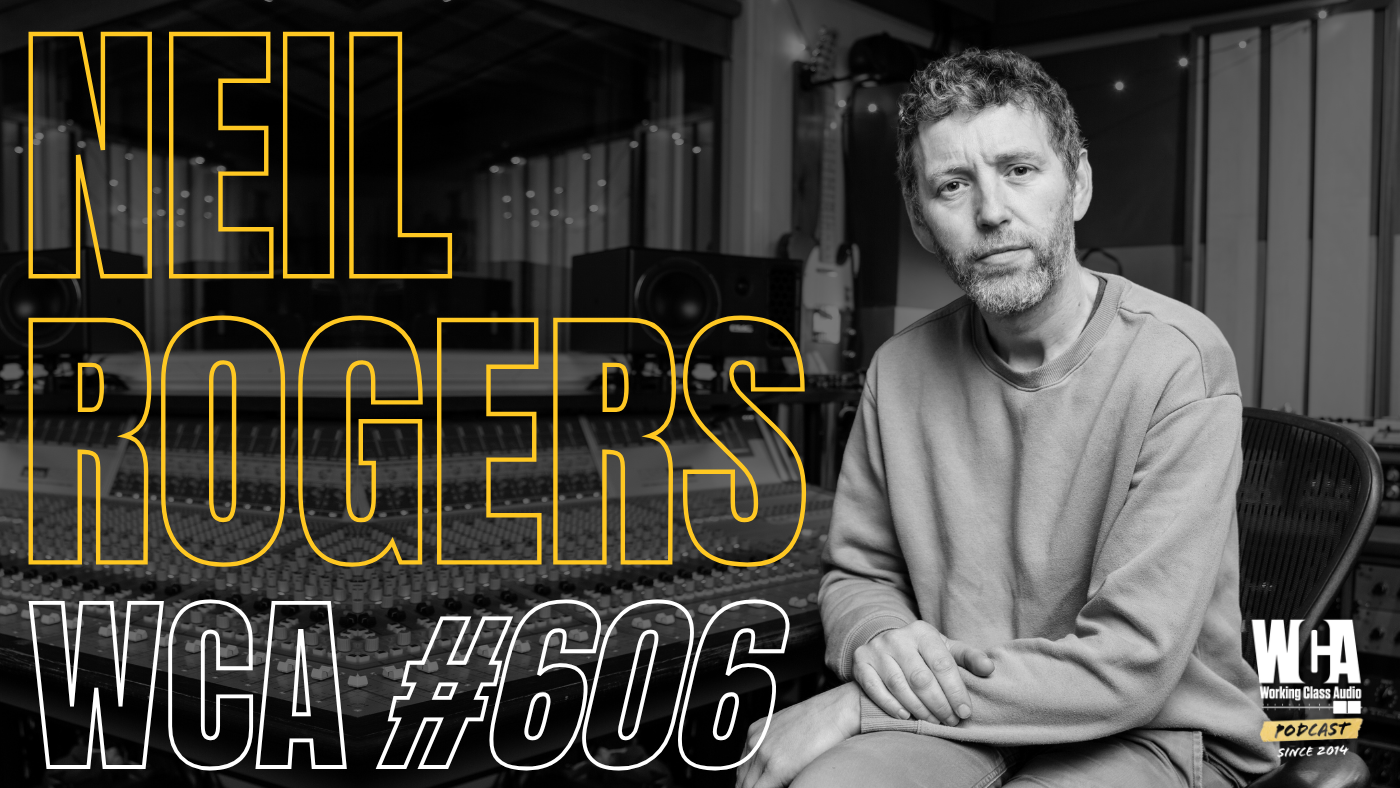
WCA #606 with Neil Rogers – Eighteen Years of Half-ton Studios, Bootstrapping in Cambridge, and Writing for Sound on Sound
For episode 606, Matt talks with Neil Rogers — recording engineer, owner of Half-ton Studios in Cambridge, and longtime reviewer for Sound on Sound. After a decade of gigging as a drummer with no payoff, Neil found a music tech degree at 26 that rebuilt his confidence, then answered a group email about a ramshackle unit next to a brewery and built a studio there on about £7,000 and favors. Eighteen years on, they talk about the accidental great-sounding drum room, rebuilding bigger during COVID, pricing, being honest with young people about studio careers, and the joy of recording bands live on the floor.
In This Episode, We Discuss:
- Meeting Matt Over a Pint in Cambridge
- Eighteen Years of Half-ton Studios
- Writing for Sound on Sound
- Learning Drums When School Friends Started a Band
- Why So Many Engineers Are Drummers
- A Decade of Gigging Without a Payoff
- A Music Tech Degree at 26
- Discovering He Could Write
- The Tutor Who Helped Fund the Studio
- The Group Email and the Unit Next to a Brewery
- Starting With £7,000 and Favors
- The Accidental Great-Sounding Drum Room
- First Gear: a £700 Soundtracs Desk and Borrowed Mics
- MySpace, Flyers, and Rehearsal Income
- Rebuilding Bigger During COVID
- Working With an Acoustician
- How the New Room Draws Bands From London
- Pricing and the Independent Band Rate
- Honest Advice for Young Engineers
- Workshops and Taster Sessions
- Why He Limits Mixing Work
- Recording Bands Live on the Floor
Matt’s RANT!: CLUTTER!
Links and Show Notes:
Credits:
- Guest: Neil Rogers
- Host/Engineer/Producer: Matt Boudreau
- WCA Theme Music: Cliff Truesdell
- The Voice: Chuck Smith
Video Interview
Read the Full Transcript
Matt: Neil, welcome to the podcast. Great to see you again. let me just give the audience the background. Basically, we met at a bar in Cambridge. I was there hanging out with Mike Sr. doing, he took me punting.
Neil: Yeah, let’s do it. Hi Matt. good to be here. Mm-hmm.
Matt: along the the waterway there and and then we walked all over Cambridge and then he said, we gotta call Neil. And so you showed up at the bar and we had a good chat. And that’s how that’s how our connection was made from my recent travels to the UK. Met at a bar.
Neil: A very good story. Yeah. yeah.
Matt: Or or or I’m sorry, I I should say pub because it is it is a traditional pub.
Neil: Yeah, yeah, I should have called you up on that really. Yeah. Yeah, I was very impressed you did the punting. That’s that’s good. Yeah.
Matt: Hmm. Yeah, yeah. It’s okay. I’ll still leave you a a positive Yelp review. Yeah, I felt like when Mike brought it up, I was like, What? Okay, sure. So I I was game. But then when he insisted that I drive, that’s when I was like, Okay. But I did it.
Neil: It’s a lot harder than it looks. It’s
Matt: It is harder than it looks, but it’s it it came to me rather quickly, I have say. Yeah. Audience, I’ll I’ll flash a picture on the on the video part of this just so you can Yeah. It’s the punting audio podcast.
Neil: That’s good. This is a niche, very niche podcast, it’s a The punting ho audio community, yeah. Yeah.
Matt: Yeah. Very niche. There’s like four people. well let’s get into it. What’s the state of the state? Who are you? Where are you? And what do you consider yourself?
Neil: So I’m my name’s Neil Rogers. I am a recording engineer, studio owner. I have a studio in Cambridge, not near the punts, but not that far away. I’ve run Half-ton Studios for eighteen years now, unbelievably. that keeps me pretty busy. I also Do a bit of writing for Sound on Sound, which is how I know your friend Mike. I would say if people were aware of me, like that’s probably where they would have heard my name. I’ve done a quite a lot for the magazine over the last decade or so, I guess. reviews and yeah, writing about recording and yeah, that kind of thing.
Matt: Mm. There’s not there’s not many many studios in Cambridge, are is there?
Neil: No, there’s a couple. yeah, there is there is there’s not many proper studios, if you like. There’s a s there’s a few sort of smaller ones in people’s houses and things. and there’s another sort of more f commercial studio the other side of Cambridge to me, but
Matt: Mm-hmm.
Neil: I guess I’m probably the only one of my my type, if you like, which has served me quite well probably from a business point of view over the years.
Matt: Mm-hmm. Let’s go back in time a little bit and and we’ll make our way into it. But where did you initially grow up?
Neil: So I’m I’m from around Cambridge. I grew up in a village just outside of Cambridge. but close enough that we were sort of, you know, in and out of Cambridge all the time. yeah, pretty sort of quiet sort of village I guess, but maybe like a little town. certainly didn’t have much of a music scene, that’s for sure.
Matt: Well yeah, but what was was there any exposure to to to music from other people or live music or and or was there any exposure to technology back then?
Neil: Not really. I mean, my I was always I was always sort of a music was about, if you know what I mean. With my we weren’t sort of a a musical family, but my my dad was a music fan kind of thing, so I was I was I very much remember you know, being on car journeys and listening to stuff pretty loud and kind of aware that this was something my dad was kind of into kind of thing. And but yeah, certainly I wasn’t sort of pushed down the route of sort of learning any instruments or anything like that or that sort of came in sort of teenage years really.
Matt: Was excuse me, was there any was there pressure to be to follow a certain path work-wise, or study wise?
Neil: No. No, not at all really. It was all pretty yeah, I don’t yeah, just pretty pretty normal sort of whatever a normal childhood was is in was in that kind this part of the world. probably more sort of sporty rather than music.
Matt: Yeah. Mm. Okay. And brothers or sisters?
Neil: Yeah, two two brothers. One either side of me.
Matt: And what kind of work did did your parents do?
Neil: My dad used to work for Leica company, camera lens. Yeah, I know. Whenever I speak to camera guys, they’re always quite impressed by that. but yeah, he he worked for them I think from sort of not long after he left school till he you know, he was a one company guy kind of started.
Matt: my god. Wow. Yeah.
Neil: right at the bottom and sort of I was never quite sure what he did. I s I often I still ask him now, I was like, I still don’t know what you did, kind of thing. He wasn’t involved in the technical side. He was he was always in an office kind of thing. but it he did have he did have a nice pair of binoculars and kind of yeah the
Matt: Wow. That I’ve never heard of anybody’s parents working for a camera company, especially you know, a Leica. I mean, gosh.
Neil: think it’s like all these companies that like I don’t know, like not like Sony, but the I think the camera side of it’s probably like a little small little I don’t know, small part of it. I think they sort of do lenses and optical stuff. I d I don’t yeah.
Matt: And did your mom work or or or or was she a house mom or a or or
Neil: Kind of yeah, a house mum, but then she as we got older, I remember she she was a bookkeeper. She worked in an accountant. Which has been quite handy for me. She’s done my books since I started the studio. Which has been good.
Matt: Yeah. Okay. Well what was your early exposure or or where when did you start to come to the realization that there was this thing called recording and and when did you start to take an interest in how records were made?
Neil: Well, I remember as a as a teenager, sort of getting into music properly. I remember my my dad had had given me his old stereo. So I can’t remember what it was, but I still think it was probably the best sounding stereo I ever had. And just having a bunch of his old vinyl and stuff. And I I do remember just being I was asking him about it when I was on my way over here, ’cause I was I listened to the White album a a lot when I was a teenager and I I wasn’t thinking about it, you know, in any technical way, but I was I was obvious there was obviously something I was into that wasn’t just the songs, if you like. And you know it’s pretty it’s pretty out there.
Matt: Yeah, d I mean, when you say, you know, other than, you know, listening to the songs, was there an element to that, the the the sonic element that you started to wonder, like h h how is that done?
Neil: Yeah. I I must have been. I must have been. Not not consciously, but but yeah. But it but it was it was many years before I sort of got into I w I always wanted to be a you know a drummer and in a in a I wanted to be playing or
Matt: what’s just so that came first, the drummer part of it?
Neil: yeah, yeah. It was yeah, like a a lot of you know, how we get into stuff. We were at school and we decided we were gonna be in a band, so it was like, right, I’m you’re gonna play that, you’re gonna play that. I was gonna do the I’ll I’ll do the drums then, you know. It’s kinda but that was it. That was literally the first time I’d ever picked up an instrument of any kind and the other
Matt: Yeah. Had you had any experience as a drummer before that? W and it’s funny because it’s almost like, Hey, let’s build a house. Great, I’ll do the roof. Or I’ll be the I’ll build the foundation.
Neil: No. No. Yeah. Yeah. I remember one of the chat one of the guys in the band, he he he could play the drums a bit, but he wanted to sing. so he just showed me I remember he showed me the beat to Should I Stay or Should I Go? which is you know pr probably about as easy as it gets. But
Matt: Mm-hmm.
Neil: And then yeah, then you’re in a band and then you’re I’d obviously had a you know some sort of knack for it and I picked it up pretty quickly and you know, we were playing gigs probably a month or two later and that’s that’s I always think that’s the nice thing about drums, you know. If you have got a bit of a natural it’s a the the the learning curve to get to that point where you can you can play with other people. It’s can be quite quick, you know.
Matt: Mm. Yeah. I I mean, you know, being a drummer myself, I mean I I see it that way. But it’s funny, I see guitar players just struggle to really get a grip on it. You know, and I can’t I can’t play guitar to save my life, but so I can’t I can’t throw stones there. But it’s interesting to watch friends of mine who are, you know, great songwriters, great guitar players, great bass players, but then they get behind the drums and they there’s this awkwardness that’s it’s it’s like cringe level awkwardness watching them. You’re like, maybe you should step away from that.
Neil: Yeah. Yeah, yeah it is. but it is fun. I mean I’ve with my my kids and I’ve I’ve sat them behind drum kits and it you just see their face light up when they they can just play something resembling a beat. It’s it’s you know.
Matt: Mm. Yeah. Brain-wise, I’m sure that there’s there’s gotta be some connection going on between multiple parts of the brain because, you know, like you start to play and then you realize, wait, I’ve got it. And the satisfaction and the rush that you get, the dopamine rush that you get from, you know, discovering that, I can do that now. I can play that now.
Neil: Yeah. It’s I mean yeah, drum drums drums really really suited me ’cause I I I and again you meet a lot of you meet a how many engineers you meet who who were who are drummers or were drummers, it’s it’s quite a lot. It’s not but it’s sort of it’s being it’s playing this really important role, but you’re not at the front, you know.
Matt: Mm-hmm. Do you think that that’s the the through line there? Do you think that that that’s the common denominator for drummer engineers? Is that a support a support role that’s super important but not in the front?
Neil: Yeah, I don’t know. Yeah. Yeah, maybe. Yeah. It’s Yeah, whatever the sort of yeah, however you want to put it. Yeah, I I mean that makes sense to me, but
Matt: How far did you take music?
Neil: so I I yeah, I played in various bands from a sort of teenager. That was until, you know, I sort of gave it a good go, if you like, for a a decade. That was kind of my my thing. not quite sure what else I was doing during that decade really.
Matt: Mm-hmm. Yeah.
Neil: There’s definitely a few lost years in there. but yeah, I d I sort of in terms of how far I got, I d I don’t yeah, I d I yeah, sort of Far enough that I was sort of touring and stuff, but but not that I was getting sort of record deal, you know, getting properly paid for it or anything. I was very much sort of scratching around, you know.
Matt: Right. Were were there recording experiences in in the midst of that?
Neil: yeah. Yeah. Yeah. And that’s that is I I I always loved going to the studio. That was I think probably where I I got the the bug if you like, even though well whenever I was in in the studios there was not there was not one second where I thought I’m gonna be that guy doing or girl doing But sitting in the it just wasn’t on my radar at all. It was just like I’d never be able to you know, you’d see someone doing a patch pay and you’re just like I’d never be able do that. That’s like Yeah. I
Matt: When did that change?
Neil: I think I’d I’d yeah, I mean sort of moving forward a bit, I’d I’d got to a point in sort of my mid mid twenties where I’d a a band I was in had sort of folded and was a bit sort of burnt by it all and I yeah, was sort of I’d sort of decided I’m not doing that anymore kind of thing. I’m gonna do something else. I’d I sort of I was getting into I I was fitting the feelers in, I was thinking I was gonna I was always like cooking, I was gonna I was working as a chef for a while. Went down that route a little bit. which again there’s a lot of parallels with I was
Matt: Yeah. Mm.
Neil: think the food and audio. There’s a lot there. but then I can’t remember I was what how it worked out, but I was
Matt: Yeah.
Neil: There was I think I had a friend who was doing there was a music tech degree that was run from one of the say one of the universities in Cambridge, it’s not it’s not the proper university. It’s I guess it would have it would have been called a polytechnic once once upon a time, but in the UK. But they’re i it is a it’s a proper university, but it’s you’d sort of joke about, you know, people think
Matt: Right.
Neil: Cambridge is very famous for its universities, but it’s it’s not the not the real one. But but yeah, I had a friend who was who’d who’d who’d who’d started doing the music tech degree there and I just I just sort of piqued my interest and I just remember looking into it and that was a tie that was long enough ago that in the UK you could get some financial help support.
Matt: Mm-hmm.
Neil: to go to university and I was I just thought that doesn’t sound too bad, you know. Maybe I could I just thought I’d I’d give it try. And I Yeah, so I I I ended up doing that for four years basically. And it sort of yeah, changed my life.
Matt: Do you think that was do you think that was a quality program?
Neil: In not and I mean I’ve been to where the the same course is run from now and they’ve got these amazing studios now and the facilities are incredible. They’ve got a huge API and desk and the facilities incredible. When I was there it was, you know, they had a Mackie desk and a it was it wasn’t great, but that kind of wasn’t the point for me really. It was it was me sort of Just coming out of a decade of Yeah. You know, from having left school to to get into my mid twenties, I was apart from the music, I was yeah, I didn’t really have the sort of direction really and and I was so I I I sort of found something doing during that course that I didn’t sort of know I didn’t know I had it in me, kind of thing. I didn’t think that I was able to I didn’t know I could write kind of thing. I didn’t know I could write like five ten thousand word pieces, you know. and you know, that kind of I guess that sort of led on to me to being able to write for the magazine. I you know, I I would have laughed if someone had said that when I was at school, you know. If someone said to me you’re
Matt: So because there was that’s interesting, the writing element so were they making you like write essays or anything on music and recording?
Neil: Yeah, it you know, it was it w yeah, it was a proper a academic degree. It was four years of There was there was messing around in the studio, don’t get me wrong, but I was also you had to you know, do maths and physics and yeah, all sorts really.
Matt: Okay. Interesting that like it it took up to that point for you to start, it sounds like it started to be a confidence builder because you discovered some things about yourself that you didn’t necessarily know existed, like the the ability to write and pr and also prior to being a drummer and and being in studios thinking, you know, the studio was Too much technically for you to understand, but here you were like completely, you know, getting a getting a grip on the whole thing.
Neil: Yeah. Yeah, no but no, it’s it’s really Yeah, it’s itch without getting too deep, it’s it is kind of I sort of got spat out of secondary school or high school, sort of, you know, feeling like I I I without any qualifications at all really. And sort of wondering why other people around me had sort of had managed to sort of navigate it. Whereas I I can look back now sort of and I was, you know, I I I kind of got what I deserved really. I I I thought no one was doing any work but it turns out people actually were. And I was you know, too cool for too cool for school, you know, kind of skateboarding and playing music. You know. But
Matt: Yeah. Yeah.
Neil: I’d I was I was too cool for school, but I and I I’d like to say I don’t care, but I I think I I probably did care, you know. And I obviously carried that into you know, when I was a bit older. But yeah, finding this course and yeah it was. It was like a big confidence booster over a a period of years really and there was some good people on on the running the course. one of the tutors actually
Matt: Yeah.
Neil: He he ended up actually helping me start the studio, sort of sort of chucked a bit of money in and stuff. It was really Very good.
Matt: Did you feel like the people there saw something in you that maybe they didn’t see in others? Is that would that explain that, you know, one of the people in involved at the school contributing money to the studio?
Neil: Well I was yeah, I mean I was older. Yeah, I mean that sounds bad contributing money, yeah. I mean he yeah, I guess we became friends. I mean I was older. I was 26 when I started. So you know, I was with a lot of 18, 19 year olds. Which was I think there was a couple of us, sort of mature students, they call it.
Matt: okay. yeah.
Neil: You know? but and I guess I mean the experience I had from being in bands, it was, you know, you know, even though I wasn’t thinking when I was in the studio I was obviously wasn’t thinking technically, but I you you see stuff, don’t you? You you you see how sessions work and you know even
Matt: Mm-hmm. Mm-hmm.
Neil: I must have been paying attention to ca I I obviously enough had gone in that I could I knew how to, you know, vagu have vaguely what making a drum kit looked like and, you know. but yeah, I don’t know. Yeah, I was yeah. So but it was it was also, you know, I think sitting in a room full of eighteen, nineteen year old it’s it’s quite I don’t know how to put not humbling, that’s the wrong word. So yeah. Do you know what I mean? So
Matt: I actually do because since I’ve been recently going back to school, you know, and it’s ten it it’s it’s a whole nother level when you’re fifty-six and you’re in a room with eighteen to twenty year olds and everybody’s like, What’s the old man doing here?
Neil: Yeah. Yeah. Yeah, but it’s No, it was no. It was it was don’t know looking back on it it was a really kind of transformative thing for me really. just
Matt: And when you talk about the studio after that, was was that the studio you’re in now or was that an earlier incarnation?
Neil: No, so I I started the studio not long after I finished my degree. she rewind a little bit. I’d I’d become a become a a father also around the same time that I went to uni. so
Matt: Mm-hmm.
Neil: You know, by the time I’d I’d finished the degree I was I don’t know, a hands on dad as well as doing this. and sort of coming out of uni, it’s like, right, so I wanna I wanna get a job in a studio. It’s like, well, there’s no studios here. You know. no, there’s there’s there’s nothing here. I remember sort of applying for some stuff, not studio work, but sort of
Matt: Yeah. Especially in Cambridge.
Neil: just stuff that I could use my degree for if you like. There was there’s like I think I applied for there’s there’s quite there’s a few sort of acoustic companies around these parts. I remember applying for a couple of jobs and but then it was very much sort of obviously in Cambridge as you know we’re only an hour away from London. Which is obviously a there’s plenty of studios there. but it just felt it felt like a bit of an immovable object. starting, you know, going in as a
Matt: Yeah.
Neil: Yeah. Going in at the at the bottom rung of working in a studio when you’re when you’re thirty and have got a kid, it’s you can’t afford to Yeah. Sleep on people’s sofas for a year or, you know.
Matt: Yeah, there that there’s a kind of a threshold you cross at with age, being a parent, and being having the the need to, you know, bring in a decent income, that all of your choices prior to those those things as a younger person, you know, it would have worked out. But I c I can’t I can’t imagine you being a dad. in need of employment and commuting into London an hour, you know, plus each way on the train, you know, and starting at the bottom.
Neil: No, would have been difficult. yeah. But yeah, but then an opportunity it it it like a lot of things in life, it was I got I got copied in on a on a group email with someone I know who had recorded one of my old bands and it was you know Back in the days where you could see everyone who it w everyone who was copied in on it, you know. So I could I could see a long list of people and and it was yeah, this this guy I know was just saying, Look, I’ve I’ve I’ve I’ve got this unit just outside Cambridge. I’m I’m moving to another part of the UK. Is anyone interested in taking it on? I’ve I’ve sort of started to build a studio, And I was like, I read the email. I called him straight away and said, can I pop down now and have a look? Basically. So I it was probably 10 minutes from where I was living at the time. And I I drove I drove down there and he showed me around and it’s it was a ramshackle industrial unit that he was sharing it. there was a brewery next door.
Matt: Mm-hmm.
Neil: And they were they had a bit of the unit for storing like their kegs and stuff in. and he’d sort of started to build a he’d built a sort of small control room if you like, and a little it was all very, you know, pretty lo fi, but I I don’t know what came over me, but literally I’d I’d I’d been there twenty minutes and I just said yes, I’ll have it. I said I’d I’d I you know, obviously found out a little bit about
Matt: Wow.
Neil: the lease and what have you and I mean it was so cheap back then I can’t bel yeah it’s but yeah there this was that was in two thousand and eight. Yeah, it it sounds very it sounds very I don’t know, a bit reckless saying that, recalling that really, but just it just felt like you know, one of those things in life you I just sort of knew, really. And
Matt: Did you did you have a vision of what it could be as you were walking around the space?
Neil: no, not really. Not really. I just thought, I could do something with this kind of thing. And it was cheap, it was cheap enough that I just thought this doesn’t sound like a huge this isn’t gonna ruin my life if it goes wrong, you know. It was the setup with the least, it was a very I could tell it was very relaxed, you know, and kind of This it felt like something this is I something I could I could give this a go. And I sort of felt like you know, I thought, worst case scenario, I I know enough bands around here that they could just they could just rehearse here and it would pay the rent, you know. And I can’t remember if I was still playing in a band at that point. I just you know, I just thought I didn’t necessarily envision it as certainly didn’t envisage it being what it is now, but I I thought I can just Worst case scenario, this will just pay for itself and this will be a cool little space, you know.
Matt: Was it cheap, do you think, because of its location or the state of the building, or both?
Neil: both, really. Yeah. It’s Just on the edge of Cambridge, but it’s certainly when when I moved in here it was it was just sort of garages and you know industrial units. now if I walk out there it’s I’ve got a hot yoga place there, I’ve got a I’ve got a jiu jitsu gym there, I’ve got a gym there, I’ve got it’s hilarious.
Matt: I mean, I’m laughing because like that is the absolute indicator of how it’s changed. There’s a hot yoga place.
Neil: Yeah. Yeah, it’s just opposite. I that’s one of my running jokes with the bands. It’s I’ve booked us in for a hot yoga session in the after lunch. It’s
Matt: You know what? I’ve done hot yoga. I tried it twice and then I was like, I can’t do this. Like I can I can yoga I can handle. Hot yoga, I was sweating so much and having to stop and drink so much water I couldn’t handle it.
Neil: Never done it. I just see very people coming out very red-faced and sweaty. but yeah, no, it’s changed. There’s a really great coffee place just there and that I give all my money to. and yeah, I mean it’s it’s nice really. but
Matt: Yeah. Wha when did that transition of of that neighborhood start to take place where hot yoga and great coffee moved in?
Neil: not that long ago really. Maybe less than a decade, sort of. Yeah. Yeah.
Matt: So talk to me about, you know, taking this space that you, you know, as you s as you say, recklessly jumped into. What what was the path in this space?
Neil: So I remember I just sort of One of my friends I’d made on the on the degree course, he he wasn’t into music at all, but he’d he was from Cornwall where you visited I know you went on holiday there. but he he was he was not a music person at all, but he he came from a he was a builder, he came from a building family. And I also say he was like my
Matt: Mm.
Neil: my enabler, if you like. I just I remember he he came here, he just said, Yeah I’ll build you I’ll build you this, I’ll build you that, you know, what what do you want? Kind of thing. And he was like, I was like, really? And it was like you can do that. And he’s like, yeah, yeah, I can and I I built I’ve built houses, you know. he was a young guy, he was he was younger than me. And so then it was sort of I don’t remember just
Matt: Mm-hmm.
Neil: just sort of roughly thought, okay, I could have a live room here and a little control room, and there was another smaller room. So there were the smaller rooms was the bit that was already there. The original feature. I remember it was just like a one of those classic little rooms that just they’d he’d foamed it out completely, you know, it was like a little cell. but the
Matt: Mm-hmm. Yeah.
Neil: So that this room I’m in now is is the control room, but this this was the the live room that my friend built for me basically. He and but I had to I remember I just had to sort of hustle up a budget of sorts. I remember I just I think I I think I started the studio with about seven thousand pounds, which as you know is that doesn’t get you a lot studio wise. yeah, but I you know, I was just borrowing borrowed like a couple of grand off a good friend of mine and some friend who was my lecturer
Matt: Mm-hmm. Yeah. yeah. You’ll burn through that.
Neil: who I’d met at the on the degree course he helped out bit and my builder friend just I could well he he came in he he told me what he told me what materials to buy so you know loads of four by two and plaster board and I I didn’t know what I didn’t know what the hell I was doing. I knew enough to put rock wall in the walls. That was it. it’s just sort of laughable now. but I remember he came in he he had this like He came with his nail gun and he just put this room up for me in like a couple of days. It was just incredible to watch. When someone who does that stuff, it was just
Matt: It it I can I completely understand like there’s a there’s a s a sound of amazement in your voice and and I get it because I’ve you know having having built studios and and gone through it, like to me it’s just like the the biggest pain in the ass. It’s so hard. I mean, even drywall or or plaster board as as you you would say, We we did a a a simple office thing for my wife in in the backyard here. And I knew from my experience of studios, I was like, we’re hiring somebody to do the drywall. And and it and it looks great as a result because if I did it, you would have seen all the scenes, it would have been screwed up, it would have been terrible. So when you come across people who are such
Neil: Ha ha.
Matt: you know, Jedi’s in their craft, so to speak. It’s remarkable, especially when you watch a person frame out something so fast like it was nothing.
Neil: Yeah. Yeah, it was it’s very impressive. Yeah. I remember him I remember him putting a f he put a nail through his finger with an his nail gun and just he just he just cracked on and I was like if that was me I’d be I’d be in the corner kinda you know
Matt: Right. You’d be like somebody in Premier League, you know, rolling around in the ground like they’ve like they’ve had their their world destroyed from a foul. You know how you what watching watching the World Cup this this this round really brought that to my attention, how like, you know, they get barely hit and they’re like, rolling around on the ground and throwing their hands up and then when they don’t get the foul, they jump up like, Well, okay, I get that one.
Neil: Yeah. Yeah, yeah, yeah. Also Yeah. Yeah, that’s yeah, it was that’s no, no, it’s a different breed, really. but yeah.
Matt: Yeah. Well so I I’m derailing you, sorry. the so he he frames this thing out and you buy all the supplies.
Neil: Yeah, so he built he built the room and kind of finished it for me. He even did the plastering and and then I it it’s really hard to know looking back sort of how much you knew and what you didn’t know kind of thing. Certainly I remember I’d obviously I I I sort of knew enough to know what sort of a an acoustic panel looked like and I sort of kid put them where I thought looked right in the room and then that ended up sort of being being the being the live room, really. and purely by complete accident it sounded really great. It sounded it was an amazing drum room. I mean everything’s wrong about it. It’s really square, it’s not a very big room. but there’s a particular corner of the room where you just put the drums in there and it it they just sounded huge kind of thing. I I used to I’d get drummers coming in who would who would doing a lot of studio and session work and they’d be like, This room sounds amazing.
Matt: Mm.
Neil: kind of like purely I purely by accident, you know. It was I and I I sort of took it for granted. I I just thought that’s how rooms sounded and it was only when I a next level of development in the studio quite a few years later where I decided I was gonna make this the control room and I built a bigger live room. I remember the the first drum session I did it was like Where’s the drum sound gone? It was just it it it it was it was interesting. It was
Matt: Mm.
Neil: And even fairly recently I I had to pull up an old session from years ago that was done in this room and I was just soloed the drum overheads and it was like, my god, that drum sounds it was it just it yeah. It was a lucky accident that served served me well for the first first few years of running the studio and cutting my teeth really.
Matt: Mm.
Neil: certainly helps when you’ve you can Pull up the a couple of faders and the drums sound good, you know, in a room.
Matt: And and just back to the building for a sec, did you did your builder friend also handle the electrical?
Neil: Yeah, good point. No, that was another ch another guy I I know. I was just calling in calling in favours. Yeah, I knew this guy who’s a musician. He still comes here actually. I mean he yeah, he did the electrics for me and
Matt: Calling in favors left and right.
Neil: It they’re still okay. So yeah.
Matt: Yeah. And and w was there did you have to hire a plumber? Was there proper bathroom and and and running water and
Neil: No, that’s all that was all pretty Yeah, there’s a there’s a small sort of toilet area. It’s pretty pretty basic, but it’s it’s okay. I think it probably part of the charm of the place. It has a bit of a a bit of a vibe, kind of people who are always surprised when they come here for the first time and they you know it it looks pretty pretty run down from the outside. And then they walk in and they’re like, wow, this is like but I I I quite like that being inconspicuous on the outside and
Matt: Yeah. Yeah. So What was the like after you got up and running? Well, actually let me back up a little bit. D had you been buying gear and did you have to like just was this not only a build from scratch, but was it also buying gear from scratch?
Neil: Yeah, I I had I had I had some had some monitors that I’d had at home. Some just some Adam sort of A sevens that I’ve still got. and I remember out of my original budget I bought a I think they that’s Soundtracs desk. Like an old British I mean it was huge, thirty it was massive.
Matt: Mm-hmm. Mm-hmm.
Neil: think it was like seven hundred pounds. It was like, you know, hilarious. Massive, great thing. so I had that, I had some monitors, you know, and I just I just had enough to get going. And I I remember I had I had a I had a pair of four and fours and or four fourteens. and my my lecturer mate who I come back to he he he had a couple of mics he just sort of lent me to keep go you know, so I had a I had a I had enough mics to, you know Do a band basically, very basically. I didn’t have any outboard or I had a had this old desk, some quite nice mics and an interface and some speakers and you know, I mean I thought that was great at the time. I thought that were you know, and but yeah, looking back I must have had I mean it seems I I must have had a
Matt: Mm-hmm.
Neil: I must have had some confidence that I could that I c could do it. Do you know do you know what mean? ‘Cause
Matt: Yeah.
Neil: It was pretty quick that I I had I had bands I didn’t know, you know, coming in and paying me to record them. So
Matt: How are they finding out about you?
Neil: I remember I I that would have been just probably at the tail end of the sort of MySpace era. You remember that? but also just I remember I I did sort of flyers and you know posters and old school kind of putting them in the the venues round here and
Matt: that’s yeah.
Neil: There used to be a couple of music shops that are sadly gone now, but you know that was enough to to kind of get a few people in and get me up and running. and I was also I was letting bands rehearse in the live room.
Matt: Mm.
Neil: Which is Yeah, that was there still is now there’s there’s always a quite still a a a lot of demand for rehearsal space with music. And it’s unlike recording, it seems it was always just pretty steady. Enough to keep a you know, that cash flow ticking over. so if you had a quiet month it was
Matt: Yeah.
Neil: It didn’t mean you were out of business, you know. It was
Matt: Yeah. can you talk a little bit about what you perceive either back then or now? and maybe connect maybe even connect those two points in time about talk about the the ecosystem of music, meaning live venues. Studios and just a scene. Is does Cambridge have a scene?
Neil: No, not so much. It’s not I mean it that’s probably a bit unkind. It it it sort of duh I mean it it does have sort of little clusters of scenes that appear and then but it wasn’t like you know, big pools of bands that I was ready to sort of tap into, you know, it was But there’s there’s certainly lots there’s there’s still plenty of people doing music around here and and there was when I started enough that I had You know, enough bands to run a small studio for to allow, you know, me to get but really I mean I was I was still I was just learning what I was doing, you know, I was on the job, kind of on my own.
Matt: Yeah. Right. But but you’re really the only kind of legit studio space of that size level in the area. Is that accurate?
Neil: yeah, but I guess the studio then it wasn’t it certainly wasn’t it wasn’t nice enough then that s that someone would have travelled there, do you know? so I I yeah, I was very much leaning on leaning on my community, if you like. Because you know, Cambridge is it’s not a big place and I’d I’ve been doing music here since I was a teenager, so I knew I knew
Matt: Right.
Neil: I knew a lot of people in bands and Which is it’s a i it it’s a it’s a big advantage, you know. It would be very difficult I think to start a studio like I did without without that, I think. and I guess I maybe looking back I I had a bands that I
Matt: Yeah.
Neil: bands that I’d been in previous members had gone on into bands that had been somewhat successful. So I could sort of they might come and do some stuff here. So straight away I could
Matt: Mm-hmm.
Neil: I’d have something to, you know, promote myself with, you know, say I’ve I’ve done this band or that band and, you know, just helping to build some credibility, you know.
Matt: How did COVID how did you make your way through that and and what were the effects on the studio and the income?
Neil: So COVID was I I mean I mean the studio was closed for big chunks of time during those eighteen months or two years, however long it was. but I I don’t in in the UK I I I did I was quite fortunate. I ticked I ticked all the right boxes for the government support, basically. ’cause I I rent the unit here basically. I mean it’s incredible now looking at if you if you rented a commercial unit you just
Matt: right on.
Neil: You’ve got given a chunk of money to keep you going with very few questions asked, basically.
Matt: Yeah. And and and did you have to repay that?
Neil: No. No, this was a grant, basically.
Matt: Yeah.
Neil: But there was there was a few that Yeah. I I mean it but it was I it sounds bad saying you kind of did well out of COVID, but yeah, I was I think I w I felt I was one of one of the luckier ones. So certainly I had friends like one of the one of my good friends who was doing a lot of the studio, he he didn’t tick any of the boxes, he didn’t get anything, any support at all, basically. but it was it w it was enough for me that there was
Matt: Yeah.
Neil: And because the studio was closed, I actually completely redeveloped the studio during during COVID. I remember a guy a guy from the the local council here is visiting businesses to sort of they were sort of seeing how they could help. I think they’d I think they’d been given a chunk of money by the the government basically and they said you’ve got to go and get out there and give it to businesses.
Matt: Yeah.
Neil: And I remember this I remember this Quite young guy coming in here and sitting in the control room for an hour and we were just chatting well what what kind of help do you need kind of thing? And I’m like, well that’d be really you know I remember it was it was all about social distancing, wasn’t it? It was like I said it it would really help us to open if if that live room was if it was a lot bigger, it would really help, you know, and if we had some sort of air proper air air system, So it could circulate the air properly and make people feel more feel safer and and he was like, Yeah, yeah, yeah. And then he I mean, he thought this was a great idea and set me up so I could get another grant basically to do what I said would I wanted to do. So so yeah we sort of tore down we tore down the the library room and completely rebuilt half the studio basically and I mean it was it was It was quite reckless and and again probably a slightly reckless thing looking back on it, ’cause it was it was a it was a much bigger project than what I’d I’d ever done here before. I saw I had I had this confidence that I’ve built rooms before, it’s fine, it’s you know, it gets stressful and it costs more money, but it all always works out in the end. It’s it’s fine. But this was this was a much bigger thing that needed you know
Matt: Yeah.
Neil: I it was a properly designed room. I I had a acoustician called Douglas Doherty who runs a company called Dax, who I’d sort of got to know and he’d sort of actually designed the room for me and
Matt: Mm-hmm.
Neil: you know, had to have sort of engineer calculations. You know, it’s a it was a proper build rather than lashing up a a room with a nail gun. but and I mean it it worked out very well in the end, but it was it was It was it was very stressful. Ended up costing.
Matt: Little overwhelm like on one hand you’re getting this money and on the other hand it’s like, well, be careful what you ask for because now
Neil: Yeah. I mean in hindsight it was it was nowhere near enough to to do that a pro that project. It was And you just can’t and as as well when you when you’re closed as a business, it’s you know, it was still all all the overheads were still there. It was so you’re just hemorrhaging money, you know. But it it it got done and that’s the live room that is there now and it’s it’s it’s an a it’s an amazing room. It’s kind of if if I could see that room when I started it I would have I would I wouldn’t have believed it kind of thing. I was I was a bit kind of I was a bit jaded by the time it was finished, but I do I do sort of walk in there and I I do try and appreciate it and but all also it was I’d always wanted to have a bigger room because I was drawn to recording bands on the floor all all live. And it’s you can I learnt I learnt to do it in a small room. Think I I got quite good at it.
Matt: Yeah.
Neil: you know, putting stuff in corridors and all sorts, but Having a big live room where you can you’ve actually got a bit of room to play with in it. It was it’s yeah, it’s been great, sort of
Matt: So if we look back, like and and tell me if I’m if this is accurate, but basically, you know, after once you started at this this recording school and graduating, you you essentially just set up shop there in Cambridge as a studio and have been doing that ever since. Is that is that about right?
Neil: Yeah, yeah. I’d say that’s that’s that’s fair, yeah.
Matt: And you know, along the way, I know some people go through this. I don’t know if you if if this is true for you, but do you ever think, man, I really would love to just close this place down and move and open up a bigger place? Or have you just felt like, no, this is this is good. I’m I’m content and and happy to stay in this location.
Neil: can’t imagine doing a doing a big a big a big studio build again anytime soon. I think I’ve it it it does. Yeah, I I’ve I’ve I I feel I feel I’ve I’ve scratched that that itch. but I mean yeah I I mean like anything in life I’ve I’ve you I’ve been here eighteen years now and
Matt: It takes a lot out of you.
Neil: I do the same drive, same the same things annoy you every day and you know, yeah, i i I it’s
Matt: Mm-hmm.
Neil: Yeah, it’s it it it’s it’s a mixed bag, you know. I still I still enjoy what I do, but
Matt: And do you think that there’s a lot that you’ve learned about the business of r running a recording studio over the years?
Neil: I would hope so. Yeah. Yeah. Yeah. Yeah.
Matt: And if you were to share like if you were to give somebody else advice about, hey, you’re gonna open a studio? Great. Let me teach you a couple tricks about the business side of it that you probably are not gonna grasp right up front. So what what would you tell somebody? What would your advice be to those listening?
Neil: think a lot of the things you hear just a lot of the cliches about you just you gotta run I try even I tried to run quite a tight ship with my outgoings. I think I’ve been despite describing a few reckless scenarios, I’ve I’ve not I’ve been fairly disciplined with not, you know, going out and splurging on gear and, you know
Matt: Mm-hmm.
Neil: from you know, this this really built things up bit by bit. I think what I was describing earlier about having I think I I had that confidence that I I knew knowing enough people to get me started, customer wise, client wise if you like. I obviously must have had some confidence there that I could get some people in.
Matt: Is it?
Neil: And I think I’d probably suggest to someone they they were realistic about about that. Yeah, I don’t know really. What else is there?
Matt: Well, mean, you kind of summed it up in the I mean, it sounds like your overhead really at the end of the day. How much money is going out?
Neil: Yeah. Yeah. You’ve got to you Yeah, you just You’ve got to be realistic. I think I think I’d definitely advise it I wouldn’t do what I do and just plough ahead with whacking up rooms kind of thing. I would I would I would get get some advice with acoustics and ’cause I’ve I’ve made a lot of mistakes over the years with The building side of it, if you like. That
Matt: A couple logistical questions though about that because so you you’ve this has been You don’t own this building. This is a building that you that you that you lease.
Neil: Yeah, I’d I’d dearly love to o own it. but I don’t.
Matt: Yeah. How’s your relationship been with the landlord?
Neil: it’s okay. Yeah. They’re it’s pretty r it’s pretty relaxed here. yeah, it’s a there’s a family that sort of own most of the estate I’m on. Yeah, industrial estate. they’re pretty hands off kind of thing. As long as they as long as you pay the rent, they’re they sort of leave everyone alone, which sorta works both ways. I’ll often
Matt: Mm.
Neil: I’ve been quite lucky here, but my n lot of my neighbours are often moaning about leaky roofs and things. But Yeah, I mean yeah, it’s I mean it du it seems yeah, I but I I you know, I do I I think I signed a three year lease when I took on the unit kind of thing. Which is you know I know it sounds it sounds mad. i I Yeah. Yeah. I’d whether I’d whether I’d do that now, it is I I don’t know. But
Matt: Yeah.
Neil: Yeah, it’s I mean I’d have loved that like units down here have come up have come up for sale over the years. You know, and I’ve I’ve seen you know, them I think the the last one was
Matt: Mm-hmm.
Neil: Triple what it was. when it you know, the time that I took on a unit. You know, you just think, But it it just wasn’t on my radar at that point. I didn’t have the money to buy a unit down here. It was so, you know, it wasn’t a choice. It was, you know and it it never yeah. I mean I mean, yeah, it mean that would be a if you were giving out advice, if there was any way you could do that, I mean it would
Matt: Yeah. Buy a building. Yeah. do you feel that Cambridge is growing musically?
Neil: Obviously amazing. Yeah. probably no. It’s it’s it’s it’s just there’s still stuff happening here, but it’s there’s you know, there’s there’s sort of a handful of venues and I think it’s quite a hard place for well like everywhere it’s it’s an expensive place, Cambridge.
Matt: Yeah, okay. Yeah.
Neil: to rent and well you know, it’s so I I think it’s quite hard for the venues and stuff to but you know it’s not unique to Cambridge but it’s a it’s a strange place ’cause you I mean obviously most people would know Cambridge for the the university. It’s a university town. you think you’ve got tens of thousands of young people coming to the city.
Matt: Mm-hmm.
Neil: but they don’t seemingly it’s it’s quite insular. They don’t necessarily
Matt: Yeah.
Neil: I don’t know, d the I don’t know if necessarily the the normal people that live here they whether they necessarily benefit from that. I’m I’ve I’ve always been surprised that I I get I get I do get bans from the university here, but maybe a couple a year. And that it’s always been a surprise to me. I I’d you’d think there’d be more.
Matt: So so the peop so the people that are coming to you then, are they locals or are you getting people from outside of Cambridge on a regular basis?
Neil: Since I since I built the live room I described, I’ve As stressful as it was and exp as expensive as it was, it it sort of changed it seemed to change how the studio looked from the outside, I guess. And I I get a lot more bands travelling to the studio now from because we’re only we’re only an hour away from North London in particular. and
Matt: Mm-hmm.
Neil: Yeah. I I mean the region I’m in I’ll I’ll get bands sort of travelling. I’ve had bands coming up from Brighton and the cup sort of within a sort of two hour drive, I guess. and i yeah, it it it’s nice. They’re they’re they’re they seemingly They’ve either yeah, they’ve either s heard of a band that’s been here, you know, or they’ve they’re they’re looking for a a nice room, you know, because they want to work in a particular way. And if you if you go to my website there’s a the front page is just a big picture of my my live room, basically. It’s and it’s yeah, served seemingly served me well so far.
Matt: Yeah. And and how have you navigated your pricing over the years?
Neil: yeah, it’s tricky. I mean it I mean it’s it’s it’s gradually gone up, but it’s I mean I mean we’re we’re terrible, aren’t we? valuing ourselves. It’s like everyone I know who doesn’t work in music, they’re like they can’t understand why if I tell them how much I’m charging a day then they just think it’s ridiculous. You know. They’re like No, too little. Too little. Yeah. They’re
Matt: They think it’s too much or too little?
Neil: Yeah, they’re you know, you’ve they’re like that’s for you and and and this facility you’ve built and all your equipment and But I I I I’ve definitely got a lot better. I I and I I I don’t I don’t have I don’t have sort of one rate. I I have my kind of official rate that if I if I get s a project coming in where there’s some external funding of some kind or it’s a company doing some voice work you know they’re paying a slightly better rate and then I’ve got my what I call my sort of independent band rate. which bands are also they’re always very keen to tell me that they’d qualify for it, you know. And I’m almost like, don’t worry, pretty much everyone has that rate. It’s you know it’s it’s fine. so I’ve definitely got better at at at that. But I I I always joke with friends of mine that my my sense of money is still stuck in about two thousand and one, you know, it’s like I’ve st I’m still I’m still amazed at how much stuff costs. I’m like, I still I can’t seem to recalibrate, you know.
Matt: Yeah.
Neil: You know, I’m I’m I’m I’m renovating where I live at the moment. And I’m, you know, I just had someone quote me to do a to do a bathroom and they they quoted me like fourteen thousand pounds to do a bathroom for me. And I was just work I was just sort of roughly working out what this guy’s day rate was and I was like, Jesus, it’s like yeah. That’s like three or four times what I’m I’m I’m earning a day.
Matt: I I know. It’s it’s incredible. And you think, wow, maybe I should change businesses.
Neil: Yeah, I mean I mean my my good friend who I ran the studio with for years, he helped I mean he he got he he retrained to become an electrician around coming out of COVID. And he he did that. He sort of
Matt: Mm.
Neil: had enough of it really and and yeah, he’s he’s a full time electrician now. And doing quite well.
Matt: Yeah. I’m I’m sure there’s, you know, er that that’s a business that always needs, you know, th there’s there’s n it seems like as time goes on, an electrician or a plumber like are two jobs that you’re always gonna you’re always gonna need those people in the trades.
Neil: Yeah. I mean it’s it’s an interesting I mean it it is I mean you don’t wanna you don’t wanna be too pessimistic about this about our world. But I I get a lot of young people on here who wanna either come and intern here or you know get some or even just get a bit of advice about, you know, getting into studios and and I’m I’m always I’m always I’m always really careful not to
Matt: Mm-hmm.
Neil: don’t want to talk anyone out of doing it, you know. But at the same time, I’m I I I think it’s important to be to be quite honest, you know. I think a lot of a lot of people sort of come out of recording courses and I’m I’m not sure they’re given a true proper realistic picture of what what it actually looks like on the ground, you know. and
Matt: Yeah. Yeah.
Neil: But yeah, also I mean I don’t know. I d Yeah. Whether I would get out of it and do something else. I don’t know, really. I feel like I’m probably too old to learn a trade, but And that’s the other thing. I think if you’re gonna be a plumber, okay, you’re gonna earn some good but at the end of the day you you’ve still gotta be a plumber, you know. You’ve actually got to be a plumber. You’ve got to crawl around on your back and, you know, fix toilets and, you know
Matt: Can I’m looking into a but yeah. Well, maybe.
Neil: I don’t know if
Matt: Yeah. I I I’m too old for that at this point. I don’t know if I could
Neil: I I think I have.
Matt: I’m looking at the website. can you tell me there’s a couple of things I wanna ask you about recording workshops. talk to me about the recording workshops that you do.
Neil: Yes, I I haven’t done one in a little while, but they they have been a sort of fun thing I’ve done. Well I say fun, no, it’s been a business thing really. I’ve it was a way initially it was a way of me like any studios, I get I get so many emails about people asking have you got any jobs or can I come and, you know, make coffee and sit in on sessions and I get so I I mean I it might be a bit depressing for young people to hear, but I even I I you know, I I probably get ten a week still.
Matt: Mm.
Neil: So it was it was it sort of became a a way for me of saying I’m really sorry I I don’t have anything at the moment, but hey look, I we run these things once or twice a year and we you know, it’s you if if you wanna see how the studio works and you can come and come and do this for a few days, you know. So it was having a w a weekend where I’ll I’ll get six, seven, eight people in and would get a band that I know or a singer songwriter and we’d we’d record them and break down what we’re doing, you know. and but they’ve always They’ve always been quite good fun and met some ended up meeting people who’ve come and worked here and or they’ve brought their projects there. It’s a good sort of networking and you know saying it aloud. I don’t know why I do don’t do it more often really. but yeah.
Matt: And then the other thing that’s on the website that is catching my attention is the studio taster sessions. Can you explain that?
Neil: Yeah, that was that was just a thing if you’re If I get someone if I get someone like I’ll I’ll do I won’t do anything that comes through the door here, but you know, I’m I’m not kind of I’ll do I’ll get a lot of people who just wanna come and they just wanna come and sing, you know, over a backing track or have a have just have an experience more if you like, you know? So it was it was something to Or people that you can just sense when they get in touch, they don’t really know. if that’s really if they wanna come into a studio. So so it was just having something that was just like, Look there’s this thing, it’s two hours. Just come and we’ll make sure you be realistic about what you can do in that time. But it was just a way of Yeah, creating a little product if you like that does what it says on the tin, people can just come and come and try it, see if the studio’s for them, you know. ’cause not I think for unlike our generation, a lot of where we sort of went through studios, for for younger people now it’s not going into a studio is not a that’s not a given, is it? It’s you know they’re It’s very different. so and I I I I’ll have someone get in touch about they’ll they’ll send me I want to come in and record a song, I play guitar and sing. And I I I’ve made some demos at home and I’m like, it’d be great to hear if you’re happy sharing. Can you send me what you’ve done and I’ll I’ll hear it and it it it’s really well recorded, like and you know, they’ve just done it done it in logic at home and and I I’m almost a bit like they you know, they can come and record it with me and I’m sure we can refine it a little bit, but I’m almost isn’t necessarily gonna be any better than what they’ve done in their in their in their bedroom when they’re all relaxed and kind of you know, it’s it’s it’s very different.
Matt: Do you get a lot of the the bedroom producers who come in and and want you to mix?
Neil: Yes, although I I think in recent years I’ve I’ve I’ve sort of I’ve sort of shied away from doing that kind of That kind of stuff. ‘Cause it it’s just
Matt: Mm.
Neil: I’m I’m just I’m always wary that for how much I can charge for it. It’s not a great use of my my time, if you know what I mean. As I’m sure you know, mixing for people it can
Matt: Right, right.
Neil: managing expectations and I’m I’m I’m I’m just a bit more careful these days about taking on mixing stuff.
Matt: And what’s for you just in in your ideal world, where is your happy place? Is it recording a band live on the floor? Is it mixing? What what’s your favorite activity in the studio that really brings you a lot of joy?
Neil: I I still If I’m with a if I’m with a band and I like the music and we’re all getting on, it’s it’s a it’s a I it’s d I’m some I still think I can’t believe I’m getting paid for this kind of thing. It’s it can yeah, it can be a great job with all the the challenges. recording bands. yeah.
Matt: Mm-hmm. Yeah.
Neil: said with having the larger live room, I love doing the live sessions where it’s half a day of hard graft setting up frantically and then and then if it’s someone great, I just get sit I just sit I just get to sit and listen to it. And just keep an eye on things. It’s it’s amazing.
Matt: Yeah. Yeah. Yeah. It it is interesting. Once you kind of get everything up and running, it it kind of runs itself.
Neil: Yeah. Yeah. Yeah. I’ve got you were asking about Cambridge. There seems to be this little niche scene in Cambridge of free jazz stuff. And they they come here and I d you see a lot of the same faces, but they they just get in a room, three or four of them, and they just they’re not too fussy about how stuff’s recorded and they’re
Matt: Mm-hmm.
Neil: someone’s gonna be mixing it themselves and I’ll yeah, I’ll just get them set up and they just they just let rip for a a day playing, you know, thirty, forty minute long improvised pieces that sometimes sound like music and sometimes sound sound like people honking and kind of but this that’s gotta be more fun than plumbing I think sitting listening to that. I hope so. But yeah.
Matt: We think so. Yeah. Well, great to have you on. for the audience, it’s halftonstudios.co.uk. Link will be in the show notes, obviously. So be sure to check that out. But great to see you again, Neil. And I’m glad that it it was kind of serendipitous just to kind of like sh you know, Mike and I showing up at this pub and then him, you know, reaching out to you and having you join us. So I’m really glad you I’m glad to meet you have met you then and I’m glad that you agreed to come on the show. So thank you for your time.
Neil: thanks for having me. Yeah.
Matt: Yeah. All right. Well you take care.
Neil: You too. Thanks a lot. Bye.