
 Apple Podcasts
 Amazon Music
 YouTube
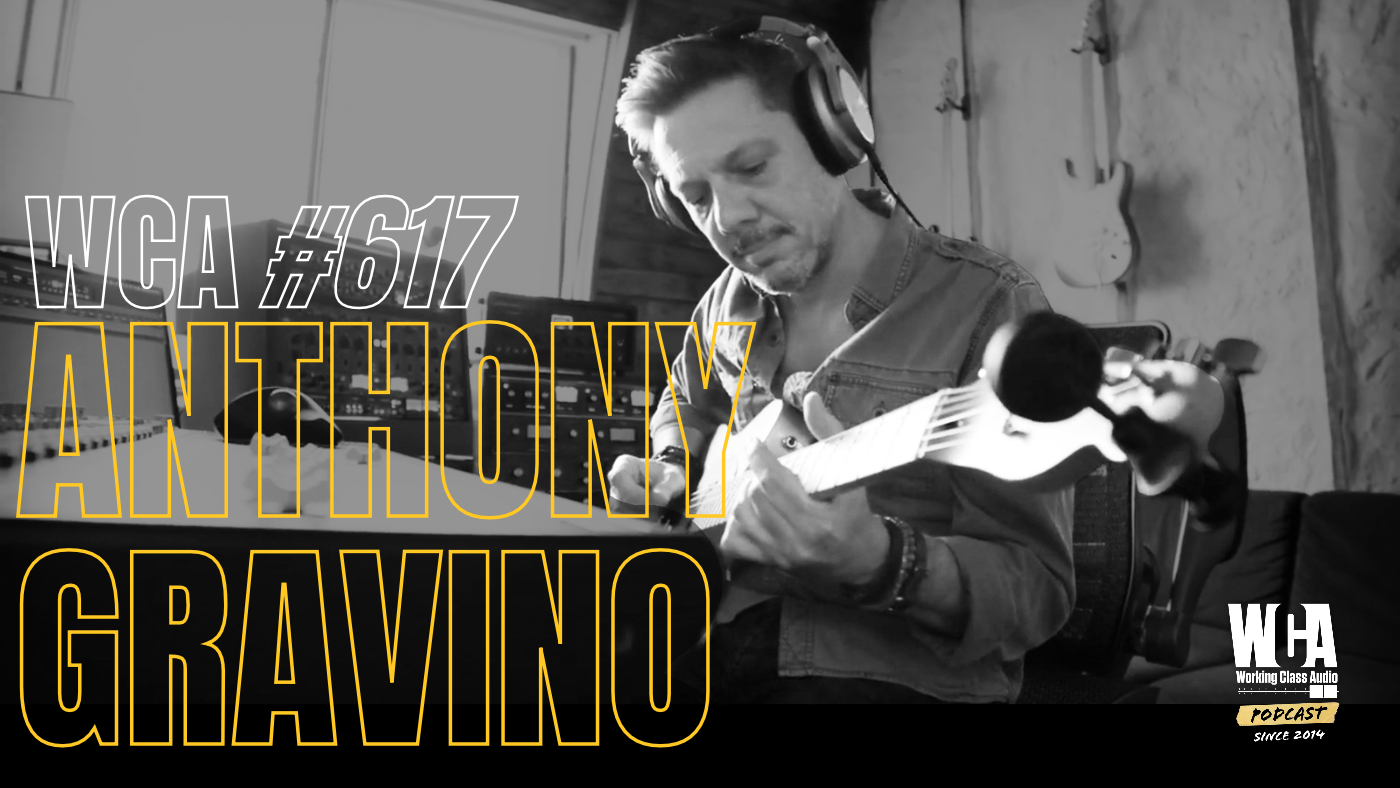
WCA #617 with Anthony Gravino: Leaving Chicago, High Cross Sound, and Building the Studio You Want to Work In
For episode 617, Matt welcomes back Anthony Gravino, musician and recording, mixing, and mastering engineer, nearly a decade after his first appearance on WCA 137 In 2020, Anthony sold The Drake, his Chicago studio of 14 years, bought a converted 1940s horse barn just outside Urbana, Illinois, and turned it into High Cross Sound, a 2,100 square foot studio and home. They talk about why he left Chicago, what drew him to the barn, tracking 14 straight days with Kurt Elling and Charlie Hunter three months after moving in, the Champaign-Urbana music scene, and the business side of owning, living in, and working out of the same building.
In This Episode, We Discuss:
- 14 Years in Chicago: The Drake Studio on Drake Avenue
- Why Anthony Left: Gentrification, Property Taxes, the Pandemic, and Seeing the Right Property at the Right Time
- The Old Horse Barn: 25-Foot Peak Ceilings, Curved Wooden Walls, and Listening to Drums Before Signing
- Building High Cross Sound: Control Room, Isolation Booth, and Wiring a Former Home Into a Studio
- Kurt Elling and Charlie Hunter: 14 Straight Days, Three Months After Moving In
- The Psychology of Vertical Space and Natural Light on Musicians
- Champaign-Urbana: REO Speedwagon, the Rose Bowl Tavern, and a Music Scene Bigger Than Its Studio Supply
- Moving During the Pandemic: Every Session Canceled in March, Perfect Time to Be Out of Commission
- Selling the Chicago Building After Buying in 2006, Financing at 2.5% Interest
- Dropping the API Console, Going to a Small Mixer and Outboard Preamps
- Keeping the Rate, Then Raising It When He Saw What Others Were Charging
- Isolated Ground, a Private Transformer Shared With Three Houses, and a Quieter Noise Floor
- Living and Working in the Same Building: Tax Advantages When 80% Is Studio Space
- Music Videos, University Work, and the Snowball Rolling Down the Hill
- The Pool: More Romanticized by Clients Than Actually Used
Matt’s RANT!: Your Mindset
Links and Show Notes:
- Anthony Gravino on Instagram
- Anthony Gravino on Bandcamp
- WCA Episode 137 with Anthony Gravino (2017)
Credits:
- Guest: Anthony Gravino
- Host/Engineer/Producer: Matt Boudreau
- WCA Theme Music: Cliff Truesdell
- The Voice: Chuck Smith
Watch on YouTube
Episode Transcript (click to expand)
Anthony, welcome back to the podcast. It’s great to be back, Matt. So let’s quickly do the state of the state for those who don’t know you. And we’ll get into the the background of you and the show in a minute. But who are you? Where are you and what do you consider yourself? My name’s Anthony Gravino. I am in Urbana, Illinois, Champaign-Urbana, Illinois, just outside of the town, in my studio.
And what do I consider myself? Well, I consider myself a musician and a recording engineer and a mixing engineer and a mastering engineer, sometimes a producer. And recently got to add actor to my resume, which is a hilarious story, but that’s not what I am. Yeah, I’m just a music maker. I think of myself awesome. So for the audience, Anthony originally appeared on episode 137, and as of this recording, that was nine years, two months and 19 days ago. July 31st, 2017 is when that was. So it’s good to have you back.
And I’m really interested to find out, you know, in almost ten years, what has changed, because I’ve watched from afar over social media as you’ve shifted into your new location. From your perspective, what took place between now and ten years ago? Quite a lot. Yeah. Well, then I would have been in Chicago. I had a studio there for about 14 years, and I made a ton of records there, and I also worked in a lot of other studios in Chicago land area and voice. Since then, I’ve made a ton of records with so many fabulous people, and in 2020, I sold the property in Chicago and bought a property just outside of Urbana, Illinois.
It’s an old horse barn that was turned into a house, and then I kind of converted it into a studio house. So I live here and I work here, and I love it out here. It’s been great. I’ve been here for just over six years now. In fact, I moved in two weeks ago, six years ago. So, you know, it’s come a long way. I did a lot of work on the building over a period of time, and I’ve got the studio to a place now that I really love in terms of functionality, sonics, vibe, just overall feel. It just feels like a really good place to work now. So that’s what I’m doing now. I’m working on records and I’m working on a couple movie soundtracks right now, which has been an interesting new adventure.
What drove the decision to sell in Chicago? You know, there were several factors. Timing is always everything. And at that point, I mean, I had been thinking about maybe making a move. I’d been in Chicago for 20 years at that point, and I was sort of passively thinking, maybe I need some new surroundings. I saw this place in an advertisement on the internet, and it was right as the pandemic was starting and my cat died and a lot of things — there was just a lot of the area that I lived in in Chicago had a lot of tumult around George Floyd. It was all about like all this stuff was kind of happening at once, and I saw this place and I thought, oh, that place looks so cool.
And I know Champaign-Urbana. I was in a band from here. And so I have a lot of ties to the community already. So I just came down here on a whim to look at it, and I saw it, and it was just great. I just was inspired and I thought, I’m going to see if I can do this. And, you know, my partner in the building in Chicago was also kind of ready to make a move. So we decided to sell it. And I bought this place and started rehabbing it and working on it and working in it all at the same time.
What was it about the building that really drew you in? A lot of things. First of all, it’s very unique. It has a lot of wood. It’s an old horse barn, so it looks very rustic. It’s not like a normal house. It has 25 foot peak ceiling and then curved wooden walls. And so there’s a nice sound, a nice natural sound. When I came to look at the building here, I asked a friend of mine who lives in town to bring over a little drum set, and I asked the real estate agent if I could put the drum set up in the room and just hear what drums sounded like in the room, and she said yes.
So we were in here listening to the room, and I just thought, oh God, this place sounds cool, looks cool. There was a good place to build a control room, which is where I’m sitting right now. This was just kind of a loft, but we closed it off and built walls and made it a control room. And then there was a place to build a booth right across from where I’m sitting right now. And there’s a pool and it’s like a half acre. So there’s a pretty big yard and it’s fenced in and there’s this really nice back area for people to just hang out. And it just had a lot of things. It checked a lot of boxes.
It needed a lot of work, but it wasn’t that expensive. And I don’t know, I just thought, okay, let’s do something different. And I haven’t regretted it. And you live there? I do, yes. Okay. So when you saw it, did you think, okay, well I can live there. Check that box. I can run a studio out of there. Check that box. And it can be this destination recording situation? Do people stay there? They don’t stay here, but they come here from other places and stay in the area.
Actually, there’s an awesome Airbnb, like a five minute walk from here out in the woods. And it’s beautiful and it’s cheap. And so I’ve had a lot of bands from Chicago come down and stay for, you know, several days and work here. And yeah, it is kind of a destination, I guess, especially in the summer when the pool is open. People really want to come here for a couple of days and just get away from whatever their situation is. Focus on the music. So it’s been good that way.
What’s the best way to get there? People just fly into Chicago and then drive over? Yeah, you can actually fly into Champaign. A lot of my clients just drive here because they’re usually from, you know, five hours or less away. So, you know, people just come to town, they’ll rent a spot for a few days and just record a chunk of a record or maybe most of the basics. And then we’ll maybe chip away at it over time with a day or two here and there. Sometimes I go up to Chicago and work on records.
So the whole environment is going to be radically different from Chicago. I assume? Yes, very much so, in a good way. I mean, I’m just much more relaxed here. There’s no traffic. It’s quiet out here. It’s beautiful. There’s a lot of woods right around here to walk around. And I love it. It was a downshift. It didn’t take me very long to get used to. I immediately felt just like this kind of calm come over me when I moved out here.
And yeah, I like it. The pace is just slower, but there’s a lot of great musicians in Champaign-Urbana and the surrounding areas, and I’ve discovered all these amazing musicians who are just around here that nobody in Chicago knows about, but they’re fantastic. And there’s a rich scene here. Yeah. And I only know of Champaign-Urbana because you say that, and I immediately go to an old friend who passed away. Mark Ruble, who had a studio there for a long time. He taught there for a long time and then moved to Nashville and worked with John McBride at Blackbird.
Can you talk about Champaign-Urbana from your perspective? It’s about 100,000 people between Champaign and Urbana. And then there’s about 60 or 70,000 students at the University of Illinois. So there’s a college town element to it, but there’s also this rich history of music and art. Bands from Champaign — REO Speedwagon is from here, Hum is from here, Poster Children are from here. A lot of great bands. And there’s a really cool music scene. There’s this awesome venue here called the Rose Bowl Tavern, and they have live music literally 365 days a year and two shows most days.
And it’s great. It’s got this whole scene around it, and there’s just a lot of players around here. A lot of really good musicians, and it’s a fun scene to be a part of. People are really cool. It’s not competitive or anything. Everybody just kind of works with each other and helps each other. It’s also very culturally diverse because the university is very culturally diverse. So for a small town, it feels much more cultured.
Yeah, I’m sure that there’s some elements of Chicago — the walkability, the places you could just pop out the front door and go down the street. But I’m sure in a college town of 100,000 people, there’s a lot of new things to get acclimated with. Yeah, I mean, it’s just a slower pace. Everything’s easier here. To do anything in Chicago is a pain in the ass, logistically. I love Chicago, I’m not bagging on Chicago. But for me to go to a show here, it’s like a ten minute drive, and I park right by the venue. For me to go to a show in Chicago, it’s probably a 30 minute drive and parking is a nightmare and traffic. And you don’t always know how long it’s going to take you to get somewhere in Chicago. There’s always a snag.
Do you think the property drove the decision making or did the area drive it? I think both. I mean, I wouldn’t have come to an area that I didn’t feel good about, and I’d spent a lot of time here and I felt really good about it. But I wasn’t looking for a house in Champaign-Urbana at the time. So I think it’s both. The property was definitely the thing that was like, wow. The wow factor caught my eye. And then the community was just like, well, yeah, I can live here. I like this place. And I knew a bunch of musicians here already, so it wasn’t like I was starting from zero.
Did you live in the previous space? I did, actually. Yeah. The best part about it is the commute. Yeah it’s cool. It’s also sometimes a little hectic, but I just kind of live music every day. Just being around it all the time, pick up an instrument, plug something in, it’s all right here.
When it comes to the gear and how you were going to set it up, did you acquire new things? Did you sell things? Did you try to have a purposeful shift in any direction? Well, the control room was almost the exact same size and dimensions as my other control room. So when I first moved here, I didn’t change really anything about the gear. I just brought the gear that I had there. I bought a couple mics because I was like, oh, now I’ve got this cool sounding room, and I didn’t really have a really cool sounding room before. So I wanted a couple stereo mics to do some room stuff.
But I did change quite a lot since I got here. I had an API console at the time when I moved here, I sold that, and now I’ve got a different setup with just a small mixer and outboard preamps. And I’ve bought and sold a few things here and there just over the course of time, a few different outboard pieces. But like the core of the equipment that I’m using now, I’ve had for like 10 or 15 years and it hasn’t changed a lot.
And then setting up the infrastructure of this place because it wasn’t a studio in any sense of the word before. It was a home. Correct. Yeah. So what changes did you have to make? I had to build a couple rooms. This one, we had to build two walls to enclose it. And then I built a small booth. It’s an isolation booth where I can do vocals, upright bass, amps, whatever depends on the situation. But I didn’t really modify the main big space very much because it already just kind of had this built in stage setup with a little bit of a riser for the drums, and it just had this setup where it was like pretty much there.
So I did have to run wiring — when we had everything open, we were able to just run the wiring that I needed, which was not a ton, but I needed to get a snake from this room down to the floor and those kind of things. But it was pretty minimal. It was just a couple of snakes that ran here and there.
Is it all one story or is it multiple stories? It’s two stories. I’m on the second floor right now. The control room is kind of up, and then the booth is up across from the control room, and then the main space is sort of right down below that. So there’s a big open area where it’s like the main room with the piano and the Wurlitzer, and where the drums and all the musicians would usually go. And then there’s a kitchen attached to that. It’s just one big space. It’s kind of a really open floor plan when you walk in.
Space wise, is it much bigger than where you came from? Yeah, yeah, the whole building is about 2,100 square feet. My old place was about 1,100 or something like that. Wow. Okay. I was making records in a very small area. I didn’t have any isolation. I was in the room with the musicians, and I just figured out how to make that place work. But it was so far from ideal. You know, it’s much easier here to make records.
Do you think that there’s a psychological effect on not only you, but also on the musicians — making music in a smaller place in a city environment like Chicago versus a bigger place such as this? Yeah. It’s different. It feels different out here. And there’s just a lot of natural light in here. And there is something to vertical space. I just feel like vertical space is inspiring for some reason, at least to me. When you’re in it, it just feels differently than being in a smaller space.
Yeah, I totally agree. When I go into places that have flat ceilings right there, you kind of feel like ducking down and you just don’t feel that expanse. Your first few sessions here — were they with people that you had made records with before? Well, so a couple were. One of the first things that I did after I moved here was I did this record with Kurt Elling and Charlie Hunter, and I did not know them at all when they arrived here, and they spent two weeks, 14 straight days. We worked every day for like ten hours on this record and I didn’t know them. That was about three months after I had gotten here, and there was still a lot of work being done on the place.
I was nervous about it. It ended up going great. And then there were a couple other things that I had that I just did with some friends of mine. I think when I first got things up and set up, I just invited some cats over that I know from town and was just like, let’s just record something. I just want to see if everything works and sounds good and start getting a sense of what the room sounded like. And it all went off well. It all worked great and I liked the sound right away. I had to learn some things about the sound over time, but it’s a cool space, it’s got a vibe and you can do cool things in there with the room sound.
That is interesting though, that kind of — oh, this is how this room sounds — kind of questions. Yeah, you kind of acclimate yourself to it and it doesn’t just happen right away. You have to start to hear trends and things where it’s like, oh, I’ve recorded the same thing in this room slightly different variations of it a few times and I’m getting this result. And you learn what you like and what you don’t like and where the nice spots are.
Can you talk a little bit about the whole concept of — hey, I’ve just met these people and we’re going to spend two weeks together. How does that go? That’s a great question. I just try to be myself and I try to have positive energy and show them immediately that I want them to feel welcome and at home. Yeah, I just want to make them feel relaxed and like not thinking about a studio, you know, just thinking about vibe and music and things like that. Just friendly. And I wanted this place to feel good. That was the whole point of this place too — it made me feel good when I first walked in the door. And as a musician, that’s a nice thing because you’re going into this place that’s foreign to make your art and you want to feel comfortable.
And it does. I mean, people walk in and they’re like, wow. I hear that a lot. And that’s good. It’s like, okay, cool. That’s what I wanted. I wanted people to feel inspired immediately when they walked in the door. Oh yeah. Those early reactions as a musician comes into the space. Wow. Oh, cool. Oh, nice. All those reactions. It’s an icebreaker, you know. A nice space that someone walking into — it’s just like an icebreaker without having to say a word.
Did you take steps purposefully to make people excited when they come in? Sure. Yeah. The aesthetics were very important. It’s difficult sometimes when you come into a space like this that’s got such a strong aesthetic, and then you start building new things inside of it — it can be difficult to match those things. So a lot of time and thought went into what we used everywhere in terms of how it looked and how it would sound. And I worked with this wonderful guy Tim Edwards, and he helped me a lot just to make aesthetic decisions that were pleasing, that matched the old 1940 horse barn, but that were also cool looking and functional.
Right. So there was a lot of consideration put into that. And I’m really glad that I did it, because when I first saw it, I was like, okay, we made this match. This new stuff goes with the old stuff. Yeah, because not every musician is seeking the purpose-built recording studio that shows up on the cover of a magazine to win an award for its design. Like, sometimes the funkiest of places just carry more weight and are more entertaining to be in than some of those more traditional spaces.
Yeah, I agree. I never really enjoyed being in those spaces as much as being in some space that seemed like slightly dangerous to me or whatever. You know, I always liked that. Like, nobody else can get this sound that we got in this one. And that’s kind of how I approach this place. It’s my aesthetic. And I do things just the way I like to hear them, you know. That’s something I’ve cultivated. It’s a symbiosis between how I hear things and the physical space of the building.
You know, I’m not a big fan of big changes, although I welcome them. I see the silver lining in them and the opportunities in them. But I get frustrated changing phones, computers, not to mention houses. So can you talk about the stresses that were considerations when you left Chicago and you came to Champaign-Urbana?
I remember this one night. I’d been here for a couple of months, and the place was a disaster — it was just a construction zone everywhere, dust everywhere, a mess. I had the control room, but that was the only little cove that was closed off, and everything else was just in shambles. And I was laying there in bed and I was just kind of freaking out. I was just like, wow, I think I might have made a mistake. I think I might have bitten off more than I could chew here. And then that subsided.
And you know, the first couple of years definitely tested me in terms of just living in this constant construction zone, because I did sort of one thing at a time, and it just sort of moved around the property. And there was always a mess and always something going on. So that was kind of stressful. I was a little nervous about leaving Chicago just because I’d been there for 20 years and had a lot of great friends and a lot of great music that I’d made there with great musicians. And I knew that I wouldn’t still get all the same sessions if I didn’t live in town.
So I thought, well, but I can do stuff with local artists down there and pick up the slack. And it’s worked out that way. It took a while. It was weird because it was September of 2020 and nothing was going on. And so it was a good time to move and be out of commission because nothing was going on. Like every session I had booked for that year pretty much got canceled in March. And so that also was one of the reasons that I decided to make the move. I can’t work. And if I tried to make this move in a time when I was busy, I would have like lost a couple months worth of work. Whereas nobody was working then. So it was a good time to move.
Did your expenses go down or did they go up? Oh, they went way down. What were some of the changes that took place in terms of just the business? Well, part of the thinking was that a lot of my work doesn’t matter where I’m at. Like mixing and mastering. I already had a pretty good amount of that work happening that wasn’t even in Chicago. So I knew that stuff wouldn’t change. And I knew there was a good scene down here, and I knew a lot of people down here. There’s not a lot of studios around here, so it didn’t seem like there was a glut of that.
I was prepared to be here for a few years and then it not work out, and then try to do something else, maybe even teach or play music again more or whatever. But it’s been good. The first couple of years I can’t really — it was the pandemic and everything was different then. Like my whole — I was doing so well. In 2015 to 2020 was a really busy, great time for me and the pandemic just kind of derailed all that. I had all this momentum and all these things were supposed to happen, and then they just all went away. So I kind of had to rebuild from there.
And it took a while for the dust to clear on that. And then things started picking up. I made some connections and I’ve done some work for the university now, and I’m continuing to do that. I really enjoy that. And I know tons of local artists now. I’ve made a bunch of records with local artists, and it just seems like it’s just slowly — it’s the snowball rolling down the hill. Yeah. One good thing about this place that did expand things a little bit is that people like to shoot videos here. There have been a lot of music videos and stuff shot here, which was not the case in my old spot. You know, it was just too small. You couldn’t even fit all the camera people in.
Were there things about the town that you didn’t consider as important that you realize later — oh, actually, this is really playing in my favor? I think just the fact that there’s not very many studios around here that can record on the scale that I can. Which is not huge, but I can record 7 or 8 live musicians all at once, very well, different headphone mixes — just the functionality of stuff like that. There’s not a lot of places around here that can do that. And jazz music, live jazz quintet, something like that — I’ve done a lot of that here because my space is set up for that. And I did a lot of it in Chicago.
That’s interesting. So the number of musicians and the scene seems bigger than what studios are available. Yeah, that’s a good way to put it. That should be a good criteria for most people picking a place to set up a studio. Yeah. Your odds of success go up a little bit there in terms of finances and rates.
Did you make changes to your rates since your expenses went down? Well, I kept my rate the same for about a year or two. And then I raised it because I looked around at what other people around here were charging and I was below, or the same as other places that I felt were not as cool of a facility. So I thought, you know — and that hasn’t really affected anything other than in terms of how much work I have coming in. It seems like nobody’s really bad at it. And I’ve had it at that level since then. Every project is different. I don’t even really think about it necessarily. I kind of just assess everything on its own and decide what it’s worth.
When it comes to the space itself — you’re living there. Did you set it up to where your living space is completely segmented from the studio space? Not really. No. I mean, there’s a bedroom that’s off on the other side of the building, but everything else is just kind of kitchen, main room, you know, everything’s just out there. I want my piano right there. So I just play my piano all the time, and I have a drum set just set up in the big room right next to the kitchen. So it’s very integrated. You know, it’s very just all one thing except for the bedroom, which is kind of set off and it’s a very large bedroom. It’s almost like two rooms.
Your studio partner in Chicago — did they come with you? No, no. He moved to like north of the city, almost up into Wisconsin, but not quite. So you both just completely divested from the building and went separate ways? Yeah. I mean, we still work together. He’s one of my best friends, but yeah, we just we were both ready for a change. We had the building for 14 years. It’s a long time. And the neighborhood had changed dramatically — gentrified. And I don’t really like living in gentrified neighborhoods. My entire time in Chicago was just like jumping, trying to land in the cool area and then it gentrifying, and then me having to run away from that and find another cool area and then it gentrifying.
Right, right. You know, when a shoe store moves in next door, you’re screwed. It’s a Starbucks. You know, once you see one of those, it’s all downhill from there. Leave the neighborhood immediately because your rent’s about to make a big jump. Yeah. And the property taxes — that’s the other thing about Chicago is the way that their property taxes are. It’s like you get reassessed every two years and they just clobber you, especially if you’re in an area that’s gentrifying fast. Your property taxes, your nut, is just — over the course of 14 years it’s amazing how much it went up. Our property taxes probably went up by four X in 14 years. Wow. Yeah. And obviously not the case in Champaign.
No, no. Much more reasonable. And I’m not even in the city. I’m in the county. So my property taxes are even less. But you owned the building there in Chicago, right? Yes. Correct. Okay. So as I have ranted on this show time and time again, if you own the building, then you have an advantage. When did you buy that building initially? 2006. Okay. So inevitably it went up in value a lot. It over doubled. Yeah. So you sell that building, you’re in a much better position to get this spot. Correct. Yeah. I didn’t have to do a lot of financing. And when I moved here, it was a 2.5% interest rate on the loan. Oh my gosh. So it was like the timing again — you asked me earlier what were the factors. There’s another one. It was like, man, I can borrow money cheap right now. And that to me was a big deal.
So winter time in Champaign. Tell me about that. The weather is a little nicer here. It’s just south. It’s about 2.5 hours straight south of Chicago. We get a little less snow. It’s not as windy a lot of the time. Not like night and day. We get really crappy weather, but it seems like it doesn’t last quite as long. Sometimes they’ll get snow and we’ll get rain because it’s just a little bit warmer down here. We get less snow for sure.
It’s okay. Still the Midwest. You see those seasons change dramatically there, which I like. I mean, I hate winter, don’t get me wrong, but I do like the changing of the seasons. I love fall, I love spring, summer is awesome. Winter you just kind of weather it for three months and it can be a drag. But sometimes, like the first winter I was here was really terrible. And then the second winter I was here, it barely snowed and it was in the 50s a lot of the time. So we get these, every year or two it’s like really mild winter, and then we’ll have a hard one and you just don’t know.
Were there any challenges to the property in terms of the usual things like foundation or water intrusion? Foundation, no. Water intrusion — had one problem with that since I’ve been here. Actually, it was this summer. We got some kind of — over the course of three days we got like 11 inches of rain. It was just insanity and a little bit of water got in and it was a little bit of a mess. It wasn’t terrible, but I got to figure that out. I think that’ll be a rare occurrence because that’s the most rain I’d ever seen in a short period of time. But overall, the building, the bones of the building are good.
The previous owners had not kept a lot of things up. A lot of things were outdated. So the kitchen had to get redone, the bathroom had to get redone. But the general bones of the building are very good. It’s built well, no foundation problems. Feels solid as a rock to me. Did you have to do any electrical updates? Oh, yeah. Tons. Yeah. We did tons of electrical work. Did you do anything special like isolated grounds? No, we did do an isolated ground. That’s only for what’s up in here. So all this is on its own circuit that has its own isolated ground.
But one of the cool things about out here — the power lines out here, there’s a transformer that comes off the road right over here. And it literally is a whole transformer that is three houses, and mine’s one of them. So I literally think that whole transformer is hooked up to three houses. My neighbors and me. So the power here has been very good. No noise problems. Definitely better than what it was in Chicago. Just the noise floor of everything got better when I got out here.
And I know that some of the younger people listening might hear these questions that we’re talking about and be like, what does that have to do with audio? Well, it has a lot to do with it because it’s all part of the broader ecosystem of everything. Speaking of which, your internet connection — seems like you have super solid internet. Yeah, no problem getting that out here. Or cell service. Fine. No problem. Yeah. Because if you have a great location, great studio, great spot, and the internet sucks — that can really be a problem. Oh yeah, holy shit. Yeah. I pay for a high level speed internet because I send a lot of big files and I receive a lot of big files. And having that really fast upload and download is just convenient. Worth it to me.
You mentioned your neighbors. Were there any challenges with the neighbors — the music guy coming in and setting up a studio? No, no, my neighbors are cool. I know them all. And their houses are all 150 feet away from mine on every side. So they don’t hear anything coming out of here. You know, it’s a light whisper outside when a drummer is playing — you can hear it, but it’s like, oh, I can sort of hear something going on inside. So it’s not like I’m making a ton of noise to them. There’s a pretty big buffer around me on all sides. And they’re all cool. They’re just Midwestern nice people. They think it’s cool. And they’ve been super cool to me. Actually one of my neighbors did a session over here. He came over and sang some songs with this piano player.
Were you transparent with what you were doing there? Yeah. I introduced myself to them and if they asked me what I do, I tell them. I don’t put it out there in the world like, oh I’m a recording engineer. But if somebody asks, what do you do, I just tell them. And they’re all just cool. Seems like it was a successful and very wise choice. I mean, I’m happy, and that’s what it was all about — trying to make myself happy. So yeah, if that’s the measure of success, then it’s been successful.
Did you change the name of the studio at all? Yes. The old studio was called The Drake because it was on Drake Avenue. And the new studio is called High Cross Sound because it’s on High Cross Road. So I’ve got two studios, both named after the street they’re on.
Are you open to other engineers coming and working out of there, or is it exclusively your domain? That depends on the engineer. I am open to it. There are certain people that I would absolutely love to have here working if they wanted to. I don’t seek that out. I don’t put this out there as like, come rent the studio. It’s sort of just like if you’re working with me and you want to work here, it’s part of the package.
I wanted to ask you this — are there any tax advantages or business advantages to having your home and your studio all in one? Yes, yes, because you can write off a lot of stuff that is essentially just your life. Because of especially in this space — it’s all about the amount of square footage that is dedicated to your work. And here it’s like 80% of it is studio space. So yeah, I get to write off a lot of things that people who rent a separate space can’t write off about their house. Yeah. And I’ll echo that because our accountant always asks, you know, have I expanded beyond this small space here that I work out of. And that is a consideration that if the listeners have not taken into account — if you’re operating out of your house, whatever space you’re using that’s dedicated to that task of music or audio business, you can write that off. Your electricity bill, the internet, all that is for the business. All my clients use the internet. The electricity runs all the equipment. So you get to write off portions of that based on the amount of space used for the studio.
Okay. My big question — and it’s really kind of a silly question. In the summertime, do your clients take advantage of the pool? Yeah, not as much as I would have thought. I think they romanticize it. And then they get here and we’re so busy that, you know, they’re trying to make a record. But some of them, yeah for sure. Okay. And I use it a lot.
Is there a plan in the future to make it more conducive to having people stay there? Or do you prefer to have that separation of like, okay, we’re working during the day and then you go to your sleeping spot outside of here. I like no too. Yeah, yeah. I think it’s just a little much to live with the band. I need my space at the end of a long day. I’ll just be better the next day if I have my own little space where I can reset.
Well, links will be in the show notes to the studio, assuming that you have a website. Well, not really. I mean, my Instagram is sort of my studio website. Okay. And it would also be awesome if you would post my Bandcamp link for all the music of mine. Oh, absolutely. Yeah. We’ll put the Instagram and the Bandcamp link. Audience, please check those out. Thank you.
Well, really great to have you back. And it’s such a cool thing. I’m inspired. I’m probably going to spend a little time looking at, you know, not only Champaign-Urbana, but online at other possibilities because you hear a story like this and you’re like, oh, maybe I should consider moving. Yeah. I mean, if you find the right place — I’m like you, I don’t want to be moving a lot. It’s a horrible experience for me. But when you’re feeling like a change might be good and you see the right spot — it’s all about timing to me. It’s all about where you’re at and then the right space. And then sometimes it’s like, hey, this could be an upgrade, you know. Well, great to see you. And thanks again for coming back on the show. Good to have you back. And I wish you luck and look forward to hopefully meeting you in person at some point. That would be fantastic, man. Thanks for having me. It’s always a pleasure to chat with you. All right man. You take care.