
 Apple Podcasts
 Amazon Music
 YouTube
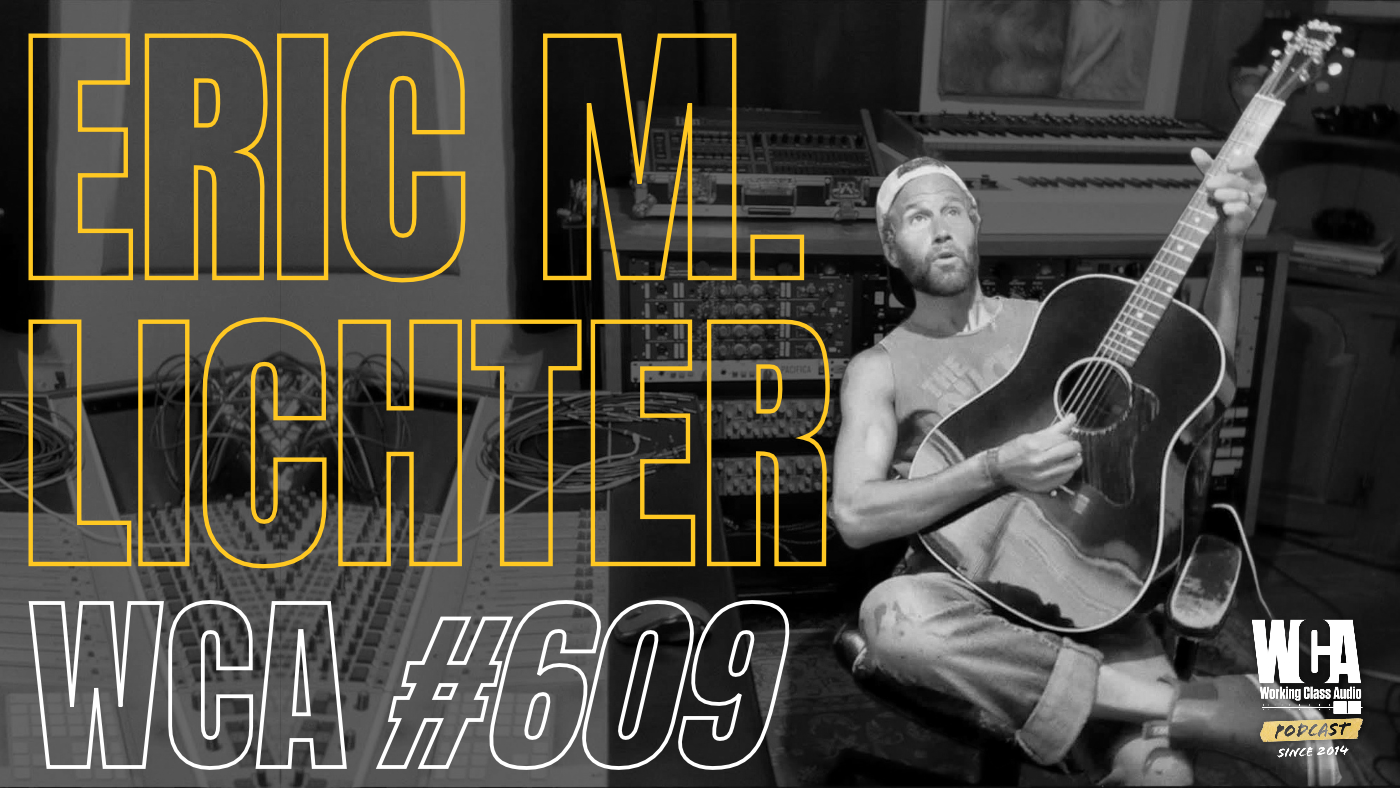
WCA #609 with Eric M Lichter – Martha’s Vineyard, New York, Connecticut, and the Beauty Marks That Make a Record
For episode 609, Matt talks with Eric M Lichter — multi-instrumentalist, producer, and owner of Dirt Floor Recording in Connecticut, where he’s been in business for twenty years. Eric came up singing in chorus, spent time on Martha’s Vineyard playing the Hot Tin Roof and landing in Carly Simon’s living room with Danny Kortchmar and Jerry Marotta in the liner notes, then moved to New York, recorded at Sear Sound on a Polygram AR’s dime, and eventually landed back in Connecticut to open a studio on a wing and a prayer in 2006. They talk about the Ed Wood approach to recording — get the vibe before the moment is gone — why he leaves the beauty marks in, pitching a studio to 90-year-old landlords, keeping a tight ship with bankers hours, vetting clients for energy, a proposal-based pricing model, and the Caribou Ranch mentality that has everyone leaving with fresh eggs from the chickens out back.
In This Episode, We Discuss:
- Twenty Years of Dirt Floor Recording in Connecticut
- Growing Up in a Sports-First Town and Finding His Voice in Chorus
- The Soccer Coach Who Changed His Life
- John Mayer, Keith Richards, and Goose — Connecticut’s Quiet Music Scene
- The Hot Tin Roof on Martha’s Vineyard — and Carly Simon’s Living Room
- Danny Kortchmar, Jerry Marotta, and Reading the Credits as a Kid
- New York City, Polygram, and Recording at Sear Sound
- Failing Guitar 101 in College and Trusting the Natural Thing
- The Troubadour Years — Singer-Songwriter on the Road
- Watching His Brother Make a Record With Jerry Marotta at Jarysville
- Discovering Tape Op and Saying Out Loud “I’m Going to Be in That Magazine”
- Starting Dirt Floor in Chester, Connecticut in 2006
- The Ed Wood Approach: Getting the Vibe Before the Moment Is Gone
- Beauty Marks — Why He Leaves the Imperfections In
- Why Real Music Is Winning Against AI
- Kids Discovering Van Halen and AC/DC on Their Own
- Ethan Johns, Jack Antonoff, Aaron Dessner — Who Inspired Him
- The Rented House That Became Dirt Floor’s Current Home
- Pitching a Studio to 90-Year-Old Landlords — and Winning Them Over
- Keeping Overhead Low — The Case for Renting vs. Owning
- Vetting Artists: Why He Turns Down Projects That Drain the Room
- Bankers Hours: 9:30 to 5:30 and Going Home
- Other Engineers Working Nights — The Studio Humming When He’s Not There
- Pricing by Proposal — Hourly, Day Rate, and Full Project Budget
- The Caribou Ranch Mentality — Full Hospitality for Artists Who Stay
- Everybody Leaves With Eggs — The Dirt Floor Signature
Matt’s RANT!: Getting the Job Done!
Links and Show Notes:
- Dirt Floor Recording
- WCA #363 with Chaz Root
- WCA #341 with Cynthia Daniels
- WCA #552 with Daniel Holter
- WCA #575 with Michael Beinhorn
- Tape Op Magazine
Credits:
- Guest: Eric M Lichter
- Host/Engineer/Producer: Matt Boudreau
- WCA Theme Music: Cliff Truesdell
- The Voice: Chuck Smith
Video Interview
Read the Full Transcript
Matt: Eric, welcome to the podcast.
Eric: Matt, thank you so much for having me. I’m a huge fan and I’m very excited.
Matt: I wanna give a shout out to to to Chaz Root for being so gracious to connect us because you know, in all honesty, you know, sometimes like I get to the end of a week and I’ve been working all week and I’m like, huh, I didn’t set up a guest and I ha I don’t have any stockpiles of guests. And so I reach out to Chaz. I’m like, Hey, Anybody you think I should talk to? He came up with with a couple names and you being one of them and you know, one thing leads to another and here we are talking on a Monday, the day the episode’s gonna come out. So I’m a little I’m a little last minute like that sometimes, so apologies.
Eric: I love it. I’m the same way. I’m an eleventh hour, you know, make shit happen. You know, and and I’ll and I think oftentimes some of the best shit does happen when you do it that way.
Matt: Yeah. Yeah. Well, so for everybody, including myself, who are you? Where are you? And what do you consider yourself?
Eric: well, my name is Eric Michael Lichter. I use my middle name because believe it or not, there’s another Eric Lichter in the world that makes music. So in order for me to, you know, carve out my slice, you know, and my identity, I started to just use my middle name. So it wasn’t, you know, it wasn’t because I I wanted to be a prima donna or anything like that. and I’m in located in the Northeast in New England, Connecticut. and
Matt: Mm-hmm.
Eric: I am a music a multi-instrumentalist. I am a multi-instrumentalist and a producer.
Matt: And you run a dirt floor recording there.
Eric: Yes, I run a studio called Dirt Floor Recording and Production and I’ve been in business now twenty years.
Matt: Wow, and this studio is located where?
Eric: my studio is currently located in the Connecticut River Valley part of Connecticut, near Middletown, near Wesleyan University.
Matt: okay. And and is it tied to your home at all or is it independent of your home?
Eric: So the studio itself is independent of my home. It’s in a different location entirely. In fact, I have to drive to work every morning and then drive home, which is nice. It’s nice being able to have the separation, you know, of those two things where you know, I wake up in the morning and think about what my approach is gonna be for the day. And the drive in, I start to sort of pregame. You know, thinking about how I’m gonna approach the session. And then in the drive home, I think about, you know, well, dinner, being home, dogs, you know, my wife, all of those things. so it’s the coming down part. I think it’s a necessary thing.
Matt: Yeah. Yeah. Well let’s come back to the creation of the studio and and the the origin of that in itself because that’s always a I I find that to be a fascinating conversation to get into, but let’s go back to to early days. Where did you grow up?
Eric: So I actually grew up in Connecticut. I grew up on the shoreline. And music was a big part of my upbringing. My parents had this great selection of records. And I remember the Frank Zappa section. My dad like forbid us from listening to the Frank Zappa records. You know, we were kids, it was the 80s. And you know, those records were, you know, certainly for the time, or even before that time, maybe. You know, a little X-rated, right? But I discovered those Zapper records anyway. And I was like, man, this shit is really good. But they also had, you know, the Jackson Brown and the James Taylors and the Crosby Stilson Nash records. And those were the things that somehow resonated with me. And our parents were very supportive of us. And so music was the kind of thing that took hold very early on, where I was about 17. And I pretty much knew what I wanted to do at that at that time.
Matt: Interesting. And Did you discover those Zapper records because you s you did what he asked you not to do, or did you discover them independent of his collection?
Eric: Well, you know, when any when someone tells you not to do something, you want to do it, right? And we know as parents, right? You know, it’s the same, you know, it’s it’s it passes down. So he just said, you know, don’t go near these. And so those were naturally the things I wanted. And the album covers themselves and the song titles were totally bizarre. And I just remember, you know, it was more Zappa than it was Steely Dan for me. Yeah, I don’t listen to much Frank Zappa now, but at that time it was a pivotal moment. because I I went so far into the rabbit hole on on those records. And I started to listen to the musical components, the parts, the like the the marimbas, you know, on those records and just the way those of records were put together, that it kind of changed.
Matt: yeah.
Eric: The way I listened to music then.
Matt: Interesting. Okay. So what did when you when you listened to the the music that your dad had, was there a drive to play an instrument? D did any particular instrument stick out as, hey, I want to do that.
Eric: Yes, definitely. So as a teenager, I discovered aside from the I’ve stressed I’ve stressed the Zappa stuff a lot. And it and as as important as that stuff was for a moment in time, it was really the first Crosby Stills in Nash record, the one with the three of them on the couch. That record changed my life. to where it’s you know, it still like permeates my being, you know.
Matt: Mm-hmm.
Eric: in fact, there’s a song on that record called You Don’t Have to Cry. And it’s just the three of them singing, and it’s very simple, and it’s my favorite song of all time to this day. but to answer your question, it was it was the Hammond organ. And I’m not a great keyboard player. I I’m a passable keyboard player. I play a lot of keys on a lot of records. but in listening to those Crosby Stills and Nash records, and reading the liner notes, I realized that Steven Stills was The guy that played the majority of the instruments on that particular record. In fact, he was called Captain Many Hands on that album in the liner notes. So it was the sound of the ham and organ. I was really kind of mesmerized by the Leslie speaker and like what that thing did. You know. So it started out, you know, his guitar was the first thing. And And I started to kind of play bass because again, Steven Stills played bass on those albums and Joni Mitchell records and then the Hammond organ. So little by little I started to learn how to play different instruments just to be able to put it all together. But I didn’t know that that would serve me later in life, you know. It was sort of a means to an end because I didn’t really know. All the drummers and the musicians and the guitar players I knew when I was a kid were listening to like Poison, you know, and Motley Crew and, you know, stuff I wasn’t really into at the time. I’ve always been a hippie, I suppose. So that stuff didn’t interest me as much as the stuff I I grew up on.
Matt: Okay. Your exposure to other musicians and in a music scene was was there much of a music scene there where you grew up?
Eric: Ultimately there was. when I was a teenager, not so much. It was a very kind of it was based around athletics, you know, so certainly as a teenager. and then I discovered I could sing. So I I you know my I we had a soccer coach. This soccer coach also taught chorus and music. Great guy. I still talk to him to this day. He changed my life. made me feel valued, you know, and that I had something to offer. So he recognized that I could sing. And so you know, he drafted me for the chorus and I sang in the chorus and I was in the plays and I did all of these things that a lot of my friends who were like, you know, in metal bands and stuff, they kind of frowned upon. You know, they were like, man, that’s like some real lame shit you’re doing.
Matt: Mm-hmm.
Eric: But it really made me feel connected to something, you know, like, I’m really good. I can sing. Like, I I guess maybe this is my calling. This isn’t such a pie in the sky thing after all. And fast forward many, many years, I mean, I had even left the area, but this area is now really known for its jam band scene. You know, we’ve got goose comes out of this area. And there are a lot of a lot of great artists came out of Connecticut. I mean, Keith Richards lives here, so that’s a cool thing. I always figure Connecticut can’t be that bad if we get Keith Richards. John Mayer is from Connecticut, and you know, on and on and on. but I still, you know, you still, when you’re growing up, you still have to leave. You know, you still have to leave. And at that time in my development.
Matt: Wow, I didn’t know.
Eric: You know, John Mayer was still like a zygote at the time. You know, a lot of these these people weren’t here. So I went off, moved around the country, lived pretty much everywhere there was to live. And I I’m probably putting the cart way before the horse now. I’m getting ahead because I still want to kind of get to the development of of where dirt floor came from.
Matt: Mm-hmm. Yeah, yeah, but but that’s interesting. What w what places did you go and what was the goal in going to these places? Were you just exploring and trying to find yourself?
Eric: Okay, so yes. Yes. So post high school, I tried college, it wasn’t for me. so you know, I was not an academic, you know, I didn’t respond well to it. In fact, I failed guitar 101 in college. You know, I I could I was so poor in college that I failed the thing that came so naturally to me. But the thing, Matt, to understand, and I know that you know you have this, and so many of your guests have this, it’s it’s this thing that’s in you, like you either have it or you don’t. Sometimes you can go to school for it and you still don’t have it, you know. no amount of money that you spend in a school environment is going to give you something that you have. And so, you know, I felt like I had this natural thing, it just came easy to me. And So I went off to kind of figure out who I wanted to be. And I this recording thing was far off. So far off, you know, years from even happening. I knew I could sing and write songs. I really got into being a songwriter and a singer. So in my twenties, I started to do the troubadour thing, you know, the singer-songwriter thing. And I lived on and off on the island of Martha’s Vineyard. Off of Cape Cod for many years, and my brother too. And we had, and it’s a very the island is so rich with musical culture. You know, of course, you’ve got, you know, James Taylor lived out there, Carly Simon to this day lives out there. And so me and my brother fell in, in fact, with with Carly and James’s kids, because we were working at this nightclub out there called the Hot Tin Roof.
Matt: Mm-hmm.
Eric: Which was a c nightclub that James and Carly bought when they were married. I think they opened it. And they certainly, and they at that point had been divorced for many years. But Carly took a liking to us. She heard me and my brother sing, and we would go over to the house and kind of hang out. And it was kind of a surreal thing. But in my mid-twenties, I felt like holy shit, I’m in this, this is like some cool shit. For a kid. I’m among my heroes. And my heroes were the people that made up those records. So we’re talking Danny Kortchmar. We’re not talking about like Carly was wonderful and very gracious and incredible to us. But the people that like blew my mind were the musicians. So we had done a bunch of recording with her. A lot of that stuff remains unreleased. But she had like Danny Kortchmar, Jerry Marotta and Rick Marotta, a T-Bone Wolk who played with in the SNL band and with Hall and Oates. All these great musicians that were like in the liner notes of all of these other records that I remember, you know, looking at the those credits as a kid, you know, James Taylor, Jackson Brown, Don Henley, and so on and so forth. At that, that was the moment in my mid-20s where I felt like, you know, I I this is this could be a thing. You know, we’re like rubbing elbows with these really great people who seem to like us, who seem to think we’re like pretty good. You know, especially.
Matt: Let me I wanna ask you though in in that in that situation, did you see yourself on the supporting musician side or did you see yourself on on say the Carly Simon side of things where you you wanted to be the star?
Eric: I didn’t know. I didn’t right there, Matt. Let me tell you, there’s never been a point in all of my years on this planet where I’ve ever suffered from any delusions or illusions about what it is, what it is I wanted to do, and what it is I do to this day. You know, and I feel like that’s probably protected me to some extent and also been the The thing that has allowed me to continue to evolve in this business that is constantly reinventing itself all the time. So we’ll go back, I’ll answer the question. So I at that time really wanted to be an artist. I was a songwriter and a singer, and my brother was in school. My brother was at the New England Conservatory studying jazz vocal, and he’s tremendous, even better than I am, actually, as a musician. His life took him other places. But we really wanted to be artists. It’s what we were, it’s what we were recognized as out there on the island. And then we went out to California and I was in New York for several years, and I was really like pounding the pavement, you know. So I left the island and I went to New York City, right? With this great experience under my belt and this great and these great friendships, okay, with, you know, the Marathas, Jerry, who I haven’t spoken to in many years. Those. relationships opened up a lot of doors by the time I got to to the city. So I was playing and I was singing and I’m not a prolific guy, but I wrote some good songs, some songs that got some attention. And so you had we had some people from Polygram, which was also Island Def Jam. It was like sort of the Polygram was the the umbrella at the time. Which also had Island, Def Jam, Capricorn, AM Records, Verve. There were all of these little labels. And so Mercury was one of the labels, another label. And the AR, one of the AR people there, took an interest in what I was doing. And she put me in a studio. I went, I got to record at Sear Sound.
Matt: yeah.
Eric: So keep in mind, I I know nothing. I don’t care about this stuff. This is 1990, 1998. Studio stuff is still like a foreign concept to me. I’m just this dude that writes and plays guitar and I’m I like sing songs. And so they foot the bill and they put me in a studio and I record a handful of these songs with session musicians. So I’m thinking, shit, this is working. Like I’m gonna like. It’s really starting to happen for me. And there was no like, there was no Instagram. There was no like, I couldn’t like document every minute of my of my time going through that. It’s all here now, you know? So long story really short, that was a that was a short-lived moment in time where labels would would sign these acts to demo deals, right? And they would put them in a studio, they would record a batch of songs.
Matt: Yeah.
Eric: Going as far as to even create artwork and to kind of get to, you know, talk about the next thing. Next thing you know, the record company is bought out by the Seagrums Corporation, which are the wine cooler people. And they’re like, drop everybody, like get rid of everybody. You know, we’re starting a whole new thing here. So we want to basically only work with the artists that are proven entities, right? So as quickly as it all happened for me is as quickly as it all went away, right? That was my shot. And the AR person who still remains a friend to this day, she took pity on me because there was a a little bit of money that came my way. That was in the days of like they would give you some money. And I got a little enough to be able to buy some equipment. I’m I’m trying to kind of get there quick enough because we’ve got a lot of ground to cover.
Matt: Yeah.
Eric: I bought some recording equipment. So my parents were still in Connecticut. There was a pro audio dealer in Reading, Connecticut, by the name of Turner Audio. And I had a a friend of mine who now works for Sheps Mics. His name’s Scott Boland. Great guy, great friend. He worked there and put together a package. My dad, my parents, who were again very supportive, gave me the 10 grand I needed. To put together a small like project studio in the basement of my parents’ house in Connecticut. Because I had to give back the money that like I owe I owed the record company this money back. So I had to kind of give that back. The Lord giveth, right? And the Lord taketh away.
Matt: man, yeah.
Eric: And there’s more on that side of things too. So my my my dad helped us out and we put a little studio in the basement in these little road cases, these little SBK, pretty cheap road cases. I had a preamp, which was an HHB radius, very like not expensive stuff, two DA38 machines, a Neumann 103, and a Mackey. Like really the most basic but functional shit you can imagine.
Matt: Okay. And very, very of that time, the modular digital multitracks, the Mackey boards, like all and and like you say, the H H B stuff, you know, very, very of that era.
Eric: Yeah. Not a com no compressors, nothing, you know, just the basic stuff necessary. So I had two, two of those Task Am DA38 machines, and it was at at our parents in the basement. So when we would go home on weekends, we would mess around on that stuff, right? Yeah, my brother would go home and mess around on his own, or I would go home and mess around on my own, or we would mess around together. It was just there.
Matt: You and your you and your brother.
Eric: And there were there were actually a few years where it wasn’t touched ever. And so what happened was I was working for the record company, and then I had and I was hit by a car outside of my apartment in Brooklyn Heights. You know, bad enough to where, like, you know, I was hospitalized, but I wasn’t in I wasn’t in danger of dying. But I but what happened was is I had a lawsuit with the driver of the car.
Matt: Like how bad are we talking?
Eric: because it was a trash pickup day and it was, you know, Brooklyn and New York and those boroughs, they get very clogged on trash pickup day. Everything grinds to a halt because you’ve got the garbage trucks and the car, it’s it just becomes very congested. And I was in front of my apartment crossing the street, and this car, you know, didn’t want to wait and, you know, put it, it jammed the car in reverse, hit me in reverse, hitting me in my back, throwing me about 20 feet.
Matt: Uh-huh.
Eric: Yeah, and that’s, you know, it fucked me up for a while, like so much that it created you know, there was a little bit of like sort of post-traumatic stuff going on. And anyway, I recovered from that and I was able to, we had a little lawsuit with the driver. And I I’m not a litigious person, but that needed to happen just so I could cover all of my stuff. So I was actually on disability.
Matt: Absolutely. Right.
Eric: from the record company. So I was able to get paid disability from the record company, who I had to pay back.
Matt: That’s interesting. Were you were you still technically signed to the record company?
Eric: No, no, no, no, that happened. I mean, that that was at least a year in the past. So they had hired me to work for them to sort of work off some of the debt. So the AR person hired me to work at the record company. So I worked in the royalty administration department where they were paying me every week, but would garnish my wage to put it towards the debt.
Matt: My gosh.
Eric: Yes. So after this accident, I was able, this is what was, I hope this makes sense to the listener. So after this accident, I was able to make enough money to be able to pay back that debt to get them off my back and to be able to buy and pay back my dad for this studio equipment. So I was free and clear at this point. I was sort of a free agent at this point and I didn’t know what I wanted to do. Honestly, I wasn’t sure. And this go, this is 2000. Okay. I wasn’t sure I wanted to even make music anymore. I was really like seeing the way it was run through the record company and going through this sort of life-changing experience. I wanted to just travel a little bit and just kind of forget about it all, right? So I went out to
Matt: That’s that’s a that’s a pivotal moment, right? Because you’d been hit by this car, you’d you had to work for the record company to pay off record company debt.
Eric: Yes. Matt, this was the moment. This was the actual moment. Okay. So I remember it happening. So my brother was in LA at the time. He’s living in Santa Monica. And he’s living with this kid that he went to college with. They were real they were in a band together. And so this kid’s dad was an engineer. He recorded he was the one of the head engineers at the record plant in Sausoled. He was a guy that engineered all the cheap trick records. His name’s Gary Ludinsky. So Gary, awesome guy. Gary actually was the guy that did the whistle on the Mar on the Molly Hatchet flirting with disaster song. There’s a period where there’s a whistle, the that’s that’s Keith’s dad. So my brother’s out in LA, he’s hanging out with Keith, and Keith is a jazz head. So my brother put together this band with Keith, and they’re all New England conservatory cats, right?
Matt: shit, that’s funny.
Eric: So they put together this band called Barnstorm and they go back out to LA to make a record. And so my brother calls me. He’s like, hey, we’re out in LA. Why don’t you come and join this band? You know, we’re having a blast. You know, Keith’s dad is awesome. So by that time, Keith’s dad, Gary, had, you know, started his own company in Burbank, a pro audio rental company called Design FX Audio. You may remember it, you may not. So we would go to Burbank to work on this record. He had a mobile truck, which had an API in it, and a bank of DA38 machines. Again, this is like 2000, right? So that was like everything was so awesome. And he had a bank of these things. And I remember Gary’s warehouse was all studer machines and like all of this stuff. That I didn’t appreciate at the time because I still didn’t care or really it didn’t register to me what what this was, you know. So we were out there for a while, and then I came back east and I started to think, well, you know, maybe I’ll work on my own record. You know, I spent some time out there, it didn’t really happen. And it was time to come home. And so I moved back to New York City, the scene of the crime. And I have this equipment at my parents’ house. So this would be 2004. I’m kind of like kind of trying to get through the years here. 2004, I buckle down and I start to work on a proper album for myself. So I bring a lot of that gear at my parents’ house to my apartment. And I start to record a record called Corduroy, which was ultimately the title. And I play everything on this record. I play drums, guitars, keys. Everything. And you can hear my dog barking, you hear the dog collar. And I put this record out. I released it. Joe Gastwort, who did a lot of mastering of a lot of classic albums, Grateful Dead records, Joni Mitchell, and stuff like I had him master it. And this is still early, this is pre MySpace and Facebook and Instagram, you know, like some of those names still mattered at the time. You know, there was still some clout there. So it’s like, well, I want this guy to master it because he did these things. So somehow being attached to this guy, I’ll it’ll give me some clout somehow, you know. So I released this album. I put it out on a small independent label out of Woodstock, New York, and a lot of people like latched on to this record, and people started to ask me to do their record for them. So this was the pivotal moment.
Matt: Mm-hmm.
Eric: This crosses over into about 2005, 2000, and I was back out on the vineyard around this time, and I have my gear, all my studio gear. And so dirt floor was wherever I brought it. Okay, so the other f the important part of this whole story is that dirt floor isn’t really about a place. It’s never been about a place. It’s always been about what I’m doing with an artist. You know what I mean? And so on the vineyard, once once I was back out there, I’m dragging all of this gear around recording artists wherever they needed to be recorded, in a house, in a hall.
Matt: Right. C yeah, can I could I ask because it from my own curiosity, Martha’s Vineyard, you know, so I I think the average person and including myself just associates that as well, that’s just a a place where a lot of very rich people, celebrities live and and and people are just hanging out. And I’m sure that there’s, you know, a whole working class of people that, you know live and and maybe they live outside the island and they come to work on the island at at grocery stores and coffee shops, et cetera. So can you talk about like the opportunities for music on Martha’s Vineyard for a brief moment?
Eric: Yes, yeah. Yeah, absolutely. You know, I I’m definitely not an authority now because it’s been so many years, but I’m still very close with a lot of people who have made music out there or who have you know, or or there it’s the home base for them. so you know, you’ve got like Evan Dando from the Lemon Heads out there. you have there’s endless amounts of people, Willie Mason, great engineers, great producers. it is there are six distinct towns on this island. It’s big enough to where you you’d feel like you’re on the mainland. and in the wintertime, the you know, your summer population leaves and you’re left with, you know, the the winter, the folks who live there all year round, you know, who are basically just waiting for summer to basically service the the the rich and the famous, right?
Matt: Right.
Eric: But it is a great place. There’s a great studio out there. You know, I’ve got a friend named Jim Parr out there who’s had a a studio out there for near to 30 years. Parr Audio. You know, he’s done a lot with certainly with Carly. He does a lot of you know, audiobooks, you know, if you know, any big musicians or happen to find themselves out there for a length of time, they’ll go out, they’ll go to Jim’s place and work.
Matt: Mm-hmm. And and question, did you ever run into Cynthia Daniels? She was on episode three forty one. I think she runs a studio out there.
Eric: I haven’t, but I know who she is. Yes. Yeah. Yeah, I do. I know who she is. and and there’s a lot of that. Again, you know, it’s it’s not far from the mainland, but it’s far enough. so you know, being out there was a great thing because again, I was able to reconnect with a lot of the people that I lost touch with, you know, and
Matt: Yeah, yeah, ’cause she I think she’s from Stanford, Connecticut. Yeah.
Eric: I start I made this record of my own. That record started to make its way into people’s homes, okay? And People would start to ask me if I could do, could I could could you do this for me? I was like, well, yeah. I mean, I could show I could give it a shot. So I would start to work with artists, various artists. Some have gone on to do great things, some of them have disappeared, you know, into the mists of time, you know. And I would play bass and I would play drums. I would put organ and whirlitzer and harmonies and whatever I I felt the song needed, right? And so we would build the songs up. And I didn’t really realize that what I was doing was producing. I was like years off from even, you know, calling myself that. But that’s apparently what I was doing. Because people would be like, okay, well, you produced it because you helped me like with lyrics and you helped the tem you helped me pick out like you change chords if we needed to change a chord to make it more impactful.
Matt: And so you there you are with this set of talents, musically speaking, and then this set of gear that you can move around. Were you going to different people’s homes?
Eric: Yeah. Yeah, you know, at the time it it was a a kind of a a movable thing. because I wasn’t thinking of a studio. I I had no thoughts at at that early point, like 2004, 2005, to having any kind of a a real studio per se, you know, like a home base. It hadn’t crossed my mind. And then I I I met a person who would become my wife. later on and then ex-wife later on, but we’re still close. It’s all good. But we had we had our daughter. She had our daughter. And it was time to kind of think about, you know, shit or get off the pot was really kind of the message that was being sent to me very clearly. And I knew that I wanted to stay in music because I I’m not good at anything else. And I knew I didn’t want to just be a singer and a songwriter anymore. I mean, the writing was on the wall for me, where it was like, okay, you know, that’s you’re not gonna be the next James Taylor or Jackson Brown. That’s just not gonna happen. I’m not prolific. I’m not hungry enough. I’m just not. I I I can’t live in a van and just live on the you know, I’m not cut out for that. I’m too practical. I was raised by a very you know, my dad’s a very practical guy, and so In order for to make this thing work for me, it’s gotta be practical. I have to kind of be on my terms, you know. So we find a space in Chester, Connecticut, not far from where I am now. We find a rental. And it’s like, okay, I’m gonna find a a place and we’ll put this studio and we’ll call it a we’ll pick a name for it. What’s a a good name? And so we came up with the name Dirt Floor, and this would be 2006, March of 2006. And I think it was the early MySpace days. It’s right around there. And so I believe I started to advertise on MySpace for my business. You know, I got an LLC and everything, and you know, hung my open my open for business sign. And little by little business started to trickle in. And I destroyed a lot of people’s work, I’m sure. But I have to tell you, you know, it was a learning, you know, I was learning, they were learning, you know, what do you want? I’m charging them a couple hundred bucks a session. You know what I mean? It’s we’re all going through it together. But it was the beginning of something. And it was the beginning of me really realizing that, hey, this there’s something here. I don’t know what it is, but I think I found my place. And I wanna go, I wanna go back a little bit before that. And I don’t want to give you too much to have to edit because I don’t want to drive you nuts with it. But back in 2005, before the studio was even a thought, my brother was up in Woodstock making his record with Jerry Marotta. He was in the j in the studio with Jerry. And at the time, Jerry had a studio called Jarysville. This was before he this was before Jerry took over
Matt: Okay.
Eric: What is the place in Kingston? Dreamland. So Jerry Marotta took over Dreamland Studios in Kingston, New York, which is an incredible studio. It’s legendary. And Jerry himself, who I have not talked to in many years, is just an incredible engineer and producer. So my brother is working with him at his studio. He’s got Tony Levin on his shit. You know, it’s like the Peter Gabriel rhythm section. So let me tell you, I
Matt: man.
Eric: I learned a lot of lessons from watching my brother make this record with Jerry at his place, Jarysville. So I go up to visit my brother at Jarysville to add some background vocals, and he’s got a stack of this magazine called Tape Op. And I’m like, man, this magazine is so fucking cool. Like, I just love that you can go back to previous issues, and it’s like a tome. It’s like this thing that. No matter how many times you go back to it, you find some new incredible information. And it spoke to me, especially at that time in my life, you know, being a sort of a gorilla style record maker. You know, I remember saying out loud in the room, I was like, I I’m gonna be in this magazine. I I wanna get in this. And Jerry was laughing because he’s like, You’ll never, you don’t know what you’re doing. Like I think he was he was being facetious. He was like, you’re never gonna get in that. And at that time, I think they had done the Tape Op tape op had done a piece on Jerry. And I was like, I was like, listen, asshole. I was like, I’m gonna be in this fucking magazine someday. And it was kind of a loose goal, you know what I mean? Come to find, you know, back in 2013, they finally did a piece, you know, of like a proper story on what I do. Which was funny because I didn’t have very much gear than what I had early on. I I had a couple of you know, a bigger mixing desk and a and an analog tape machine and a radar, the Atari radar. But I really had nothing when Tape Op did the piece on me in 2013 because it was never about the stuff. You know, and this is what I was telling you before we started to roll. My job as a producer and what I do day to day has very little to do with my knowledge or lack thereof in this equipment that’s behind me. You know, I have a very working knowledge of it. I I’m really a musician. I’m really trying to get the vibe and get, you know, and get the energy down. You know, the rest doesn’t matter to me as much. You know, I’ve got a great engineer. And a partner now who works with me, who really is a fantastic engineer who make who cleans up my shit. Okay. He’ll go, man, like there’s all this noise. What the hell did you use? I’m like, I don’t know, whatever was closest. That’s kind of my thought. Like, let me grab what’s closest to try to capture the energy if I can, before the energy or before the moment is past.
Matt: Right. But you know how to do it. You just, you know, t to wear both hats sometimes is just uber uber challenging.
Eric: Yeah, and I’ve never enjoyed it. Yeah, I’ve never enjoyed it though. I I remember do you remember that that movie Ed Wood? I always felt like, you know, to explain to someone what I do. I’m like, watch Ed Wood. I’m like, I’m that guy. I’m like, that’s good enough. Let’s go. I mean, I want to capture the vibe and the energy. I want to make sure the take’s right. But from this perspective, it’s like, you got the take. The take sounds great. That guitar solo kicks ass. I don’t care that like your belt buckle scraped it or that there was some weird noise or something. You know, to me, that’s the beauty mark. And in this,
Matt: Right.
Eric: And now, like here we are in twenty twenty six and we’re battling AI, which I know people are already tired of, thankfully. I feel like we’ve reached a sort of a place where people, regular people who aren’t like us, are tired of hearing about it. They want real interaction, they want real noise, they want real
Matt: I’m just I’m just actually tired of people talking about it. It’s just like all anybody can ever talk about.
Eric: I’m tired of it too, yeah. There’ll be a point where we won’t. I think, you know, it’ll be like anything, but but what’s great now, and I and we both have kids, you know, you know, I know my daughter loves real music. She loves, you know, all the classic stuff, you know, because it’s made by real people. So, you know, my goal back then as it is now is to, you know, make music that just feels lived in. It feels timeless, I suppose.
Matt: Mm-hmm. Yeah. Well, you know, I I won’t go down an AI rabbit hole and and I don’t want to sound like an old man either, but like I was just on a I was just visiting my parents in New Mexico and my kids came with me and I look over my twenty year old sitting to my left and I look at his phone and what he’s listening to and I see the cover of Van Halen One. I never showed him that record. He discovered that on his own. And I was I I was asking him, it was just like so, you know, what do you like about this? We got into a conversation about it. And I said, You don’t know how happy that makes me to see you listening to that record. That was an important record for me growing up. But I digress to a degree. so
Eric: Yes. It’s listen, I I understand that. I, you know, you’re and again, you get you get to sort of live hear that record for the first time through them. It’s an amazing thing what that will do to you when you when you see your child, you know, listening to something that you did not, you know, you did not try to influence them in any way to make that decision. You know, you’re able to kind of revisit that as if for the first time. And there’s a it puts a new spin on that on Van Halen one, certainly. You know, I’m I’m the same. You know, my daughter discovered ACDC, the early Bon Scott stuff. And I’m like, you know, like what is it? Live wire. In fact, we were driving in the car fairly recently and live wire comes on, right? And you know, there’s the beginning of the of the song and you hear the tubes rattling and the amp. You can hear it. I’m like, honey, I’m like, listen. I was like, nowadays they would try to clean that.
Matt: which which I love. Mm-hmm.
Eric: They would try to get that s they they don’t want that sound in there. It’s like that’s what makes that so magical is you hear all of it. You know, I got so excited, you know, you can’t show your excitement too much because then, you know.
Matt: I d I know, but I do like what you you just back to what you were saying about, you know, noises like that, things like that. The beauty marks.
Eric: Yeah.
Matt: You know, th those those little characteristic things. The ca whether it’s and and and I keep reflecting on this to to kind of you know put a pin on the the whole AI thing. The last Michael Beinhorn interview I did, Michael talked basically how we’ve been teeing it all up for years, perfecting and chopping and editing and gridding out and and click tracking and every little thing that we’ve done.
Eric: That’s important.
Matt: has been a a a basically a lead up of self-sabotage because now we’ve handed it over in such perfection in some respects to some music that ai can just duplicate exactly what we’ve all been working to you know clean quote unquote clean up so i think we’re gonna see a shift away from the cleanup moments
Eric: That’s true. Of course. I think, you know, it’s a moment in time, just like anything else. And I and I think, you know, we’re gonna be okay. I think I always I look at, you know, I don’t really listen to Taylor Swift at all, to be honest. I love I do love Jack Antonoff. I love what he does. I love what Aaron Dessner does. There are a lot of producer engineers out there that I love. I came up with the people I really admired were like Ethan Johns.
Matt: Mm-hmm. Mm-hmm.
Eric: Jonathan Wilson, the people who I thought like sort of he was the guy that made me realize, like, shit, this is what I do. Like that’s it has a name because before social media and before Instagram made everybody a producer and an artist, I was apprehensive about calling myself that. I didn’t use the term. I let other I never use that term for myself until like dozens of people started giving me that credit, you know? It was never something I I appointed, you know, onto myself. but I do admire a lot of newer producers out there doing and certainly a number of the people that you have on your podcast, you know, that just, you know, really inspire me.
Matt: Right.
Eric: And you know, when I have those days where I’m not feeling inspired, you know, listening to it really pumps me up and gets me psyched out for the day. I don’t know where I’m going with that, but yes.
Matt: That’s okay. Well let’s let’s get to dirt floor. So you create the you you’re in a new the the first location is a rental. It’s an LL you got your LLC together and you set up shop. W how long did you stay at the rental spot? And you specifically called that out. So it makes me ask, is the spot you’re in now, do you own the building?
Eric: Yes. Yes. I do not. It’s they’ve all been rental buildings.
Matt: Okay, how has that worked out for you?
Eric: It has worked out tremendously well over the years. I mean, dirt floor, it’s a bit of a running joke, but I can handle it now. dirt floor has been in no less than seven different locations over the years. And they’ve all been they’ve all been equally, you know, inspiring, you know, for so many different reasons. And the last the last place the studio was was the longest. Okay. So I was in a log cabin about 15 minutes from this.
Matt: Okay.
Eric: Place. And it was a wonderful place. It was a very old log cabin and you had to climb this hill. And the drive up the hill is pretty daunting. I mean, there were people that would have, you know, would give you a panic attack to get up to the spot. But it was really inspiring and it was kind of in my own way. It felt like my own Caribou Ranch. I don’t know if you’re familiar with Caribou Ranch. Yeah, it’s in Netherland, Colorado. Yeah. Big spra.
Matt: In is that in Colorado? Yeah, yeah, like big sprawling.
Eric: Yeah, and so and so that place, Caribou, has always been an an inspiring thing for me. Like Jim Gershio, who is the resident producer there, he’s a big inspiration for me. And his son was a good friend of mine. So that’s why I I bring up caribou, but this was my own little caribou, really, here in New England, in this log cabin on this private piece of property owned by a wonderful family who, you know, you know, gave me their blessing. So for a good decade, I had my studio there. I had an old camper trailer on the property. It was super funky. Artists could come and spend a week and make a record. You know, it was a really wonderful place. And then about a year and a half ago, I had an opportunity to move into this place, which is this sort of it’s a slightly bigger, maybe a little more refined place. It’s an English. Style country house, you know, on a big private piece of property with a couple of bedrooms upstairs. It’s a little bit bigger and it’s still kind of it’s a studio that is not a studio at all. You know, the soundproofing is, you know, just enough. We have a couple of treated rooms. Mostly it’s like, let’s put our shit in here and let’s make records, you know, and that’s what we’ve done. We have a big live room, which is a living room. But it’s like the kind of room when I first walked into it, it was like Black Sabbath would make a record here. Or like or The Who would have made a record. Something very British about this house. And I liked, I liked that part of the evolution for what I do and for this for this business. So that’s where we’ve been. And I’ve got again my partner and engineer Guido. His name is Guido Falaveni, and he is a gentle giant. He’s he everybody loves him.
Matt: Mm-hmm.
Eric: And so it’s a it’s really important to have a really good energy when you come in here. It’s it’s mostly about a good vibes, good energy, and you know, capturing something as a result of that.
Matt: The the all these moves over the years, obviously there’s a challenge to that because you get used to one spot and you accumulate so much gear and cabling and infrastructure, and then you gotta pick all that shit up and you gotta drop it into a new place. which can be expensive over time. D have you are you have you just not been in the position or or or
Eric: Yes. Yes.
Matt: desired to own a building and establish like a permanent location.
Eric: You know, that is a very good question. I had a couple of opportunities over the last few years to, you know, at least have the discussion of, you know, buying something or building something out. but financially it just it didn’t make a lot of sense. And for me, it’s never really been it hasn’t been about that. You know, it’s about I’m try I try to keep my overhead as low as I can. If that makes sense. Like the overhead has to be because I’m, you know, again, I’m married. We have a house. You know, and it’s I want to keep those two things separate. You know. and that’s not to say it won’t happen or it couldn’t happen. It just has not happened yet. And
Matt: Right. Well, and and and I’ve kind of over the years I’ve really emphasized how I always thought the best way to do it is to to own the building. But as as I get older I realize that in some situations, depending on what your goals are, it’s not always the best solution because one thing that you you don’t carry with you as the renter is all the responsibility for the building maintenance. necessarily well it depends. I have some friends that rent and they seem to have to deal with the air conditioning, which I just don’t understand. But yeah, I I I’m not sure what the situation is there. Or maybe, you know, there are situations where some of us are trying to mitigate our interaction with the landlord because we don’t want to rock the boat. So some I know some people are doing a lot of their own maintenance to keep the landlord happy and keep them off their back because the deal is
Eric: Exactly. I don’t either. Right. Which I understand.
Matt: ‘Cause the deal sometimes is just too good.
Eric: Right. And not everybody likes the idea of putting a studio in their space of their building. You know, there, there is that. You know, when I when I met with the the wonderful people who own this house, who happen to be in their 90s, by the way. they’re incredible, you would never know. But I met with them, so my wife found this on Zillow of all things, and I was like, this can’t even exist. It’s just too perfect. You know, it’s in the middle of nowhere. We’ve got chickens outside. You know, I have chickens here. It’s amazing. I met with them, they were lovely, and I told them what my plan was. I said, listen, I this isn’t gonna that I I’m I’m gonna probably be the first tenant that you’re gonna have here that I don’t want to live in this house. It’s not for a living. It’s I you know, I would really like to put my business in. And they’re like, wait a minute. And I said, Hold on. I said, I’ve been in business for nearly 20 years. I have good, you know, good character references. There’s a trail of 20 years of great testimonials, you know, that speaks to my character, you know, and the kind of work I do. So, you know, it was it was a tough sell, but the, you know, the next day they came back and they were like, you know what? We like you and we love the idea and we would love to rent the house. So right, so this house is now, this house is dirt floor, you know, and it and it’s awesome. And the family, I’ve become close with.
Matt: Right.
Eric: all of the members of their family and they love you know what we’re doing here. You know, it’s a 19 it’s built in 1933. So it’s been around for nearly a hundred years. And this is safely the first recording studio that’s you know been in it up to now.
Matt: That is a for those landlords that don’t have exposure to it, the recording studio concept can be a a scary one because they have their own imagery and and ideas of like, is this gonna be a big drug in and you know, all their worst figures. So did you you you say you had to do a bit of sales to get to get it across the finish line there?
Eric: Exactly. I did, and you know, going back to what you were just saying, you know, I have I’m super strict in how I do things and how I’ve always done things like it’s tough because I I’m gonna try to pick my words carefully, but I I loathe the very thing that I am. I don’t know if that makes sense. There’s a certain there’s a certain Stereotype that comes along with being a musician and an artist. Okay. And it doesn’t matter if you’re a successful artist or an artist that is scraping by. There is, and I’ve witnessed it. I mean, I’ve I’ve been around it, you know, and it’s that sort of you know, the delusional aspect of it all, you know, the drug part of it, you know, that that part of it, the you know, the tortured.
Matt: Mm-hmm.
Eric: artist aspect. There are just so many things. There are stereotypes. Maybe I should have just said stereotype. When I speak with an artist or a band and we talk about working together, there are, you know, it’s sort of a vetting process for me. You know, I’ve turned down projects just because I’m like, okay, this is just going to be, you know, I can’t deal with the the ego or the delusion or just the vibe that I’m getting. I I would just rather work with this guy who’s a a dentist who wants to make an album who like agrees to my budget. I would rather I would rather do that and be able to go home at the end of every day and just feel light as a feather than feel so drained of ha about having to, you know, sort of cater to the whims of this tortured artist. And they’re not all that way, but
Matt: Right.
Eric: But I get to kind of pick and choose the situation. And that’s why I really love what I do, is I don’t have to deal with that stuff. I deal like I have a, you know, I’m I start my day at 9.30, I wrap it up at 530, I go home.
Matt: Bankers Hours.
Eric: It is. And I have a c I have a couple of other engineers that will work nights that’ll take on their own sessions or will get their, you know, you know, they’ll piggyback on my rate and they’ll work nights. So this place is h this place is humming along. So when I’m not here, I can be home and we could be, you know, we’re making music.
Matt: Yeah. So do you feel financially like it’s ki it’s carrying its own weight or is it is it a struggle month to month?
Eric: It does, you know, it’s just having this conversation with a good friend of mine who owns a business. He is a picture framer, owns a really great picture framing business and sends frames all over the world. He’s busy like you wouldn’t believe. Yeah, and we can be busy and it’s great. And it’s like I don’t profit. Like it’s having this conversation, in fact, with my wife last week. And it was like, I was like, no, I don’t, I don’t profit. I mean, I I make a living. I make my living.
Matt: Isn’t it insane?
Eric: And some weeks are better than other, or some months, I should should say, are better than other months. it’s just the way it it is, but I get to do what I love. And it’s been the it’s been the best year I’ve ever had. I will say that. It’s been the best year. And it’s incrementally been a, you know, each year has been better than the year before because now I’m starting to utilize other engineers who will work their own sessions. And again, my rates, I have a certain, you know, I’ll pr if I’m producing a record and I’m playing instruments on it, it’s got its own it’s got its own rate. And I also have a body of work that goes back far enough to where I don’t have to sell that anymore. And I don’t have the patience to even try. I’m like, listen, this is how much it costs. And you know, I I I not in a discount business. I’m not in a discount business. I’m I’m This is the business I’m in. And, you know, if I go to a therapist, I won’t I won’t even or to anything, a doctor, or to if my daughter, let me start this again. Let’s edit. You know, if my daughter is taking lessons and she’s taking cello lessons and the cello lesson is $100 an hour. And this instructor is well respected and has great reviews. Do I want to go to that instructor or do I want to go to the $25 an hour cello instructor that has no reviews? I’m not really sure. There’s nothing, I can’t find anything on them. Naturally, I just I don’t care. I want to go to the best. That’s who I want to go to. And that’s my the way I think. That’s my school of thought. You know, I’ve worked hard enough over the years and This is where my price point is. And it’s not that way if they just need an engineer. There’s a whole other, there’s a whole other menu. There’s the hourly, there’s a, there’s a you know, a full day budget, and then there’s a whole project budget. So there are like two or three different you know, sort of budgets to work from. And we work from a proposal. So I often will put a pen to paper and write out a proposal.
Matt: Right.
Eric: Which will include mixing and mastering, you know, all of that stuff.
Matt: Let me ask you about this. So this this place is you said it’s out kind of in the middle of nowhere, right? And it’s a house. So it’s got a proper kitchen, right? So do you try to make it so that the artist can show up and everybody just stays there all day? So they’re you know, from a hospitality perspective, from a food perspective.
Eric: Yes it is, yeah. It sure does, yeah. Yes. A thousand percent yes. so it’s it’s been over a decade now since you know, since the cabin and now into this house where you know that finally took hold. It was that caribou ranch mentality for me, or or Shangri-La, or any of those places where there was a level of hospitality and making yourself at home, where you’ve got, you know, bedrooms if you wanted to stay for an extended period of time. So again, we’ve got The two bedrooms here at this house. So we’ll have artists come in from, you know, I we just finished an album with an artist from Colorado, and she was here for a whole week, stayed here for a whole week. So I show up for work in the morning, and you know, she’s in the kitchen and it smells like bacon. She’s drinking her coffee. She’s, you know, and they’re fully fully immersed in the process. And that is my favorite way to make a record. I know it’s not.
Matt: Yeah, yeah.
Eric: the norm and it’s not not everybody can can afford to do it that way. But that’s the ideal way of of making a record for me. but even if an artist comes in for like a day or two, you know, they have we have the whole kitchen and it’s the hang and it’s you know, it’s that cozy vibe. It’s not a clinical, you know, sterile environment.
Matt: Yeah, you know, this is just a relevant discussion of late with some phone calls I’ve been having with people. And there’s an episode I did with Daniel Holter, who is you know, up in Washington in in Seattle. And when I went over to his place at his studio, man, he really he was trying to make sure that the band that was coming off the road had all the little creature comforts. whether it’s you know chips and candy to you know personal items whether you know tampons or dry shampoo or like things that like if you’re if you’re getting off the bus or you’re the coming out of the tour van, you show up you’re just like man I just need to chill and yeah you have something to eat. Like he’s like he’s got like all kinds of like whether it’s the healthy to the unhealthy and
Eric: That’s amazing. Really? Yeah, that is something to aspire to for sure.
Matt: You know, like I just I love that. I I love that emphasis on really making it so that when they show up, they just feel like they’re they’re comfortable.
Eric: Right. And I think, you know, when they’re comfortable, when the artists are comfortable, you’re going to get the best out of them. You know, the fun element, you know, is at the forefront of it all, you know, because you know we’re all in it together. We all want the same thing. And I think it you’re right. It definitely starts with the hospitality. It really does. That’s a a tremendous thing. I mean, I know that I go to the we have a Dollar General, which is like get 10 minutes from here, so I’ll do the unhealthy, the bags of chips and the and the seltzer to the seltzer waters and
Matt: yeah.
Eric: you know, popcorn and you know, any mostly anything they could want. I haven’t I haven’t gone the tampon route yet, but but you got me thinking about that. Maybe maybe my next run.
Matt: Right. R yeah, yeah. I and I wouldn’t even know what Tam wants to buy, but you know, obviously there’s people you can ask you can ask these questions and make sure that, you know, you’ve got a fully stocked, you know, closet. I just like
Eric: I wouldn’t be in there. Yeah. Yes. We have, we do, we do, not to interrupt, but we do what’s cool, and this is an interesting, a really nice touch, is you know, we have these chickens here. So at the end of every session, everybody gets eggs. Everybody gets a half a dozen eggs and the and the little pulp container has our dirt or the dirt floor logo on it. So at the end of every day, whether it’s an artist that’s come for just a day or they’ve come for a few days, everybody gets eggs.
Matt: that’s I love that.
Eric: From our very own hands that like sometimes show up in the house. It’s that kind of thing here.
Matt: Well, and it’s and it’s the idea that, you know, I guess, you know, I think we all know it’s common sense. An artist wants to show up to a place that’s like they’d rather show up to r to a resort or to a to a nice hotel than to a doctor’s office. So to create the environment that is the antithesis of the doctor’s office, I think is is important.
Eric: Yes, indeed. Exactly. Yeah. And I wanted we wanted to make sure, and I’ve wanted to make sure, you know, all for all of these years that, you know, the comfort element was at the forefront of all of it. And and again, it comes from being in studios myself that really they didn’t quite get what I was going for. You know, aside from my experience at Sear Sound, which was very, very, you know.
Matt: Mm-hmm.
Eric: That was a one-off. You know, I done a lot of recording even in my teens and early 20s, and it wasn’t the studios and it wasn’t the engineers. All those people were great. In fact, you know, one of the studios I would go to as a teenager is still he’s still doing it. He’s an older guy now. he was awesome. He took he like he would let me go in there at midnight and he would work with me because he believed in my talent. You know, he believed in me. but it just wasn’t really getting what I was hearing. It was either too much. Or not enough. If that makes sense. Like it just wasn’t what I was hearing in my head. And what I was hearing in my head was like really kind of like that Laurel Canyon 70s sound, you know? It was a little bit of everything. It wasn’t, it wasn’t too much. But it wasn’t, you know, it’s hard to explain what the sound is, but you know exactly what that sounds.
Matt: Yeah. when you say Laurel Canyon, I know what you’re talking.
Eric: Yeah, there’s just something a little gritty about it. It’s like that stuff you l yeah, it’s all that stuff you would listen to from that era. and that’s the stuff I that I that I feel like I specialize in here in New England. You know, and and being where I am in Connecticut, in this actual location, I’m right between Boston, right between between Boston and New York, less than two hours from both of those places, from both cities and near Providence and You know, Vermont. So it’s a really great place to be. It really you know, it looks like it’s in the middle of the nowhere, but it isn’t. It’s pretty easy to get since.
Matt: Well, that’s the beauty that’s the beauty of that part of of the US is that those areas are so within close distance of each other, you know, and and like hubs, each and every one of them, and special as well. and also we we we can’t forget to say that, you know, not too far from you, you know, power station New England, you know, Evan has been on the show, and and and he’s a he’s a friend of yours. So we wanna we wanna say
Eric: Yes. Yeah. Yes. He certainly is. Evan is one of my my best friends in the world.
Matt: Yeah. so it’s you know, there’s there’s there’s a bit going on in in these little Nicks and Crannies of of New England, of course.
Eric: You know. It’s true. You know, I have to tell you, here in Connecticut alone, you know, we’ve got a rising tide, sails all ships kind of mentality. Because that’s how you have to be. And, you know, like I said to you earlier, not every project is ready or is not every project is right for me. I will speak with somebody about a project and they may not be right for me. So I have a lot of friends in this area, whether it’s evident. At power station, or you know, I’ve got a friend named Tracy who owns a play a studio called On Deck Sound. There’s Greg at a place called Firehouse 12 in New Haven, which is an incredible place. There are lots of studios and lots of great producers and engineers in this area alone. And we will send each other projects. You know, they may say, like, hey man, I got a project. It’s right for you. You want it? Like, yeah, I’ll take it. And that’s a great thing to be able to have such a great relationship with these people who are in the same business rather than like, hey, fuck you, man. This is mine. You know. It’s not like that. It’s really a really wonderful scenario here.
Matt: Right, right. Well, we’re out of time. I’m gonna put obviously the usual links in the show notes for everybody. And man, I’m so happy to to meet you and to get to know your situation. And once again, I wanna I wanna thank Chaz Root for that introduction. so audience, it’s the usual, you know it. It’ll all be there for you. So
Eric: Ain’t here, Matt. Thank you, Chaz.
Matt: please check it out. And hey, if you’re in new the New England area and you need a studio, please reach reach reach out to Eric. thanks again. Great to great to chat and I’ll see you in person at some point in the future.
Eric: Matt, thank you so much.
Matt: Well, thank you. Take care.