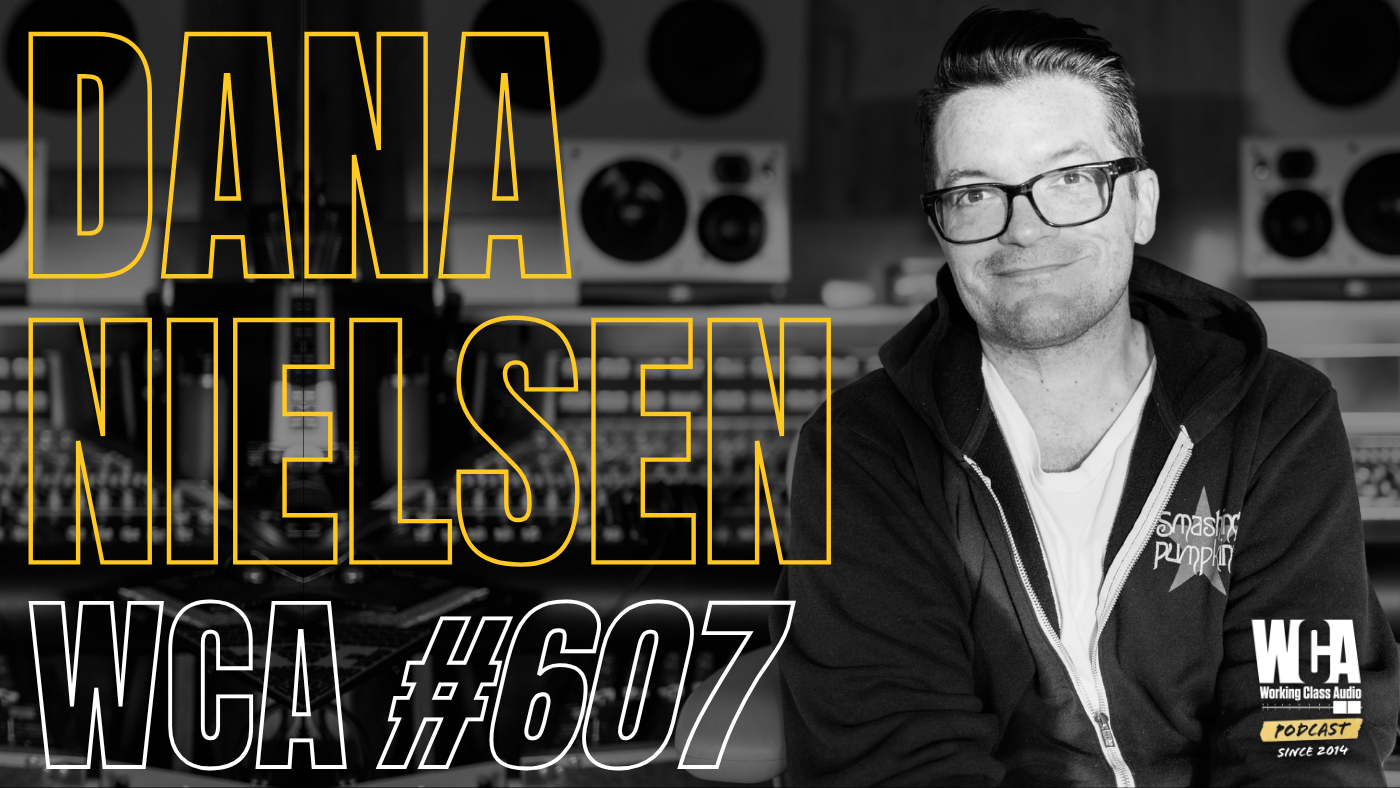
WCA #607 with Dana Nielsen – Jazz School, System of a Down, SZA, and the Money Side of a Long Career
For episode 607, Matt talks with Dana Nielsen — Grammy-nominated producer, mixer, engineer, multi-instrumentalist, and founder of Mix Protégé in Los Angeles. Dana came up as a jazz saxophonist at Loyola University in New Orleans, where a Brian Blade album and a set of studio keys changed his direction. After chasing Daniel Lanois all the way to a phone call with Teatro and eventually moving to LA with no plan, he found his footing at Guitar Center on Sunset, caught a break on a System of a Down session with Dave Schiffman, and built a career in Rick Rubin’s camp alongside Andrew Scheps, Greg Fidelman, and Philip Broussard. Now with 450+ credits and 30B+ streams, they talk about the unspoken rules of the studio hierarchy, keeping cool when everything goes wrong, running six albums at once, and the financial discipline — SEP IRAs, 529s, and a high-yield savings habit that keeps a freelance life sustainable.
In This Episode, We Discuss:
- Grammy Nomination, 450+ Credits, 30B+ Streams
- Musician First: Jazz Saxophone at Loyola University
- The Brian Blade Fellowship Album That Changed Everything
- TA Keys to the Studio: His First Real Recording Access
- Growing Up Outside Chicago and Reading the Credits
- Chasing Daniel Lanois: The Phone Call to Teatro
- How That Call Became the First Chapter of a Friendship With Philip Broussard
- Moving to LA With No Job and Landing at Guitar Center on Sunset
- The Film Lot Engineer Who Told Him to Say What He Wanted
- Learning to Read the Room and Raise His Hand
- Breaking In: Editing System of a Down With Dave Schiffman
- Meeting Andrew Scheps and Moving From Assistant to Active Editor
- How Rick Rubin’s Camp Became His World
- Working With Greg Fidelman, Lindsay Chase, and the Trusted Team
- The Unspoken Rules: Hierarchy, Knowing Your Role, and Keeping Notes
- Passing Gems Up the Chain Without Stealing the Credit
- How One Alliance Becomes the Next
- Recording Justin Timberlake’s Vocals With a Green Screen and No Metering
- Keeping Cool When Everything Goes South in the Studio
- Six Albums at Once: Managing Multiple Projects With ClickUp
- Mix Protégé: Community and Courses for Mixers and Producers
- Client Management With Dubsado and Automating the Paperwork
- Feast or Famine: How He Structures the Money
- SEP IRAs, High-Yield Savings, and a 529 From Day One
- Buying Gear as a Tax-Deductible Investment That Appreciates
- The Financial Advisor Who Got Them Into Their Culver City Home
- Telling People What You Want — From the Studio to the Rent Check
Matt’s RANT!: Taking Stock of Our Profession
Links and Show Notes:
- Dana Nielsen
- Mix Protégé
- Dana Nielsen (Instagram)
- WCA #294 with McKay Garner
- WCA #590 with Phillip Broussard
- WCA #398 with Dave Schiffman
- ClickUp
- Dubsado
Credits:
- Guest: Dana Nielsen
- Host/Engineer/Producer: Matt Boudreau
- WCA Theme Music: Cliff Truesdell
- The Voice: Chuck Smith
Read the Full Transcript
Matt: Dana, welcome to the podcast.
Dana: Thank you, Matt. I’m delighted to be here.
Matt: Well, you’re here because of our mutual friend McKay Garner, former WCA guest and good friend to both of us. he brought you up as a potential person and he ran your, you know, your extensive resume by me. And I went, yeah, let’s let’s let’s talk to Dana. And he said, Okay, great, text him. So that’s that’s why we are here today. So thank you for being here.
Dana: Yes. Yeah. Thank you and thank you, McKay. I absolutely love McKay and have known him and Cariz for many, many years. And used to sub rent a little studio space from him in Atwater as well, years and years ago. And yeah, we’ve been in bands together and just just an unbelievable human in all aspects, musically, personally, and yeah.
Matt: That’s right. He told me that. Agreed. Make he’s
Dana: I’m so glad that you guys are connected and friends. That makes me happy.
Matt: OER, yeah. Yeah. He’s he’s definitely a buddy and somebody I call when I’m pulling my hair out over technical issues. And yeah. And based on the the little of amount of hair he has, I think he’s called somebody else.
Dana: Heck yeah. Heck yeah. I love it. Yep.
Matt: So so yeah, in fact, audience, I’ll put a link in the show notes. You should go check out my interview with McKay. He’s a good dude. let’s start with you. So give us the state of the state. Who are you? Where are you? And what do you consider yourself?
Dana: Yeah, at the best. I am Dana Nielsen. I’m a coffee drinker. What a way to get started on introducing myself. yeah, first things first. I’m a musician, first and foremost, who became enamored with studios while in college studying jazz at Loyola in New Orleans. And I live in Los Angeles now with my lovely wife of 26 years. She’s not 26 years old. We’ve been married for 26 years.
Matt: I think that that’s a brilliant way to start. You’ve been married for twenty six years.
Dana: And our daughter who is fourteen. And we live in Los Angeles and we’ve lived here for twenty-six years. You can tell a lot happened in the year two thousand. and we are both music, full time music freelancer people. And it’s a wild life and one that we wouldn’t trade for anything. And we’re very fortunate we both have had very lucky, amazing, fun careers in the music business. And so that yeah, that’s where I’m at right now in one of our home studios. And yeah, I can give you a little little tour. Here’s like my workstation. and
Matt: And and friends on YouTube are are getting to see this. Friends just in the audio realm, you’ll have to go over to YouTube to see what I’m seeing.
Dana: yeah, right. it’s not all visual. yeah, so I have a really comfortable space here. and I’ve always done all of my mixing at a home studio. It’s always been at my my home studio and that studio has changed over the years from different homes. I guess the one exception, given our mutual friend, I did have for a short time a a studio. in Atwater in one of McKay’s rooms and did a little bit of work there. That was pre-Atmos. That was when surround sound audio I had like a cool little surround sound mixing setup and with little soffit mounted tiny five inch Yamahas.
Matt: That’s right. And even the term surround sound, saying it like I don’t know why it sounds strange to me, but it seems like such an antiquated term.
Dana: Yeah. Yeah. Yeah. Yep. It is. even though, you know, it’s still now it’s just called immersive or or whatever. But these days I’m decidedly for now purely stereo and yeah. But yeah.
Matt: Well yeah. Hey man, whatever whatever works for you and pays the bills, right?
Dana: Yeah, yeah. and so yeah, I do a lot of I wear a lot of different hats as we all do in the music business or for any freelance business. I’d say I’m predominantly a mixer producer. I still do a fair amount of engineering as well, for other producers and and artists. but mostly I’m here mixing and producing a lot of albums that I engineer produce and mix. all the the whole thing. and I also do a fair amount of writing, composing, for ads or TV or or film soundtracks and you know, still play saxophone, which is my main instrument. I do a lot of programming and bringing a lot of I like to bring a lot of my when when tactful and appropriate, my musical background to help artists. with their finished product, their vision as as needed.
Matt: Right. So you’ve worked with Metallica, so I’m sure they’re your saxophone skills are really in demand there.
Dana: I wish. Yeah, I wish. but really all of that musical background as a engineer and mixer, producer, in in the case of Metallica as a an editor, that’s it’s all so useful. I mean, that that background and study of music in such a like diehard loving way has really served me incredibly well in the studio.
Matt: Well what Mm-hmm.
Dana: space where I I love to work with lots so many people that like Metallica that as a saxphone player I would never have reason to, you know, play with or mingle unless they were doing some s one-off thing and I should be so lucky. But that’s part of what drew me to the studio is being able to use my musician brain in and be involved in styles of music and with more people. as a fan myself of all these different styles, than I would be w then I would be accessible to as a saxophone player or something like that.
Matt: Most definitely. Well let’s let’s go back a bit. where did you grow up?
Dana: outside of Chicago, about an hour west, in a couple different towns, Saint Charles and Geneva. and these are quaint little Chicago suburbs. That’s where my wife is from as well. And yeah, but grew up, you know, it’s a short trip to the city. We I spent my whole youth first with my parents and then with my friends once I was able to drive, you know, going to concerts and museums and stuff like that downtown.
Matt: Hmm. Excellent. When when did you first start to become conscious of record production and start to have an interest in, you know, discovering how what you heard was made?
Dana: Yeah. you know, er initially early on, like like all of us just listening to music. Of course then when we were young and I’m assuming we’re of a similar age, you know, it was a very you know, it wasn’t on the phone and it was like, you know, my parents’ literal record collection and then my own C Ds and tapes and all that stuff and it was really There was something to read as you know, you know, looking at all those credits and I definitely enjoyed doing that. so it’s I’d say those were my first just early as a musical person and a musician and taking lessons and being around that. It was always interesting to me to see the names, even though I didn’t know how it was being made. I I can remember just vividly still songs that captivated me sonically as a
Matt: Mm-hmm.
Dana: as a kid. Excuse me. as a real turning point, when I was at Loyola University in in New Orleans as a jazz studies major, performance, saxophone was what I was there doing. I it was an album that I now I was already in as an elective taking recording techniques and electronic music. And I was really into it and I became a teacher assistant and got keys. And so basically our awesome professor Sanford Henderley was the the teacher and I was one of maybe one or two TAs. and so I would run like the student labs and open the studio, be there at the odd hours when students would want to come and do their lab work. you know, try these mics, record a piano, whatever whatever the assignment was. And so that allowed me access to the first, you know, studio. and because I had keys and it was allowed, like, well, I could do labs whenever I want, you know, outside of class time. And so I really the the turning point was partially being in that class and finding that studio space. And seeing those other doors musically open, at least being around not having the skills yet per se, but realizing like, wow, I’m doing these labs for people who are into and r and making music outside of the jazz world. And I love all that music. You know, I grew up listening to a hugely diverse my parents have an amazing collection of music. And so all of a sudden it was like, this is so cool because I can be helpful to these people at that time in a limited way as a just young TA in a recording class. But that started to open my world to helping people record their their work. And there were another I should shout out to Daniel Lanois, Mark Howard. at that time in jazz school, the Brian Blade. album Fellowship came out and that was on Blue Note and it was recorded by Mark Howard, produced by Daniel Lanois. And it just sounded so freaking I have chills right now. Like just musically and sonically was so captivating. and here I was learning and you and falling in love with the recording studio and It was just kind of like a light bulb, like I wanna know more about how to get these sounds or where where are these people? Who are these people, you know? And and that really was a big I alwa often point to that album as a real turning point for me that really made me study harder and more interested in who’s making this stuff sound so cool.
Matt: Yeah. Ca can I ask you w what about that album stood out to you from other albums? ‘Cause I mean, by that time you’d heard plenty of music, so why was that record pivotal?
Dana: Well, I have to give of course credit first to Brian Blade and the phenomenal musicians on that album. It’s really beautiful and it’s different from other jazz albums at the time. A lot of like what we’d call like straight ahead, bebop inspired, hardbop, advanced like shredding, shredding solos, you know, we all as saxophonists, you wanted to be like, you know, Michael Brecker or Joshua Redman or Mark Turner or incredible players playing like New York style, straight ahead, hard, difficult jazz music, you know? And that was the world and I loved it. And then here comes this album by, you know, in hindsight, you know, understandably produced by who most people know of as a more pop and world and country and you know, Daniel Lenois like for all of his accolades, you know, this jazz album and it sounds so much more of course there’s incredible virtuosic playing, but it’s much more lyrical and well there’s no lyrics. I guess what I mean is melodic and moody and I don’t know. It also sounds very different. It has a real interesting sense of space and you know and that was I think done at Teatro in Oxnard, which i isn’t there anymore, but big open theater that was converted to studio.
Matt: Yes. Yeah, and actually I I’ll I’ll put a link in the show notes audience because this ties directly into my my interview with Philip Broussard. Yeah.
Dana: yeah. Philip is one of my best best best friends in the world. And I have an a a crazy story, if you want to hear it, about about Philip. But yeah.
Matt: I do want to hear it, but I’ll but but for the audience, link will be in the show notes. You should check out Phillips interview because we really get into the space talk. not not NASA space talk, but like, you know, space as in recording space and vibe and we talk about Mark and and and Daniel and and Teatro. So yeah, have a listen to that. But yeah, what’s your crazy story with Broussard?
Dana: Mm-hmm. Yeah. Well yeah, Philip, like McKay, is just a brother from another mother. We have done so many albums together, me and Philip. We’ve been in the weeds and far-flung parts of the country and just I have so many wonderful memories with him. the first time I met Philip was at Rick Rubin’s home in the Hollywood Hills. I was Coming to it was a system of a down album. And I believe Philip was working on that album with Dave Schiffman, another amazing engineer and Yep. Who I’ve learned so much from. And I I was just meeting Dave, and I was just meeting Philip, and I think Philip had family stuff to attend to, and I was gonna be filling in for a while. I can’t remember the exact circumstances, but so Philip was giving me an overview.
Matt: Another amazing great person, Dave Schiffman.
Dana: Maybe it was the b day before I was gonna start with Dave. And we’re at Rick’s house and I’m learning about the the hard drives. This was early two thousands and so the the hard drives were huge and small capacity and we were working on the hypnotize and mesmerize album. So think like double album and so there’s tons and tons and tons of drives. and So I remember we were kind of talking about that stuff and chit-chatting along the way. So yeah, where are you from? Where are you from? he’s, you know, he’s from Texas, but I I spent a lot of time in New Orleans. I went to school in New Orleans. Like, that’s crazy. When were you there? You know, like, my gosh, I was there at the same time. That’s nuts. What were you doing? You were working with Lanois at Kingsway? my gosh, I love Daniel Lanois. And like, so I start to tell him, and I guess I haven’t told you this story yet. Around what picks right up from the you know, I told him I said my senior year, I was in a phenomenal class, best probably best class I took in college called Senior Seminar, where it was basically like everything from how to shake someone’s hand in a in an interview, how to make a a resume that works, how to everything all the way to figure out what your what your dream internship would be after college. And Dr. Frederickson who taught that class who was amazing. You know, he’s like, you have a unique opportunity. In you’re in college, you’re a student. The people that you, you know, after this, like you’re competing with the whole wide world. You know, I I remember like, you know, who’s your favorite artist? Stevie Wonder, you know, like, well, once you’re done with school, like that’s your competition, you know, like it or not, you know, like these other living greats out there, it’s a big wide world. You’re a student, and if you want to go meet some of these heroes or think of your most amazing internship you could dream up, people like us, you know, Matt and Dana and others who are further along have a a heart for a a student who’s trying to break in and is learning and and there’s a unique opportunity there to just go for it, you know? And I thought that’s really interesting. I love this this album right now. And I would love to work with Daniel Lanois and this Mark Howard guy. And yeah, I just wanted like who is this? So anyway, when I was in that course, I tracked down people because Lanois had King’s Way and there were people in town who would do sessions. I gotta get a hold of this guy. he’s moved on, he’s at teatro now. So I
Matt: Ca you called them Lenoids.
Dana: I wrangle a phone number for Teatro out of friends of friends. And my Christmas break of senior year in college, I call Teatro and I get this guy on the phone. He was really nice. We talked for, you know, probably an hour, maybe less, but it felt like an hour. you know, that’s really cool. You’re you’re at school in New Orleans, and you know, we’re just actually closing Teatro up. I’m I’m here cataloging all the instruments and we’re We’re kind of moving on from here and this and that. And so you kind of just missed him and you sound like such a sweet dude and I don’t think there’s really a a thing. Anyway, here fast forward years later, I’m at Rick’s and meeting Philip and we’re talking and I said, I love I love Daniel Enwan. You I even tried to get an internship at at Teatra. I called and talked to this really sweet dude for a while and he explained blah, blah, blah. And Philip’s face is just like You know, he’s like, That was you. my gosh. I remember that conversation and I remember exactly what I was doing and that was such a fun chat and I was so sorry I couldn’t like offer you anything. And so like right from then, like, you know, me and Philip were just b you know, had already been bonded in some cosmic way and and we ended up making so many albums together over the years and still collaborate on things all the time. So
Matt: Right. It’s amazing. Yeah, and and it’s a testament to, you know, this business and and all the the sub businesses within the business, there are there is just a high probability you’re gonna run into the people more than once. So how you carry yourself, how you treat other people is very important because if
Dana: Yeah.
Matt: If there was a shitty experience there on the phone between you and Philip and then here you are in this situation, if one of you had discovered that, boy, that would have made for an awkward time.
Dana: Yeah. Yeah. Yeah. That’s so true. It could have made for a loss of a gig, you know, like, you know, if you were if that was a really awful experience for Philip, you know, he might be like, you know, on second thought, I don’t think this is our guy. Like we gotta get this guy out of here. Yeah. man.
Matt: Yeah, hey, we gotta get this guy out of here. He’s a total douchebag, right? So that’s that’s interesting. can you talk about post school and your journey getting to Los Angeles? not you know, not the play by play per se, but just like what led up to getting to Los Angeles?
Dana: Course. Well, Carissa and I most my wife, Carissa Nielsen, she and I both knew that we wanted to move to LA. we both kind of grew up gr visiting family here who at the time by the time we moved here weren’t did not live here anymore. But you know, it’s sounds like a fun thing to do after college. she ended up solidifying that deal for us by getting an internship as a music therapist in Glendale. And so that kind of like that was like, okay, now we have a legit job. She’s got a job. And so we kind of built it around that. And she is a still a licensed music therapist. and she does that. she has a couple of freely couple of private clients, and she also does a lot of mostly she’s a session singer, vocal contractor, putting together choirs and films and albums and providing all Of stuff. But that was the thing that got us here. And we lived in Glendale for about I don’t know, four years or five years. And I needed to get a job. I in fact, this job is where I met McKay and so many other people I am still very close with. I worked at the Hollywood Guitar Center on Sunset Boulevard. I was not looking for a job there, I was going in to buy A keyboard, I think, and a Lisa’s QS six, I think, is what I ended up buying. I had at that time because of my th this is an important piece of the story. I had by the time we finished school, I had been a TA and in had keys to the studio. I’d done complete albums. I made a full length compilation album with as a hip-hop upstart label called Renaissance Records, still friends with with those those folks. And the school at Loyola had just before had upgraded everything to the latest technology, the Pro Tools, TDM with the 888s, 24 bit was like the brand new thing at the time. And they had the Waves platinum bundle. And this unbeknownst to me at the time was like very state of the art. And here I am now at, you know 21 year old dude in in LA starting at the ground floor of the music industry, literally like the pro audio floor. And you know, I was I made friends with a dude there as I was buying equipment and he was like, you know, you you you should work here. You know, talk to I thought, okay, well, I gotta do something. And this would be cool because I’d get discounts on the gear. I already had like my audio media three card precursor to Pro Tools LE. I was like, had my
Matt: Yeah.
Dana: kind of home studio game for my age at the time pretty pretty dialed and because I had that all this like working knowledge of Pro Tools at a time when all of the studios and producers and film lots around LA were rapid fire making this transition from either tape or Sony, you know, digital or Tascam Digital. machines to Pro Tools. I was very lucky timing wise to A get kind of discovered and plucked off the pro audio floor by this amazing saleswoman Susan Wheeler who ran like a upstairs she and this other A and R you know Dave Widerman like they had this upstairs floor that you wasn’t public And they would sell to it’s basically what became GC Pro.
Matt: I was gonna say it sounds like the predecessor to G C pro.
Dana: Yes. And yeah. and so she had all these I mean, she would send me basically to she sent me to Palo Alto for a couple of weeks to get like hands-on training at digidesign and then w I’d go around to like all of her clients. Diane went to Diane Warren’s complex many times and David Foster’s and you know, the Sony and Fox film lots and you name it like all Rick Rubin at one point. It’s not how I ended up working in that camp, but it was a first sort of touch point, you know, all these places. And I would be the young dude who she had sold all this stuff and that was great ’cause I really didn’t like sales. Not my strong suit. And but that was perfect. You mean like you sell to these amazing people and I get to go do the hanging out and talking shop par that’s great. so
Matt: Yeah. wow.
Dana: That’s what I did and did a lot of installations and met lots of people and I did a similar job after that for Westlake Audio. when they had a s small sales division there, I was their product specialist. At that point I had my own company, Little People, which is my my wife and I’s like kind of all encompassing furnishing company for our our services. and so that was cool because then I was doing that same work, but just a few times a week and invoicing from my own company and stuff like that. But still access to all these incredible people and doing what I love and what I still do in my on Mix Protégé, my kind of training educational side is like helping people make their music. And most of my work is sort of done for you in in that sort of service realm. Like you send me your files, I mix it. and or produce or whatever. but there’s so many times when that’s not in the cards for budget or timing or or whatever or need. And it’s still just as exciting for me to talk with amazing musicians or producers who are looking to get a better sound and I don’t know. I just as you can tell I I love the stuff that that you and I do and And the the people we get to be around. And yeah, over time I just kept in touch with those folks. They continued to call me at crazy hours and w having technical issues and I was more than happy to to help them and then I would plant plant little seeds. all the time. All the time. Yeah. And yeah.
Matt: Yeah. How many people called you and said, what is this DAE error I keep getting? Yeah. So what what was the what was the thing that allowed you to break through to to you know tr transcend that whole GC Pro service oriented kind of concept and break into being an engineer of any type for somebody of note?
Dana: Yeah. Yeah. Well, two th two things. one is I mentioned the Audio Media three card, which is a real throwback. precursor to the, you know, whole kind of L E digi double O one, double O two, w box, et cetera. I always had a studio of my own. even in high school, the f very first iteration with Carissa, was your parents let us use this like IBM ThinkPad and they had like a rolling digital piano that had general MIDI sounds and they we convinced them to someone to to buy us cakewalk you know and man we we programmed music for the talent shows and our own performances and I was into like midi programming and all this stuff. And then through through college, it was like the audio media three pro tools, getting started in that zone. And as I was working as this you know technical consultant for these sales groups, I always had my recording studio set up and I was always doing sessions. I had a a weekly ongoing ad and music connection. and
Matt: Mm-hmm.
Dana: Yeah, just hire me. You got songs I wanna produce and mix them and I kept myself very busy exercising those muscles and loving every every second of it. And so all that to say, my skills were always in shape and I knew exactly what I the work that I wanted to continue doing at the highest level I could and those a real turning point for me. Here I am, you know, running sessions on my own at my own place all the time. By day, mingling with, you know, film lots and mega producers, helping them and engineers, you know, building their very first own, you know, Pro Tools rig so they can not always have to rent the big studio to get work done. And developing rapport with with these folks. honestly, legitimately, you know, all that stuff. what really what really changed things, light bulb moment for me was I was delivering this awesome Pro Tool system to this guy on a film lot and he had one of these little cottages next to the big sound stage. And cool guy, it was probably a fifty thousand dollar, you know, Pro Tools setup. Things were much more expensive then.
Matt: Yep. Totally.
Dana: And you know, I’m setting this all up. We’re chit-chatting and I’m looking around like this is so freaking cool, like the job that this guy has. He parks right in front, gets to go through this fancy gate, and we’re right by all the action and they’re making a movie right there, you know. And he’s using this gear that I love and wish I had. And at one point, as we’re kind of wrapping up, he was like, Dana, like, so what do you, you know, you probably don’t want to work it. Guitar Center Forever, you’re like, you’re really, you know, good at this, and I’m glad you’re here. But like, what do you want to do? And I was kind of, I was shocked because I thought, like, you don’t know? Like, it’s not written all over my face how freaking excited I am to be here right now and like how much I want to like do whatever it is that you’re doing. I don’t know if you’re like a music editor or you’re scoring things or what, but like, and he was. super surprised to hear that and the whole thing was like wait wait what what and he’s he said you know Dana you gotta let people know what it is that you want because it may be obvious to you but to me I figure you know you you probably won’t do want to install pro tool systems for people and this is like the apex of your dreams you know and it really was you know an aha moment He was like, let let people know what what your dreams are and and what you’re aiming for because we’re all in our own little bubbles and help you gotta help people understand, you know, and that’s been my entire career right there is is recognizing opportunities and you know putting myself out there as a genuinely honest, helpful, see and need pick you know, I could do that job. I heard I I know you guys were just talking about how you can’t get this person to my gosh, case in point. I mean we’re talking about Dave Schiffman and Andrew Scheps, two people I’ve spent so much time with and learned so much from. I think it was on that same system of a down album. This is a perfect example of this guy on the film lot in practice. I heard a conversation. Dave was trying to call he called his his good friend Andrew to, you know, look, man, I’m I’m doing this project with you know, System of Down and we got all these songs and I’ve got way too much you know, editing and and stuff to do. This is as you can tell, like before Andrew was superstars. Say Andrew. He’s always superstar to me, but I hadn’t even met him yet. And I could tell that he wasn’t available. He was doing other superstar things. And I could tell that Dave was having trouble, like what man, shoot, what are we gonna do? I can’t my guy and I was like, I would I would I can do this. I would love to do this. if it’s helpful, you know, I’m sure you got lots of other people. that you would rather call, but I’m already here and I’ve definitely done a lot of vocal editing and drama editing and all that stuff. He’s like, hmm, interesting, you know, kind of looking askance and like, okay, Dana, like and man, this is how this always happens with these things. I could tell you a million stories of the same exact construct, you know. Kind of this like, okay, we’ll see.
Matt: Yeah.
Dana: And then it circles back, you know, it could have been later that day, could have been the next day. Like, hey, were you serious about that? Could you really do this? Yes. Yeah, for sure, you know? All right. Well, okay, so and then what happened? He’s like, Well, I’m gonna Andrew can come by and kind of like check you out and get you started and and we’ll we’ll see how it goes. That’s how I met Andrew initially, and we spent a a day together, like working on editing and stuff and he was like, okay, all right, yeah, go for it. And that was like my first kind of like switch from assistant engineering into a more active, you know, editing role. that was just another and all of those things, even the the mixing I did very shortly thereafter. It was we need some rough mixes on this project. I’m gonna make them the best rough mixes you’ve ever heard, you know? And just kind of like hear the rough mixes. Please let me know if there’s anything you want me to change on them. I I’m here for it, you know. Like, every little break that I’ve gotten is is from that kind of that dude reminding me, like, put yourself out there, let people know what you can do, and and of course, never do it in a Crappy, sleazy way, you know, like I’m not not here for that. But it’s all those little chances and it
Matt: Right. That’s interesting. do you find that in those situations, okay, like you know, with Dave Schiffman, Dave kind of, you know, brings Andrew in to, you know, kind of start the process, and Andrew kind of signs off and says, Yeah, Dave, okay, Dana’s got this, it’s cool. do you think that it it it snowballs? Because you have this this situation with Dave and it and and that’s successful. And you get a new ally that helps vouch for you on future things. Is it like, do you think that’s an accurate estimation of of of how your career has gone? Is just like one person likes you, then the next person, then the next person. And each person you serve their need for whatever audio task it is, they they go, okay, yeah, this guy’s, you know, he’s competent, he’s nice, he gets the job done, he does what he says he’s gonna do.
Dana: Mm-hmm. Yeah. Absolutely. And I think, you know, if I could be bold, it I feels or felt re you know, in retrospect, even more times like we gotta we gotta have this team like rinse and repeat. Like these these mentors of mine, you know, who are making at the time and this is twenty years ago, you know, or or more, you know, making all these albums. Lot of output and this is the team. You know, that’s why like I ended up doing lots of albums with Dave and lots of albums with Andrew and lots of albums with Greg Fidelman, another just monster who’s taught me so much. and it becomes like and I I feel this now too, like with the people that I hire for this stuff. It’s like I can only do this job that’s massive if I can get these are the people that I need to have, you know, because they’re you become part of their trusted thing. They not only can you do the job real at a exceptionally high level, but you’re great to be around. You take direction really well. and you don’t share any audiophiles or do anything stupid, you know. and you know, it’s a it’s it’s hard to find
Matt: Right, right.
Dana: the perfect match. You know, I remember when I first started doing lots of work in Rick’s camp, his production coordinator at the time, wonderful woman Lindsay Chase, dear friend, I remember telling Lindsay, everybody around here is so cool. You know, all the whether it’s the engineers or the assistant engineers or the staff who run her operations and Rick’s operations. Like, this is such a cool group of people. you know, everybody’s so cool. And she was like, yeah, they wouldn’t be here if they weren’t. You know, like it’s just a that’s how the studio world is as well, you know, especially at such a a high level with high profile artists and security risks or or just a just a level of professionalism. It’s like if you don’t have it all Not least of which be a cool hang. man, it’s there’s especially in in a place like LA or there’s lots of other people.
Matt: So let’s let’s just, you know, really for the people that haven’t been through any of this and they’re, you know, we live in a day and age where w obviously it it goes without saying, and I think we all know this, that you just don’t have the exact same opportunities that existed fifteen, you know, 10, 15, 20 years ago. And that kind of in the room transference of of of knowledge. And and observing and know and learning firsthand what what to do and what not to do. So I want to talk a little bit about that with you in terms of your experience. So the let’s talk about the unspoken things. Like what you know, you you’re in the room, you’re playing a role in this, and you might have an opinion about something that differs from those around you. But it just it seems to me it goes without saying when somebody says, Hey, you know, you’ve let’s say you’ve done a mix for somebody or you’ve done a rough mix or whatever it is. Something needs to come down or it needs to go up apart. And maybe you don’t hear it, maybe you disagree, but you sure as shit don’t say, I don’t think so. You s you you say, okay, yeah, great, no problem. I got it.
Dana: Yeah, you mean when when you’re explain the the dynamic once more for me, ’cause I I had it in my head one way, like when you’re like an assistant engineer or something, or or do you mean like when you’re the mixer?
Matt: Yeah. Yeah, let’s say let’s say that you well, let’s say not the mixer, because that’s a different dynamic. Let’s say the dynamic is this. Let’s say there’s a producer involved and you are contributing somehow, making rough mixes. Maybe you’re even making Atmos mixes or stereo mixes, but the producer who is the head honcho in this structure that I’m this hypothetical structure says Let’s have this. I think we’re losing, you know, you got a part that’s getting lost here. Clearly you would just say, you know, yeah, okay, I got that. A problem.
Dana: Yeah, yeah, absolutely. I I kind of teach this a lot about that that sort of structure and my experience of it. What I mean by structure is just like you described, you know, know your your role in this in this hierarchy. And you have to be very
Matt: Mm-hmm.
Dana: You have to be be quiet a lot, you know, when you’re coming up and when you’re doing anything, you know, I guess to illustrate this better, this is kind of an example that I think of often and it happened a zillion zillion times. And you can use it to your benefit if you’re a a smart, you know, up up and coming, you know, musician, producer, mixer, and you found yourself helping someone Farther along, maybe you’re an assistant engineer, and there’s an engineer and there’s a producer and there’s the artist. And when the producer says something or the artist says something, they’re talking to the engineer, or the mixer, or whatever the the roles are. And and of course, part of the great thing about being A studio person, you’re excited to be there. You probably have opinions of your own. I know that’s part of what helps me when I was an assistant be valuable because I knew everything that was going on and I had opinions about all of it. and I keep them to myself, but I’m tracking everything. And I’m writing down notes and and all that stuff. Not my own personal thoughts, and when I do write my own personal thoughts, even still today. I notate my initials like n s no one else said this. This is this is my my note. Anything that I think about the situation, you know, if it goes anywhere, it would go very privately, very discreetly to the engineer, the person who I’m there to help. and only as very needed and and as is appropriate for your your dynamic, how long you’ve worked together, whatever. But the here are things where, you know, the engineer, let’s say it’s Andrew at the at the time, you know, 15, 20 years ago or whatever. He’s spinning a lot of plates. He’s listening to the band, he’s listening to the producer, and someone’s got a question about, you know, this doesn’t sound right on this song. Okay, well let me hear it again or what’s going on. You know, if I know the answer, or I think I know the answer, I might, you know, when no one’s looking, you know, come up and be like, I think what’s going on is the guitarist is playing like a a minor chord on the beginning of the bridge. Everybody else is playing major and it’s causing a little bit of a rub. And then that happens, and then Andrew will listen and make his own assessment and be ready with that information. next time, you know, we’re talking about it. I think what what’s going on is is this. Maybe I was right, maybe I wasn’t. that’s information for him. Not to be broadcast by me to the whole room. That’s the worst. If you’re like Smarty Pants went to music school and well he’s playing the minor seven and everybody else is on the V like, ugh. I don’t even my gosh. Yeah, that’ll get you sent out of there very quickly.
Matt: Last thing we want to do.
Dana: And we all, you know, everybody deserves a a chance to fail at that and and you know, step in the in their own poo or whatever whatever an expression would be to like, no, and I got you know, I got shut down. Hey, you’re not we’re not you’re not here to offer your opinions, okay? It’s cool that you have them. Keep to yourself. Like, you know, and that can feel so scary and awful.
Matt: Right.
Dana: If if you’re the right kind of fit for studio work, it should feel humiliating, you know, and to learn from. But
Matt: Yeah, you we we really talk about this business as a service business. It’s it’s but it but it the person that you’re servicing or the person that you’re like almost the the audio waiter to, right? that person could be the client, the the musician, but it also could be the producer or the engineer. And it can be a number of people.
Dana: Mm-hmm. That’s right. Yeah. I think it stacks exactly hierarchically, you know. If you’re the assistant engineer, it’s the end it’s the engineer. If you’re the runner, it’s the assistant. Don’t talk to the engineer. Talk to talk to the assistant. You know, if you’re the engineer, it’s the producer. If you’re the producer, it’s the band. And there’ll be all kinds of times when, especially as you build rapport with everybody, the band might really take a liking to the assistant and you know, ask them a question directly to because the engineer and the producer are talking about something else. That’s great. But, you know, those I think that not only is it an important rule to keep things running smoothly, it helps and you know this already, Matt, I’m more speaking to the audience, like it’s it does two other things. You’re able to
Matt: absolutely.
Dana: you’ll be asked back more. and if you find yourself as somebody who has helpful things to add when everybody else in the room is stumped, and you’re able to give those nuggets as gifts to the next person up in the chain without trying to do it in a way that shows you really know what’s up. They’re really gifts to the person ahead of you in line. You become super valuable to that person. And they want you around more often. And that gets you hired more. And then over time, you know, you build more and more rapport with these same people. And then you start to get even, you know, I might pass a thing on to as a young assistant onto the engineer so many times and then it becomes like, hey, Dana made a great point. I’m not sure I hear it this way, but check this out. And then you’re like, man, for real? Like I’m getting credit for these gems now. Like and then it becomes a collaborative thing. And then you’re really like, now you’re, you know, people think you’re really handy to have around. And that’s the best. It’s the best feeling for for everybody when you’re all working towards the same thing. No one’s stepping on anyone’s toes. And you know you’ve got the best crew in the business, you know, helping out.
Matt: Right. Yeah, and I I keep coming back to this video that I’ve talked about a bazillion times on the show where it’s an apologies audience if I’m doing the whole repeat thing, but you’ve heard me say this where Robert De Niro is sitting in a table of other actors and he’s talking about if you get some success, you’ve gotta stay cool. You gotta keep your head and keep moving forward. You can’t think you’re on top of the world. Because as he says in the video, I’ve seen people come going up and people going down. And that is continually going to happen. So if you are fortunate to find yourself in the room, even at the lowest levels, don’t get too cocky. Don’t get too proud. Don’t think you’re on top of the world. Be there and be, you know, put your focus into being the best professional you can be to support everybody that you’re there to support.
Dana: Yeah, I love that. And it’s it’s palpable, you know, on the other side as somebody who was a an assistant. and then you know, like when I’m when I’m at studios and I’ve got assistants and they’re from the studio, it’s so clear to me which ones are like total gems and which ones are kind of coasting along. I’ve been here forever. I’ve got status. I know how to do everything, you know. Versus the other one that maybe is newer, maybe he’s been there just as long, but has a totally different kind of professional demeanor. Who is you never never have to go find them. They’re always there. They always know the answer, whether it’s how do I patch into this piece of gear or where are the pencils and why aren’t they sharp? You know, or Whatever. Like and the people who you can tell and it comes from like just a a respect not of me but of the whole enterprise. We’re here in this awesome studio at making music. I’m so glad to be here and I wanna just like I wanna crush it, you know, and make this the most memorable, you know, experience.
Matt: But even even if you have years of experience and you you’re used to being in charge, you might find yourself in situations where you’re not in charge and you’re still a support person. That’s when it’s it’s great to know and have that wisdom to say, okay, hey, I’m doing this task for somebody. I’ve got to have excellent communication and not keep them in the dark. So they know exactly what, like, here’s what I’m working on, and here’s when I’ll deliver it to you. and also, you know, it it it takes, I think, a particular amount of energy to take a back seat and to sit there and be present and focused for somebody else’s you know, vision or or or you know, if they’re producing something and you’re you’re the support engineer.
Dana: Yeah. Vision or
Matt: to get into the the driver’s seat with them and be like, I’m here for you. I’m here and we’re focused and and I’m not bringing my shit to the table. That that takes a particular amount of energy and a particular personality too.
Dana: Yeah. Yeah. Yeah, I mean you have to be so adaptable in in all this. Because you make a good point. There, you know, the sort of pathway trajectory as a studio person, and probably this applies to any music person and farther probably beyond that as well. It’s not linear, you know. You get a an amazing break and you know, I remember You know, I mixed the first thing I mixed for Rick was a Neil Diamond twelve songs album. It was a artist cut. It was like a Greg I assisted on that for Greg Fidelman. And then and he mixed the album. But then like a year or so later they wanted Rick wanted to release some of the alternate takes and very stripped down, sort of like Beatles Let It Be Naked sort of vibe of just how I was in the studio, no overdubs, whatever. And I don’t know, I was probably like twenty five or something like that. I don’t know, twenty-six maybe. And that was kind of what I was, you know, I’m doing editing. I’m putting together comping these alternate takes. I’m making rough mixes that are the best I can possibly make them, knowing that like, my gosh, this is kinda like the first time that Rick’s gonna hear something that I’ve like mixed. And it went off great. Like he loved it. And I got to play all for him and I got the right there in the spot, like, Neil, I think we got our guide for this sounds great. You can imagine, like, what a freaking highlight, right? But then after that, you know, I was back editing vocals for, you know, years. not mixing for him again until a couple of years later he a he called for me to mix the next Neil Diamond album that we that we’d worked on. and then after that long periods of like, I’m like the the editor guy again, you know. I spent so many years editing drums and vocals and comping And had incredible experiences. You know, here I’m like comping all of Adele’s vocals and you know, working with Greg and Andrew and and so many like Ryan Hewitt and all the lots of different people who remain my kind of North stars on these amazing projects. But you know, you yeah, you get these huge breaks and then you’re kinda back to where you are. Get another one, you’re back, you know.
Matt: And and you’ve got to maintain that like be you can’t be like you know going out like banging your chest like the top gorilla out there. Look at me. can you maybe talk a little bit more about the things you do to stay consistent like let’s say you want to work with Rick Moore, obviously
Dana: Yeah, you you have to. Yeah. Yep. Yep.
Matt: You you have to put on your game face and and know that, you know, Rick’s expecting a certain thing. So are there things that you do to try to, you know, just maintain that consistency that Rick is expecting from you?
Dana: I mean I think it’s it’s pretty baked into who I am. I I really have done so many sessions with him over the decades, in so many roles, from you know, early assisting to early mixing to lots of lead engineering and lots of mixing. It feels like home to me. the things that he’s expecting are the things that I’ve adapted for my own projects and working with artists as a producer myself, those things being like ultra preparedness for one, meaning the studio. if there’s a you maybe it’s a get there’s gonna be three musicians, a singer, a guitarist, and a piano player. Or let’s say singer, guitarist and drummer. Of course, we’re gonna have all the instruments. I’m gonna be communicating with the band or band management about what back line they may or may not be bringing, coordinating when it’s arriving, mapping out where I think things should sit on the floor, where things should be routed in the studio, normal, normal stuff. But above and beyond that, you know, the things like what other instruments might these people want to play, what other instruments can be seen visibly in this room right now. There’s a Hammond B3 over there that no one’s gonna move. Someone’s gonna see that thing. And if they want to play it, we gotta have a plan. same with the grand piano or what if somebody wants, you know what, let’s have a a bassamp back in this closet with lines run. Yeah, sure, throw throw that mic on there. I’ll look at it later. But let’s make sure that’s all run. You know, basically we do a lot of anticipating potential moves, whether it’s because we don’t get any oftentimes information from the band or from Rick if I’m working with him. Or if it’s me doing this on my own, I may not have all the answers about who the band is bringing. And so I run through lots of scenarios like, okay, well, if the singer, if they want to track all together, we got, you know, dynamic mics here, here and here. If they want to do a quick overdub, let’s practice this patch. They’re gonna run into that booth. We’re gonna, what’s the move? We move this tie line to that, we’re gonna do this patch to here. I wanna use the same mic priest. What whatever the case may be, we’re gonna have lots of float mics. Those are gonna cover these additional instruments. If somebody sees something, wants to so that by the time we’re ready to record, and and the the producer and the band are arriving, the headphones sound awesome. The
Matt: Well
Dana: you know, everything works. I’ve already been rolling the machine for twenty minutes beforehand. and we’re ready for anything. So that even and this will happen. You know, maybe like the band comes in and it’s like, you know what? We actually brought four more players that happen to be in the neighborhood and we’re gonna record outside today. You know, it’s like, oom and there’s a film crew coming. And you’re just like Wow. Okay, well, we’ve got these float mics. Let’s pull these out, extend these cables. We already have them on extend whatever, you know? And just being s ready for anything and having a confident game face, knowing the the moves you’re ready for and thinking of every you know, like not to mention the sonics of things. Yeah, that has to be there too.
Matt: Right. The the and And and and I I’m asking a lot of this, like b you know, a lot of the old dogs that are listening, they know, but a l there’s a lot of younger people that don’t get this exposure of this knowledge all the time that I’m really thinking about here. And probably goes without saying, you know, you can’t put the are you fucking kidding me look on your face? You gotta film her and four to six other people. Like you can’t do that. You just gotta be like,
Dana: Yeah. Yeah.
Matt: Okay, cool. All right. gimme give me like ten minutes. We’ll get it we’ll get it running for you. You know, just like that. Y ready to go, n zero friction, flexibility, yeah, all that stuff.
Dana: Yeah. Yeah, it’s crazy. You know, it’s really it’s really crazy, especially on those day one type of vibes, you know, and when you’re doing a session, as you know, that may only be for two days or one day, it is so much work, you know, doing a setup day, getting everything running, getting going through all those things, meeting everybody. ha you know, then you get to the end of the day and it’s like, We did it. We did it, you guys. You know, producer’s gone, band’s gone, whatever. You’re like high fives, and now everybody’s already tearing things down and you you don’t ever get to the flow part, you know, that’s so nice when now you got through the kinks, people have their positions, the band is comfortable. They got their little tables that we set up and lighting and waters and whatever. And like that’s the best when You get to roll with it for a few days or a few weeks or sometimes like the old days, a few months, you know, or whatever. And you just get to utilize the the fruits of everyone’s labor to get to that point, you know. It’s always sad when it’s a quick teardown.
Matt: J that’s Yeah, I mean to have a setup day, you know, like on the independent level where I mostly operate most of the time, it’s just it’s not always possible. And it’s, you know, hey, we got two days, great, I’ll show up at six, seven in the morning to get ready, you know.
Dana: Right. Yeah. Yeah, yeah. And I I know what you’re what you’re talking about and it’s very true. And I think in those situations it becomes even more crucial to have teams that you know and trust, a studio that you can rely on with a staff that you trust, you know, like that’s the benefit of working repeat times, you know, at at the same place or with the same people, you’re like Okay, this kind is coming up quick. We have no time. But remember that setup we did for blah blah blah? You got all those documents still. Let’s I’m gonna work from those. We’re gonna kind of reconfigure from there. You know, can you get started tonight and I’ll meet you there in the morning for the, you know, whatever downbeat, you know. That’s amazing. So you’re if you have that luxury of, you know, repeat places or studios, that that’s the best when it’s like, my gosh, you already know. You already know my system or it’s awesome.
Matt: Do you have any I’m sure I’m sure you have thoughts, but I mean what w to the question that some people might ask is, what do you do when it all goes south? And the shit hits the fan, maybe an artist has a meltdown, maybe an assistant didn’t show up. Maybe the Pro Tools rig just doesn’t want to play ball that day. Like, how do you handle those challenges? and how do you keep your cool?
Dana: Yeah. Well hopefully all of that insane preparation works out works out all those kinks. but of course there are times when it just doesn’t. You know, one one time I can think of I was recording Justin Timberlake’s vocals on future sex love sounds. and it was just a vocal we’d already done like the band tracking, which was amazing. He’s freaking amazing. And now it’s just me and him and Rick like doing vocal overdubs. And the screen, the display for the computer, as soon as we’re about to start recording, this is an older display. It turns, it only shows the color green or red or something. It was like you could still make out Pro Tools barely. And anything that was green, you couldn’t see at all. So I lost all metering. And it was very disorienting. And here we’re ready to go. He’s in in the booth. And you know, I’m just like, this is nuts. I can’t I can’t I can’t do anything about it, you know? And so, you know, I know Pro Tools like the back of my hand and I got all my key commands and I Literally it felt like running the session blind, you know, like I all I can do is hear, you know, the outputs are coming through, monitoring. Everything sounds like I remember. And I’d I we can’t we don’t even have time to restart the computer. You know, it was it was a an a a real scary situation at first, but then we got through it. And then he came in and everything went well and I was listening extremely carefully for any, you know, me mostly metering things because I was it was like flying in a, you know, a storm as a pilot or something, like, you know, instruments only, but or or but I I didn’t, you know. And he came in, he’s like, Wow, that’s a crazy looking screen, you know, I’m like, I know. It was Yeah, yeah. I just like to make things more difficult. but yeah there’s so many
Matt: Yeah, it’s the same thing we’re trying. Select colors.
Dana: insane difficult times. And yeah, you really do have to keep your cool and it’s it’s boy, it can be all about the other people in the room. how casual or okay they are with with unexpected things or issues. Some people hand those th handle those things in stride. other people really do not. And it it’s crazy. It’s crazy. And and sometimes, you know, the maybe the artist doesn’t handle things well, but the producer does and can can redirect in an amazing way. Like, you know what? they’re having a little trouble here. Why don’t we go out to sh play me the new song?
Matt: Mm-hmm. Yeah. Ring direction.
Dana: That we’re gonna do after this. Let’s go step out here for a while. We’ll let them, you know, figure this out for a bit. okay. That’s an amazing producer, amazing tactic. but if it’s like if people are insecure already and something goes wrong and this person’s barking and that person’s barking, and now every it’s just like this is nuts. Like, and it doesn’t need to be like this. and it’s just music, folks.
Matt: Yeah.
Dana: I know I it’s that can sound funny, but it can also be offensive. You I would never say that to an artist who’s having a rough day and upset that things aren’t working. But you it when things get so heated, then you it really you do kind of have to like, not in so many words, but remember like we’re making awesome stuff. I know this stinks that something’s not working and we’re doing everything we can to make it work. But let’s yeah, let’s go take a break for a second. We got this. You know, don’t worry about it. yeah, I love working with people who are able to think extremely quickly and troubleshoot extremely quickly and who also are surprisingly gracious about it. and
Matt: Mm-hmm.
Dana: Yeah, you have to think outside the box too. You know, sometimes it’ll be like, I don’t know why this whole main, you know, rig went down, but we’re always recording to this dat rig, a two-track off the console. all the instruments are coming through the console. So, you know, this stinks. We don’t have multi-track capability recording right now, but these guys are kind of on fire songwriting. We’re getting everything right now. It’s it’s all going to this other rig. It’s stereo, just so you know, but like If want to keep rolling this, we’re getting everything. It’s just not, we need a second to reboot this computer or whatever. And then it becomes the producer or the artist’s call to like, no, let’s wait. Cause I don’t want most people be like, great, as long as we’re getting it and we can reference what’s happening, fix that as soon as you can. But that’s great. Thank you for having this other thing rolling, you know, or whatever.
Matt: Yeah. Let’s let’s talk a little money and business. you know, okay, so you’re mi you’re married, you have a kid, there’s obvious responsibilities there that you’ve got. So how do you approach what is your philosophy about handling money, navigating the unpredictability of the money in in what we do and the the cash flow? you work with a lot of major people, so I’m sure that there’s a lot of delay in getting pa paid from labels. I’m sure you know all about that. So how how do you structure your world? You don’t have to get into s the specifics of of the dollar amounts, but I mean, what is the overall like w workflow for you to make the money work?
Dana: Sure. Yes, sir. well I try as as you know, as anybody knows, we’re always kind of Keeping I have a I I have a lot of projects going on at any one time. and I keep all of that straight in the project management software clickup that I’ve been using for years. it’s also how I manage my engineering teams for projects. give access to certain people per project and I have a lot of remote helpers who will work with me in person and then also I give them access to kind of VPN access to my server for just specific folders with tasks to do stuff. So I I’m always developing ways to work on a lot of things at once. Well I’m giving one project full attention. There’s prep work or editing or comping or tuning being done. simultaneously on these other projects so that when I circle back they’re in a better position for me to keep moving. So there’s always a lot of things. I think at the moment I probably have like six, six albums currently. and so I’m always trying to and I of course discuss with these different projects or have an intrinsic sense about each of them which ones need immediate work, deadlines, etc. and which other ones have more flexibility or are forced to have more flexibility if it’s a
Matt: Okay.
Dana: a lower budget project that I can take on with some kind of caveats attached. each deal is is different. Of course I have my rates and things like that that depending on how much I personally like want to be involved and will take a a hit from those normal rates, you know, there’s all kinds of things or restructure things for more, you know, heavy back end or so on and so forth. all that to say that yeah there’s every project needs a bit of discussion or finding how how best we can we can make it work together. And then yeah as you mentioned there’s always a lot of delays especially with labels and especially if you’re fortunate to have royalty participation that can be You know, you never like kind of count on that as the equation, but it that will be very delayed typically. you definitely want to like have all of your kind of buckets in place and understanding how the music you’re working on, if you’re a participant in any type of back end, be it you know, producer or mixer points or writing or publishing, you know, having your sound exchange set up, your letters of direction, your you know, that’s what I mean by all these little little buckets to collect those things. and on the, you know, independent side, you know, I have a a small record label I’ll release things through sometimes. Or if I’m working with independent artists and there’s and I’m mixing or producing, they don’t have a label yet, but we’ll work out, you know, sort of distro kid split pay or something like that or
Matt: Yeah, yeah.
Dana: having those DistroKid accounts. I do a lot in another not quite as broad as ClickUp but the for clients directly I use a program called Dubsado and that is my kind of client management software for that I D-U-B-S-A-D-O. They’re based in Burbank I think and they’ve been growing and growing and growing
Matt: Yeah. How do you spell that?
Dana: And I yeah been been using them for several years and it’s a cool way to tie in to track specific projects. I have all kinds of custom fields that can populate automatically into contracts, into emails, forms, whatever. so like if anytime I’m starting a new project, whether somebody fills these these things out as part of a form or I’m doing it on the back end, you know, song names, album name, producer name, management, you know, where like did what’s the link that I got from the artist to get the files? what’s the link, you know, on SAMPly that I’m delivering to them, all these things so that I can automate as much as possible. New mix is ready. You know, here’s the link to your thing. Here’s, you know, the password. Here’s a little video that I made to show you how to make comments on it, whatever. and those things, those fields will go into the contract as well. That of course I’ve worked with an attorney to to make. But as much of this stuff that I can kind of boilerplate or have a starting point or different versions of, you know, then I can make easier. quotes and things like that, especially on the independent side. When it’s label based, there the the artist is typically the one sending me the sort of work for higher deal points and things like that. yeah.
Matt: Okay. And and in terms of, you know, expenses, do you d do you feel that your expenses are within, you know, a certain level of control or do you feel like it’s a runaway train or do you or or are you pretty were you pretty systematic? It sounds like you’re systematic.
Dana: I I am systematic and in my mixing approach as well. I have a whole system I’ve been using for many, many years. that isn’t a system about the music or the it’s more about r routing and colors and s stem prep and all of that and
Matt: That bleeds over into the money. Meaning that that’s those systematic approaches.
Dana: Well Yeah, I mean I think that’s just my nature as well is I I often feel because there are so many projects and because the hats that we wear are many, it feels very overwhelming in my head, you know? And I I think any freelance business person could could relate. Add to that workload, running a podcast or a community or
Matt: Yeah.
Dana: even just general social media. my gosh, like there’s so much going on that for me the way that I kind of rein that in or try to get some sense of organization is through these types of tools where I can get it all into onto paper, you know, into these lanes and keep track of it. but you asked about expenses and I’m not sure We’re w ask me that again. I’m not sure I quite understood.
Matt: Well I mean You you have the you’ve got work coming in. There’s a lot of you know, I in the past I really focused on asking people about, you know, their temptations to buy stuff, to add buy gear, to accumulate debt over that. but in general, you know, really what I’m finding for myself over time is as I go through QuickBooks and I see like, what is that?
Dana: Mm.
Matt: Why do I keep seeing that expense? What it shit, I haven’t used that in ages. I stopped that I should have stopped subscribing to that years ago or
Dana: Yeah.
Matt: You know, renewals on things that you thought at the time you’re like, sure, I’ll spend hundreds of dollars a year on this one thing and then you stop using it, but you forget to cancel the renewal and then it’s it all those little things just that will take away the profit and take away from you know how you save for your retirement and how you c for for us as parents, how we contribute to you know, children’s education.
Dana: my gosh, yeah. Totally. Yeah. Yeah. They had a Yeah. Yeah. That’s right. Yeah. yeah, those are all good points. And I I do have a lot of expenses in terms of ongoing services. You know, I I have a, you know, just for examples, like the mega baller dropbox count is, you know, annual expense and these different whether it’s ClickUp or Dubsado and and QuickBooks and all these software as a service items. plug-in subscriptions, you know, multiple Pro Tools, ultimate, you know, subscriptions. It’s it’s all expensive. fortunately, you know, those are part of a a broader business, our our company, and our de the legit deductibles on all fronts. but that’s not to say that I don’t I’m not interested in weeding out things that aren’t useful anymore. I also was gonna mention, yeah, for business sense, you know, if you’re lucky to have windfalls or even if they may not be categorized as a windfall, but you’re gonna have like a gig that’s paying well and then a dry period or you know, it’s all over the map. Every year is is all over the place throughout the year. fortunately, knock on wood, most years overall fall into like a a range, you know, that but you never know. Every year starts like a blank what’s gonna happen now, you know? and so when when we have a big payday for something, maybe it’s a long gig that been toiling away at, just socking in massive hours on you know, or day rate type of recording job or something like that. Maybe Royalties finally came through on a massive, you know, album or songs that I mixed. Those are times where, you know, instead of spending all of it, you know, we’re we’re always keeping our our checking accounts low and every every bit of the the actual stuff goes to you know, high yield savings accounts. We’ve got, you know SEP IRA accounts for our business for each of us. We got you know, just regular brokerage accounts. We got five twenty nine account for our daughter that we’ve been putting into every month since she was a baby. For that’s for college, school education savings account. so and you know I I re we readjust those allocations and invest you know it’s all just basic like
Matt: Yeah, yeah.
Dana: Very simple, simply invested index fund based splits that we always, you know, every couple of months will go in and readjust all this stuff. and so yeah, we we had some great financial advice early on. and from Michelle Steinberg, a good friend of ours who became a good friend as our initial financial advisor. We were very young and she really got us on a path to be able to have bought this home. Where of course we’re still paying the mortgage. But she was like, move out of this this large house you’re renting in Glendale at the time, downsize into something small, put away the extra every month. The l the like the literal difference between this, you know, house you’re renting. and the small apartment you’re gonna move into and just put that difference away. And we did that for years. It took us, you know, if that was like 2022 or let’s say or something like that. in 2012. Yeah. We had been in this house for a while. We’re in Culver City. We’d been renting, but we knew the owners always wanted, they initially wanted to sell it. But when we moved in here in 2008, it was like financial crisis. They’re not selling their place. They rented it to us instead. But we would put these notes in the in the rental, you know, in the ch rent check every month, like if you ever want to sell it, you know. And eventually that worked out. They hit us back years later, 2012, you know, you guys serious? You still want and we’re like, thank God for Michelle. We’ve been saving all this time that we have just barely enough for like a down payment for. So anyway, all that to say, like, yes, to your point, we’re very aware that we both work in a sort of feast or famine cycle each year. And we do our best to put lots of it away. And we’re all we also in those big glorious years, you know, we’re doing kind of end-of-year tax analysis, buying maybe if it’s been a particularly fun year, you know, a new asset hopefully that’s like, you know, I’ve got my I was just telling a a young like assistant the other day, Dana, you always bring like where’d you get this? You know, I have like a a beloved like Neumann binaural head mic that I bring, or my favorite like complex compressor or whatever. And someone when at the studio was asking me, like, how much was this? Where’d you buy it? Well it was it’s very expensive, but it matched my criteria for expensive purchase end of year sort of is it gonna Appreciate or depreciate. and is it something that you don’t usually find at a studio already? You know, like I could buy if I wanted to buy a, you know, U47 or something, of course it’d be super expensive. But at least in LA, you can find those at studios or rental companies. Whereas like, you know, the binaural mic or the compacts or, you know, looking around it, I have some, you know, vintage knees that are that are a little more rare or whatever. These are things that are very expensive that I like had a great year one year and it’s like this is gonna be good because it’s only gonna go up in value and it’s not stuff I can find and it’s things that I love that I don’t know anything else that can do this thing that this thing does, you know. So when all those like criteria are met, you know, that’s that’s a real winner for sort of a sound tax deductible.
Matt: Mm-hmm.
Dana: expensive little thing that could be sold later if you need to. You know, there’s a kind of good market for those things. I don’t know if any of that was what you were asking about, but
Matt: No, that’s you know, you’ve you’ve you’ve laid out some great, great advice, wisdom, food for thought. audience, I’ll put links in the show notes, of course, to these softwares that Dana mentioned. well, that’s about it. And it’s been it’s been so good to talk to you. I’m I’m really glad I got I got to got this opportunity. Thanks again to McKay for for making that introduction and paving the way.
Dana: Awesome, man. Yes.
Matt: So any links or anything that you think we should include, just you could send that to me and we’ll we’ll put that in the show notes for everybody. But yeah, thanks thanks for being so so open and and sharing a lot of this information with with everybody. It’s I think it’s super helpful to everybody.
Dana: Awesome. Yeah. My pleasure. Yeah. Thanks for thanks for having me and humoring me. I know that’s sometimes in talking about some of this stuff I’m like, do people really wanna know this?
Matt: I do. Because I is is as I mentioned earlier I just
Dana: Me I find it really interesting and and I’m glad you do too, but it’s sometimes like
Matt: I I do, but I mean it’s it’s that institutional knowledge that I just don’t think people have that opportunity as much as they used to to to gain. So also, I won’t go down a rabbit hole with this, but I just wanted to just mention you putting the note to the landlord in with the rent check goes back to what you were talking about earlier. Let let people know what your dreams and desires are. So if
Dana: Yeah. Mm-hmm. That’s true. That’s that’s so true, yeah.
Matt: You laid it out right there and then they had their answer. It’s like, well, we could just sell to these people.
Dana: Yeah. They loved it. We loved it. Yeah. That’s ex I never even thought of it in that context, but you’re absolutely right. It’s just or it’s like, you know, the the secret movie. You know, remember when that was like the big things like just put it out there, man, you know? Put it out to the universe, you know. I’m I’m not like a a secret devotee, but it’s essentially the same type of thing, you know, like yeah, letting letting people know that man, I don’t even know that guy’s name who who changed my life in that way. But I can picture that day and the the sort of blurry version of him in my memory and like, man, thanks, thanks, mystery guy. That was that was gold. Yeah.
Matt: Mystery guy. I love it. Well, excellent, man. Well, thank you so much. You take care. And and we’ll chat in person at some point in our future. Yeah. All right. Take care.
Dana: Thank you, Matt. You too. I’d love that. Heck yes. Thanks, man. You too.