
 Apple Podcasts
 Amazon Music
 YouTube
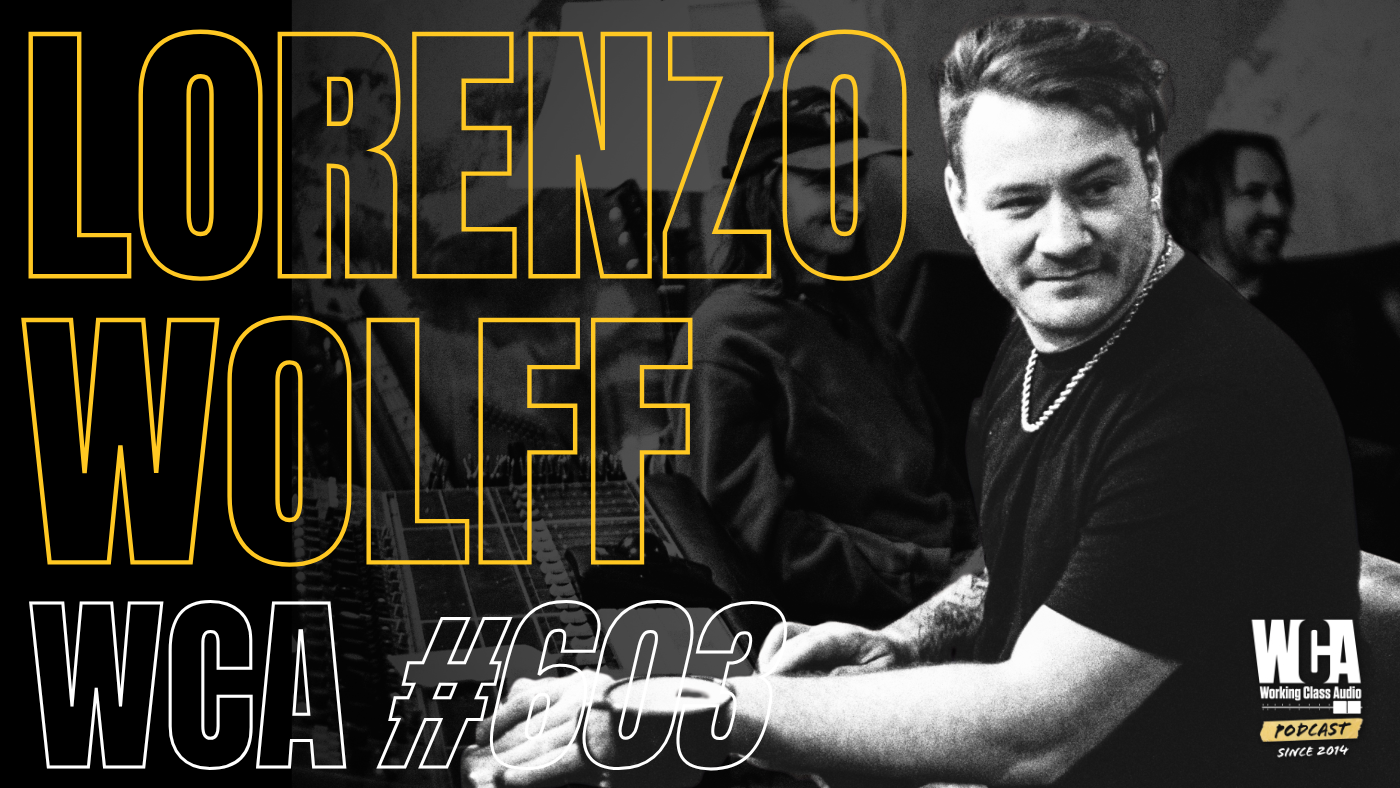
WCA #603 with Lorenzo Wolff – Building a Brooklyn Studio, Session Bass to Taylor Swift, and Working for Ms. Lauryn Hill
For episode 603, Matt talks with Lorenzo Wolff — a Grammy-winning engineer, producer, musician, and owner of Restoration Sound in Brooklyn. Lorenzo joins on a Saturday from New York to trace a path from a hip-hop-obsessed kid in Nyack, chasing the basslines on Fugees and Wyclef records, to a session bassist, to interning under engineer Scott Lehrer at Second Story Sound, to building one of Brooklyn’s most community-minded studios over eleven years. Along the way his string session with violinist Bobby Hawk turned out to be a Taylor Swift record, which led to Ye’s Donda, which led to his ongoing work with Ms. Lauryn Hill. They get into the two tiers of gigs (community vs. famous), funding a studio build with a patron’s retainer, why he treats generosity and conflict de-escalation as business strategy, and the honesty it takes to work with visionary artists.
In This Episode, We Discuss:
- Growing Up in Nyack, New York, in an Integrated Music Town
- From Hip-Hop and Turntables to Hunting Down the Bass
- The Fugees, Wyclef, Jerry Wonda, and Outkast as a Way In
- Becoming a Session Bass Player to Live in Studios
- Interning at Second Story Sound Under Scott Lehrer
- Being Sent to the Library to Read the Dry Theory First
- Building a Brooklyn Studio Over Eleven Years
- Winning Over Landlords: “Your Success Is Our Success” (and Cookies)
- The Patron Who Funded a Studio by Commissioning a Musical
- Survival Economics: Production Suites That Pay the Rent
- Community as a Business Model
- The Two Tiers of Gigs: Community vs. Famous
- The Bobby Hawk String Session That Became a Taylor Swift Record
- One Credit Leading to the Next: Folklore to Donda
- Working for Ms. Lauryn Hill
- Telling the Truth in the Room With Visionary Artists
- What “He’s Gonna Be Okay” Really Means at That Level
- Why High-Profile Credits Do (and Don’t) Create More Work
- Generosity and De-escalation as Studio Strategy
- Why He Struggles With Interns
Matt’s RANT!: Happiness of Music
Links and Show Notes:
- Restoration Sound
- Lorenzo Wolff (Instagram)
- Down Where the Valleys Are Low: Another Otherworld for Judee Sill
Credits:
- Guest: Lorenzo Wolff
- Host/Engineer/Producer: Matt Boudreau
- WCA Theme Music: Cliff Truesdell
- The Voice: Chuck Smith
Read the Full Transcript
Matt: Lorenzo, welcome to the podcast. Here we are, Saturday morning.
Lorenzo: Yeah, all good.
Matt: Saturday afternoon for you. And could you give us the state of the state? Who are you? Where are you? And what do you consider yourself?
Lorenzo: Yeah, I’m Lorenzo Wolff. I live in Queens and work in Brooklyn. and I’m an engineer, producer, studio owner musician.
Matt: Okay. Fantastic. Where did you grow up?
Lorenzo: I’m from a town called Nyack, New York, that’s like 45 minutes north of New York City. It’s like a little river town that has a lot of kind of expats from the city, a lot of artists who kind of came up there to have kids or get more space. so it it had a pretty good music scene actually, Nyack, and it was integrated. It was like 40% black and 60% white, so there was like cross communication between Musical cultures in a nice way.
Matt: Sounds like a great place to grow up. when you were growing up, what was the role of music or technology in your household with your family?
Lorenzo: Yeah. Hmm. well, so my mother is a choreographer and my dad is a writer who writes a lot about music and the way that music intersects with history, sort of. So there was a lot of music being played, there was a lot of talking about music, there was a lot of sort of like tracing the origins of stuff. Like if I came home with a new artist that I liked, it was almost always a conversation with my dad where he was like, Well That’s cool, but have you heard these three artists that they were listening to who informed them? I in an in in a less pedantic way than I’m describing it. But yeah, it was nice. I could li I had a really close relationship musically with my dad. We got he shared he bought me thirty six chambers like the year it came out. So I think I was seven listening to Old Dirty Bastard.
Matt: Wow, I I love that he would get you into these conversations to really examine the history and the and the lineage of all of this stuff.
Lorenzo: Yeah, and because he comes from a perspective that’s pretty that’s a lot about class and s the social problems that inform music, it would always be like, Well, you can’t listen to Al Green without knowing about the Black Panther Party. So it was like sort of the way that things communicate with one another.
Matt: That’s super cool. And your mom was a choreographer.
Lorenzo: Yeah, so yeah, she she was making dances all the time. There was all these weird dancers coming in and out of our houses. She had a a Czech dance troupe for a little while. So I there’s photos of me as a young man being thrown around by this guy named Peter, who was a Czech dancer. And the music that she danced to was it was all different, but there was a lot of like she made s a lot of Springsteen dance to Springsteen and girl group stuff and Lee Dorsey and stuff like that. So they both of my parents really loved. American music and the and collaborated with it in their art forms, even though neither one was a musician is a musician.
Matt: It’s interesting. Did you get interested in music first and from a as a player?
Lorenzo: got interested in music. Well, I I grew up listening to hip hop, so I got interested I like bought a couple of turntables or I had my my grandmother bought me turntables for Christmas and I never figured I liked hanging out at the DJ store, but I never figured out really how to manipulate them. And then I was listening to the Fugees and the Wyclef solo stuff a lot and realized that the live instruments was was often the bass. So Jerry Wonda is like the reason that I got into music. Because his bass lines on all especially the Y Clef solo stuff and the Fugees was always like the live instrument that was happening that was most exciting to me at the time.
Matt: Wow. W when did you start to raise questions about how records are made and the production process?
Lorenzo: I my band when I was twelve went and made a record at some tiny studio that was like an older brother’s friend in Williamsburg, back when Williamsburg was sort of like all warehouses and wasteland. And that was the first time we recorded. I think it was a two hour session and we did six songs or something. It was like a if I was twelve, it was two thousand and twelve. It was Pro Tools, but I don’t know I don’t remember what it must have been very early Pro Tools. and I thought that was really cool. And then my next band we would go and record. Like I got into the studio from being in bands. but never until I started like working as a bass player for hire, I didn’t learn really how a studio works. and once I started doing that, I was like, you know, every once in a while I would get a gig as a session bass player in a studio. And I realized pretty quickly that there’s not enough work as a session bass player to be in studios as much as I wanted to be. so I would like, you know, I’d be there for basics tracking and then be gone. and not never learned really how the arc of it happened. So I got an internship through a saxophone player named Steve Elson, who was a friend of my dad’s, who got me connected to a studio on in the Lower East Side called Second Story Sound. That’s like sort of a classical and jazz studio. And I interned there and then assisted there. under a guy named Scott Lehrer, who’s like a really legit like science style engineer and sound designer. so like the first things that he did to get me educated was send me to Lincoln Center Library and was like get the microphone handbook, get the master handbook of acoustics, read all this dry bullshit and and if you still like it, you know, come by and you can wrap some cables. Which was Which was cool to me because it was like it wasn’t like you gotta learn how to clean a toilet first. It’s like you gotta learn what magic is happening and the science behind the magic that’s happening, and then you can clean toilets as well as sort of knowing what’s going on. But it was more like he gave me that homework and I went and did it and learned and then like when I was in the studio with him, even if I was doing menial tasks, I was sort of like, I I I I’ve read about what a decatry is, so I kinda know. I I don’t know what he’s doing, but I know that he’s doing a decadry because I’ve seen it in this book and I and I don’t know why. And he would Scott was really good about letting me ask him questions during sessions and really good about telling me when I couldn’t ask questions. That intern thing where you’re like, Excuse me, what does the space bar do? And he was really good about being like, Not right now, but I’ll talk to you later, after the session or when there’s a break or a or when the band is tracking.
Matt: Was he was a big influence on you, it sounds like.
Lorenzo: He was great. Yeah, I mean, he he’s the most formal education I’ve had in this. and he was like very patient and taught me how to like sort of compete mys comport comport myself in the studio. He taught me how to comport myself in the studio with artists, with other engineers, with people who are above you. to be supportive and an active listener without without intruding too much into the process. So
Matt: Interesting. And he c he came at it from a classical background?
Lorenzo: He he was sort of like downtown New York weirdo music in the 70s and 80s. And then he did a lot of work in musical theater as a sound designer and did a lot of recording like classical and jazz stuff at the studio. He was sort of like Rudy van Gelder style. Things are c things are like pretty clinical, pretty clean. the room is the color, not the equipment, really. Like he there was never he never ran anything through a pedal.
Matt: wow. Okay.
Lorenzo: You know, like not even close to like that world of you know what I mean? Like the the the things that look fun on the YouTube videos were was never a part of his process at all. He’d be like excited about Dante working across the two rooms much more than he’d be excited about a new speaker and a guitar amp.
Matt: Right. Well that’s that’s that’s interesting. back to you playing bass. So I’m you we were talking about the the turntable thing in the beginning. When did I I missed it? When did bass start to enter the picture for you?
Lorenzo: Well, because I was listening to hip hop so much, I was sort of like, What can I do here? So I got turntables and I like, This isn’t really what’s making this music happening happen and I’m not that interested in learning how to scratch. that felt like sort of a secondary world to it. But listening to those records, especially those Fugees records and the stuff that Jerry Wonda and the Outkast stuff, it was always live bass. And so I was like, Well, there’s somewhere there’s a person playing this instrument on these records and I wanna be that person. yeah, I remember hearing the bass line from Waterfall, Don’t Go Chasing Waterfalls, which is like this beautiful through composed, like Jamerson 3.0 style bass line, and being like, That’s a guy. There’s a guy who played that. And I wanna be that guy. And I I you know, I had Bass Player Magazine, his name was Lamarque Jefferson, is LaMarquee Jefferson, I think. And I remember like reading interviews with him and being like, I wanna be that, I wanna be that person. I wanna be the
Matt: Mm-hmm.
Lorenzo: The supportive guy in the band who is getting to contribute to this music.
Matt: I might be wrong about this, although I’m gonna hedge my bets and think I’m right. This it it sounds like your dad’s dissection and tracing of through lines really tr really you like you embrace that because here you are listening to the records that you’re interested in and finding the people involved and dissecting and understanding.
Lorenzo: Yeah, I mean knowing how things work is in math in high school, when you when I got to the point where they were doing sine and cosine and tangent, I stopped being able to do math because nobody could tell me what they were doing or why they worked. So like if if if I can’t see the sort of system that makes something and the things that contribute to it and make it work, it’s pretty hard for me to get excited about it. Alternatively with music There’s all of these amazing intertwined networks of things that are happening that make the records that we listen to sound like they do. And so you can look at those systems and trace them everywhere. And f for my father, a lot of that was tracing the connections with politics, race, class, which I’m super interested in as well. But I also was like, Well, how do I get involved in this system as a contributor?
Matt: Mm-hmm. So your initial foray into it was via the bass, but did like in your mind, was there an agenda to like, hey, I’m gonna be like as you mentioned earlier, you said, you know, I want to be a session bass player, but then you started to take the turn into the recording side of it. Was your interest in the recording side of it unintentional? Or or did you start to say, the bass isn’t enough? I’m gonna, I’m gonna do audio as well.
Lorenzo: Whoa, the bass isn’t enough. The the the bass is like, the bass is the same as producing records, as far as I’m concerned. It’s like the instrument that doesn’t do anything that some people don’t even notice is happening. the guy really has to know the chord changes and what the song is doing. He really has to know the kick drum pattern. The less he plays, the better, the less they play, the better it is normally. Which it relates to me to being a producer. Like I think there’s a a reason why bass players become producers because you’re sitting there listening to the song, trying not to do too much. And in doing that, you’re given this free time to kind of like look around and think about what the guitar player is doing, what the singer’s feeling while they’re singing, what these lyrics mean. so the yeah the the bass player to making records pipeline makes a lot of sense to me. I I think it’s it’s not the only way obviously to do it. I mean there’s people who get at being a producer by channeling the magic through like a guitar solo, but but bass feels like this really supportive empathetic kind of musicianship that leads to listening to that like not playing an instrument and listening. It’s it’s as close as you get to not playing an instrument and still be in a garage band. And and that’s sort of what being a producer is too, as far as I’m concerned.
Matt: It is interesting that from if if you look at I think there’s a pattern there of bass players and drummers who are the two people out of a rhythm out of out of a band of of players that typically are in the back watching it all. And that seems to be a a constant a constant thing I see. Bass players and drummers find their way in behind the board.
Lorenzo: Yeah. Yeah. Yeah, and it it was a great instrument in that like it let me move through a lot of different musical circles. Like I think that I’m speaking of it in the past tense because I don’t do hired work as a bass player anymore. I play bass on the records that I make, but I don’t If someone calls me and says, Do you want to do a club date, I don’t say yes anymore. and they’ve stopped calling. But the Yeah, bass lets you find people across genres and across disciplines because a lot of almost all music, not all music, but almost all music has some kind of low information. And once the bass guitar came around, it seems like it got adopted into almost everything pretty quickly.
Matt: Hmm. Yeah. And and very important instrument in so many types of music. I mean, hip hop, rock, jazz, I mean, everything, really.
Lorenzo: Yeah. Yeah, especially in the African American tradition of music where it’s like the low end is the thing that propels a lot of the American African American collaboration in music.
Matt: Very interesting. So back to the studio thing, what’s what’s the progression there? You know, reading books about as you say, books that are dry as shit, about mics and learning about studio etiquette, where do you take that?
Lorenzo: I’d so after that I stopped working in other people’s studios. I did that between when I was eighteen and maybe twenty-two or twenty-three. And after that I just started I had an ex-girlfriend who had an apartment that she wasn’t gonna be in for a year that I turned into a little studio. I had a funny little ex-control room that that’s the live room had gotten turned into some tech startup, but they could kept the control room they rented to me. So I I had I started building my own studios and Or taking over little spaces and then I eventually built my own place, a very small, the one that I’m still in now, that initially was a super small room that I learned how to do the sheetrock and framing and electric for. And then I kept kind of taking over rooms next to mine and expanding until I had a space big enough that I can track full bands and produce music and you know, do a string quartet with the rooms in a way that feels satisfying to me. So yeah, so to go linearly, I I left I stopped working at Second Story Sound and started doing my own little shops. Partially because while I liked working there, there wasn’t a lot of like running shit g through guitar pedals or putting, you know, a Juno through a Leslie. It was a lot of like, here’s how you get the best possible recording of this. the creativity, the scope of the creativity wasn’t Terribly experimental from the engineering side. It was experimental often from the musician side, but the engineering side tended to be like we get a really good capture of this thing. So part of why I broke off and started doing my own places was to have the space to goof around a little bit more and make mistakes and do things wrong.
Matt: But I bet you learned a shit ton from him about the capture and and mic technique.
Lorenzo: Yeah. Yeah. And just like, you know, working pro tools fast, capturing things right. Like because it was a classical and jazz place, there was a lot of instruments that came in that I wouldn’t otherwise have ever seen. You know, like I recorded a French horn on my first session there w when some people probably go their whole career without recording one, you know. It’s like and he was really patient and really understanding and really knowledgeable about like Miking techniques for really capturing those in the best way. All all the various and sundry instruments.
Matt: giggling inside because my youngest son plays French horn and the first time I recorded French horn was for his like auditions and tryouts and stuff like that. And I was like, wow, this is not like recording bass drums and guitar.
Lorenzo: Mm-mm. Mm-mm. It’s a weird one. And then there’s the even weirder ones like like bass clarinet where you kinda can’t do one mic unless you’re really far away. Where like the bell and the pads are different notes, actually. Like the fundamental doesn’t come out the bell, except on some of the lower notes. Like on the higher notes, the fundamental is coming out here and the on the lower notes, the fundamental is coming out there. So the first time I recorded one of those, I was like, why am I missing why is it like Why does it sound gated? And it’s just the mechanics of the way that that instrument works. So that that’s to me was an amazing education in like, what are these instruments? Why do these people play them? And how do you mic them?
Matt: I’m going pause for a second. If for any reason we get cut off, keep your window open there to allow things to just keep uploading. And obviously, I’ll edit this part out. So, one of the things that I haven’t really talked too much about with people, and it seems appropriate in this conversation, is you know, you’re talking about taking over rooms and expanding as rooms become available and framing an electrical. Talk to me a little bit about.
Lorenzo: Yeah.
Matt: Navigating, especially in in New York, is working with landlords, space, the business of that, and how to and especially as an audio professional, like to make to to get done what you want to get done. But of course, you know, everybody kind of looks at audio people kind of sideways sometimes, like, what are you gonna be doing in here?
Lorenzo: Yeah. Yeah. I I had a broker who sort of turned a blind eye when I first took this space. And I’ve been here for eleven years. So me and the landlords know each other really well and they trust me a lot. I got an email from I’ve been expanding more lately, and I got an email from them yesterday from the landlords who s who said, Your success is our success, which was just like, what a sweet thing from a management company to say to you. I I I have I have all these stories of all these friends that I hear who have this like acrimonious relationship with a landlord, I for me, like sound cookies are the best soundproofing, you know? You like if you make friends with the people who are around you and you kind of like can keep it civil, it’s like twenty D B reduction.
Matt: I’m be doing a session, here’s a box of cookies.
Lorenzo: Exactly. Well now the place is built enough that I don’t have to apologize to the neighbors much. But yeah, initially when I built the place the the live room was, you know, floated double sheetrock and everything. But but the control room was just open to the floor upstairs and it’s an old building from the eighteen nineties. So the you know, if I was monitoring loud, which I did a lot in my early twenties, they the upstairs neighbors who were an art gallery were complain about it. And and yeah, we like it became civil and it at first it was acrimonious and then I went up and de escalated the conflict. And the the person who ran the art place up there was like, you know, there’s people up here trying to make art. And I was like, mm-hmm. I just didn’t say anything because and then she eventually was like, shit, right, that’s what you’re doing too.
Matt: Mm. That that’s interesting. where do you think those diplomatic skills come from?
Lorenzo: Second child, maybe? I I was a young guy with a lot of older people. I played in bar bands as a kid, worked at guitar store and worked for Scott. So I think like interning sort of teaches you how to shut the fuck up and listen and let people vent in the way they need to. The bar bands that I played in growing up was also sort of that way. It was like a lot of big personalities and late nights, and I was like thirteen, fourteen, so there was no room for me to put my foot down. I had to figure out like what people wanted and how to navigate these adult men and the things that they were thinking about, without having the possibility of like puffing out my chest. so yeah, I think I learned a lot from that from Guitar Store was the same way. There’d be like, you know big egos and bad days. They were all boys’ clubs, and so there was a lot of testosterone. Yeah, and I think there’s a lot of benefit in the world to learn how to not rise to somebody’s challenge of who’s more macho.
Matt: I love that. Yeah. Just to sit back, let them vent, and then say, so here are the cookies. I’m gonna be doing a session.
Lorenzo: Right, right. Yeah. Yeah, you don’t even have to say we’re making art too. You can just say I hear you. I hear you. I know you’re making art. Yeah.
Matt: Wow. Wow. Very, very well done. and and so you’ve been in this spot for a very long time. So you you haven’t had to go through the pains of, hey, I put all this money into this place and now they’re kicking me out and I’ve spent this money and now I gotta go spend more money and find a new place.
Lorenzo: I’ve definitely been spending more money, but I haven’t I haven’t had to like give up a build yet. because like my old live room is now the drum booth, because there’s like a maybe 30 what is it, twenty ten by thirty room over there that’s now like the drum booth, ISO booth. Singers can go in there and the live room is a like a twenty by forty big live room. So now that has become the the main tracking space. So every yeah, every iteration has sort of like grown on the first iteration here. And part of that is because these landlords are supportive and I don’t fight with them and I don’t ask for anything hardly.
Matt: Hmm. What about the the chicken or the egg thing when you’re first starting a space? Because to go and get a space, you need to have the income. You need to have the the flow of the cash flow to make it work. But then, you know, sometimes to get the work, you have to have the space. So how did you make that work?
Lorenzo: Yeah. I had a weird situation with a patron who was this very wealthy man who wanted me to work with these artists that he wanted me to work with Steve Forbert and Josh Joplin. I I had been producing records and playing bass and Josh liked me a lot. And Josh introduced me to this patron of the arts who put me on retainer to turn one of Josh’s albums into a musical despite never having written a musical or knowing anything about it. And so he put me on retainer for like it’s it’s not a story that someone else could emulate, I except like talk to rich people. he put me on retainer for a year to write this musical and I didn’t spend any of the money. I saved it and put it into cheatrock over here.
Matt: Wow. That’s brilliant. I’m and I normally I kind of save this conversation for later in in our in our conversation. can you talk to me about your your philosophy of survival and money and your approach to being an audio professional? And you know, basically as I like to say, keeping the boat afloat, like what’s what’s the strategy for you? Obviously, many of us are at work in progress and
Lorenzo: Yeah. Yeah, I mean, it’s changed over time. You know, when I was playing bass all the time and assisting a little bit, it would be can I get fifty bucks for this gig? How many gigs can I do in a row? will my parents loan me money if I need to do something? And since then I still ask my parents for money sometimes when I need to do something. but often now the situation my relationship to money on a gig level is how What do I need to get paid to feel like I’m being valued more than survival? Like what can if someone is negotiating a rate with me, will I be feel like I’m being taken advantage of or will I feel valued by this person in this way? so in terms of surviving, partially the studio construction has been a way to survive because I have two production suites over there and five over there, and I just built nine more. So my initially the first seven suites here. were to protect for soundproofing from the neighbors, but also they’re priced so that they cover the cost of the rent of the whole space. So the overhead is minimal. It’s gear maintenance for me and occasional purchases, although I’m not buying much gear anymore. the rents that those production spaces pay cover a lot of the cover the whole cost of the rent of my studio.
Matt: When did you implement these production spaces in your process?
Lorenzo: I had these two maybe four or five years ago. and then I built those two years ago. Those ones I actually built not to bring in money, but because they were talking about a metal shop moving in next door and I was like, Well, I I’ll just build rooms instead.
Matt: I I’ve been in in that position with a metal shop next door.
Lorenzo: Yeah, I was like I can’t this not especially ’cause I do a lot of strings and delicate stuff. So yeah, having having someone banging on stuff. but yeah, that that’s sort of like now that’s my survival mechanism. I mean I’d I’d make money through audio and through making music with folks as well, but that’s sort of like a way to take the pressure off of
Matt: Yeah.
Lorenzo: Every space bar bringing in X amount of dollars.
Matt: That’s interesting. And the how do you fill how like, you know, I I understand that, you know, it you can take a space, you can build these production rooms. How do you fill them? What’s the best approach to bringing people in?
Lorenzo: I mean, I do a ton of community stuff here. I do shows a lot at the studio. I do like I did a gear swap for a little bit. I had a residency program in one of the rooms to just like feel like I was giving back something to the community. So in general, I like bring people into my studio a lot in a community building way. And through that, people kind of are like, Lorenzo’s not such a bad guy. I guess, like, if I’m gonna have a landlord, maybe we make it Lorenzo. and it’s it’s an asset for if there’s a production room to have a studio next door that has every instrument you could imagine. You know, like people have come and borrowed a Whirley or a U67 or something. it’s it’s mostly just from not, you know, the same conflict de-escalation thing. You don’t piss off people in your community and You try to be useful to them in some way. You try to be the base player of your community and eventually people start to kind of trust you and wanna work near or around you.
Matt: Yeah. So community is is something that is a focus of your attention.
Lorenzo: Yeah. Yeah, I mean, I’m really proud of New York. I’ve never left here. I really love the musicians who are here in the music community. And it does make me proud the more like when someone says they track something in New York, I feel proud always. And especially my community here around my studio is people who I love and trust. And and I want to be a safe space for them in the same way that if I call them for a session. They’ll listen to what I have to say and hear me even if they disagree. I wanna be the same thing for them in terms of like a a place to come and record.
Matt: So when you’re getting gigs, like w if you were to analyze how the gigs come in, what would you say is is the way that it happens best for you?
Lorenzo: Well, I there’s sort of like in my life, there’s sort of two tiers of gigs. There’s like the big famous people gigs and then the gigs within my community. Sometimes the two overlap. Like initially it was all the gigs in my community. And then this amazing violinist Bobby Hawk hired me to record his strings for a record that we didn’t know what it was, and it turned out to be a Taylor Swift record. And so that that Taylor Swift record made this kind of other stream happen of like
Matt: Mm.
Lorenzo: Because I’d done the Taylor Swift record, my friend Chris Connors was like, well, I can recommend him now for this Kanye record because he has a credit enough that it’s not taking a huge chance on someone who nobody knows. And then through the Ye record, I made friends with Josh Berg, who is an amazing kind of a mentor and an amazing presence in my life. And he connected me. He we became friends through the process of making Donda, and he connected me. with Ms. Lauryn Hill, who I work for now. So there’s like, in that way I can trace the trajectory really directly. In the community gigs, you can trace them all back to one or two gigs as well, but they’re less it’s a little bit more amorphous because it’s like everybody is talking to each other and knows each other. I find that in that world it’s sort of like We want Lorenzo to be a presence on this record because we know him and we love him and he gets great sounds and not we want Lorenzo to be a presence on this record because he did the Taylor Swift or the Yay or whatever. It’s a it’s a little bit less transactional and a little bit more like we’re in this together, we’re making things. If Bill wants a different bass drum than he than I have at the studio, I will make sure that there’s one there for him the next time that he comes back. It’s sort of like, you know, and and he knows that I don’t like you know, the drums to be next to the violin or whatever. You know, like there’s a there’s as much as Bill would like to play drums right next to the violin. yeah, so I I guess in that world it’s more of like a trust that’s built on years of working together and being stable. And in the sort of famous person world it’s a lot more like this person is vetted and doesn’t act weird around celebrities and is really good at their job, but mostly like is able to play well with big famous people.
Matt: So having been an early Fugees fan, you must be like, I mean, working with with with Ms. Lauryn Hill, come on now.
Lorenzo: It the friend The first session was like I I’m not s like I’m a little starstruck most of the time, but I’m like, wow, that’s that person from the T V. W with her with the first time that she sang, I I was sort of like I it I sort of questioned my reality where I was like, That’s that voice from that record. The mics aren’t on, my headphones aren’t on, she’s singing and it’s that voice that I’ve listened to my whole life that, you know, guided me through a lot of my youth and continues to be records that I listen to. So yeah, that was That that was really meaningful to me to be connected to this artist who I cared so cared and cared so much about for so long.
Matt: What a full circle moment for you. I I I would have paid money to been a fly in the wall to see the look on your face.
Lorenzo: For sure. It was the first I think she might have been testing me, but the first week that we worked together was at Germano. it was before I was now I mostly go out to her studio in New Jersey to work with her. But we were at Germano and the hours were like You know, engineers tell these stories about seventy-two hour work stretches. I hadn’t had that much experience of that in my life. And and these weeks were like there was three different studios rented, and we were just working and work. I was sleeping Troy woke me up sleeping on the floor of Studio B a couple of times. It was like very intense. So the awe quickly became like, shit, how do I navigate this intensity of recording with this person who I respect more than almost anyone else in the music world.
Matt: ‘Cause you hadn’t really dealt with any like heavy duty stretches of, you know.
Lorenzo: I I don’t I don’t find that it happens that much in in my world, especially if someone’s renting my studio, they’re very rarely like lockouts where somebody wants me to be engineering for 72 hours at a time or for a week all the time. Yeah, that was it was exciting. I was like, I’m doing that thing that people talk about. how do you do it?
Matt: Wow. That’s it’s a test of on on many levels because you’re dealing with an artist that you have huge respect and and you know history listening to. And you’re also trying to navigate this thing physically of, well, I need to stay on top of my game and like stay up for a large number of hours and accomplish a lot.
Lorenzo: Yeah. Yeah. And be really present. I mean, there was a time at the end of the process where I sort of like tried to get she’s so sharp. She’s like knows everything that’s going on and is really listening and really paying attention, really remembering things. And this was like the first three or four days that we were working together. And I kind of tried to like get the intern on my side in terms of like, You said we had to leave at X hour, right? Like you gotta leave. And she was really quick in correcting me and being like, Don’t do that shit. Don’t you like tell me when to work and when not to work. Don’t insult my intelligence. She like really leveled with me and straightened me out in this way that I think I probably wouldn’t have done that if I had been a little bit more rested. but she she was like, Don’t don’t collude with this with the person working at this studio against me. That’s not that’s not why you’re here. Like, focus and do the work with me. It was a it was a really like stern.
Matt: Mm-hmm.
Lorenzo: respectful moment and I I’ve learned a lot from it.
Matt: Yeah. It’s it’s good to get called out on stuff sometimes, like like that. You know, ’cause then you you’re like, right, right, you’re right.
Lorenzo: Big time. Big time. Yeah, and like an artist isn’t especially an artist, she’s running a lot of stuff a lot of the time. An artist who’s that visionary and focused doesn’t need me slowing her down. Like in terms of I I I should be there supporting this thing that’s happening, or saying, you know, I can’t I actually can’t work anymore. Like let me see if I can get someone else to cover for me in this moment because I’m too tired to keep working. And and I’ve done that. now too. I find it like it’s better to be l honest and just say I I I no longer can be good at my job right now. Like let me go home and sleep for eight hours and I’ll come back and be ready to do it tomorrow.
Matt: Yeah, I’m sure that that honesty is much more appreciated.
Lorenzo: Yeah, lying to the artist is like it’s just so tacky and people I see people do it relatively often where they like do the that there was that Leland Sklar thing where he was talking about the fake switch on his bass, and I was like, I love the way you play, you’re an amazing bass player. I I don’t like we don’t need to do this though. We don’t need to be lying to each other in terms of what’s actually happening in the studio. I understand like the placebo effect is funny and cute, but like if you flip a switch on your base if I’m like asking for something to sound different, I want it to be a real collaboration that we’re having with one another. And that I made that mistake on that session with Ms. Hill where I was like, I’m not telling the truth to one of the people in this room. And I got called out on it. And and I try not to do that anymore. Sometimes sometimes if you’ve forgotten, if you’ve like done Command Z at a really bad time, you’ll be like, I think we should do one more take. I think I think that’s still morally okay.
Matt: Yeah. Ha ha ha.
Lorenzo: Like that was a good one. I think we can do one more.
Matt: Yeah, let’s yeah, probably for safety, let’s just have another one. when these you know, the Taylor Swift thing, Lauryn Hill, like any any any of these more high profile projects that come in, do you do you have you seen it materialize into further gigs as a result?
Lorenzo: Yeah, totally. Totally. Ye with yeah, sometimes with the same artist and often because of that artist like the I got recommended for the Kanye thing because I was trustworthy enough on the Taylor thing that the guy who was recommending me was like he’s gonna be okay. sometimes it it also moves like people see that you’ve done something with this person and they’re like, I wanna be connected to that world. I admire that artist, I care about what they do. How do I align myself with someone who has worked with them. so that happens sometimes too, where someone calls up and says, I want strings like the strings on folklore. How do we do it? And I say, get me and Bobby and we’ll do something like that. so yeah, sometimes it moves like sort of in that tier and sometimes it moves sort of like into the community of other people who are interested in that sound.
Matt: When when you say, you know, they they trust you and that you’re gonna be okay, could do you think you could articulate what does that mean really and when we’re looking at the bigger picture? What do they mean by he’s gonna be okay?
Lorenzo: Yeah. Like you’re you’re first of all, you’re great at what you do, right? There’s like an understanding that if you’re in those rooms you know what you’re doing. But almost more there’s a lot of people who are great at what they do. Almost more important than that is that you’re gonna get in the room and not be like, you gotta hear my beat. let’s collab on a song. Can I put your picture on this team? Like I I think people at that level are being asked for so much all the time in terms of collaborations or commitments that like the
Matt: Mm.
Lorenzo: the more that you can not participate in that ecosystem, the more pure your relationship with a person like that can be.
Matt: I get it. And it I can’t even imagine like getting a gig and then saying, you gotta hear my beat. We gotta collab. It’s like, no man, just get capture the vocal and do a great job and support it.
Lorenzo: Yeah. Yeah. Yeah, yeah. I mean I I think it’s it happens a lot though, I think. I think people are really ambitious and I admire that people are so ambitious and people want things to happen really fast. And sometimes you’re like, Well, now I’m in this room with this person, I might not be back tomorrow. How do I solidify my relationship with them? my experience has been that you solidify it by doing a good job and being around for it, but I think it is tempting to say I’m doing this tribute album, will you come sing a song on it? you know, d will you be a part of the can we align ourselves with one another in this way, especially when someone is really talented and really charismatic and exciting and someone you trust and respect. So I could see I could see the temptation to want to collaborate further with someone that you really adore.
Matt: Yeah. Yeah, and you’re you’re fortunate that you you’ve you’ve been granted these these opportunities and risen risen to the challenge. It’s it’s very cool. do you deal with interns in your particular studio?
Lorenzo: I’m so bad at it. I’m so bad. I really need to get bad. That’s a skill that I would like to learn. I had such a great experience of being an intern that I would love to find an organic collaboration with someone who really wants to do something like what I do. my experience has been that I’m really bad at not just doing it myself. I’m really bad at Communicating ahead of time what I’m gonna need from an intern. I’m overworked to the point of like, if I cannot answer an email, I feel better. So I I’m sort of like the bandwidth for navigating an intern I haven’t found yet. I’ve had them, they’ve come and gone. Some have been great, some I probably like could have developed a relationship that would have turned into a really good collaboration with, but I find that I often don’t have. the space or energy to do it, really.
Matt: I’m the same way. Like I just, you know, my my particular situation is is I’m in my home working most of the time, unless I’m at a s at a studio. But even at a studio, like it’s just so much faster to do it on your own. But I know that there is kind of a a a a wise and responsible thing to do to bring in new people and show them.
Lorenzo: Yeah. Yeah, and for myself, I’m starting to feel the sort of limitations of what one person can do on their own in a once the machine gets this big. Like there does there does need to be someone else. Like I did a show last night at the studio. I’m doing a show tonight at the studio, like I’m gonna be moving the chairs, I’m gonna be running the cables, I’m gonna be taking out the garbage. the not just The energy level is hard to keep up the energy to do those things that I really don’t you know, I’ve done since I was an intern and I don’t much want to do anymore. And then the the optics of crawling around on the floor in front of an artist is not always it doesn’t always feel that good.
Matt: I could see that. Definitely. you know, you talked about the the community. Do you when you t when you speak about the community, are you speaking of it from a perspective of mostly musicians and artists, or are there engineers in that community?
Lorenzo: Yeah, there’s more engineers than there used to be. I c I kind of came at it from a musician forward perspective in That like the musicians that I was collaborating with, I had played bass on something that they did, I had toured with them, whatever, and then it became we should go to Lorenzo to record, he’s a cool guy, he’s a pretty good bass player, his studio doesn’t look too too bad. At that time it was really like we can put up with his studio in order to like not have to hang out with somebody else. now it’s not that much that way anymore. but yeah, now there’s much more Rocky Gallo, who was on your podcast who I think maybe connected us is I talk to him on phone every day and we have these kind of like bitch sessions that are like what’s it like to be an engineer today for you? How do you feel? What is how does the money work? Does the money work? Is our job a real job anymore? So yeah having Rocky in my life to collaborate to talk to it that feels like community to me. That yeah it feels a lot like community to me.
Matt: yeah. Yeah. I’ll put a link in the show notes to to Rocky’s episode so people can get that perspective as well. So what
Lorenzo: Rocky’s like this fucking guy Lorenzo calls me every day. Every day Lorenzo calls me. Such a pain in my ass. It’d be amazing if that was his podcast episode.
Matt: How can you get this guy to stop calling? I’m trying to change my number. what do you find is really, really I mean, we can bitch about a number of things, but really at the heart of it, what do you think are the real challenges to this, to this as to this job, to what this audio thing we do, this production thing?
Lorenzo: Yeah. Mm. I think for me at least, it’s about like keeping the urge to want something to be better strong. And not just for me, but for the artists as well. Like keeping the curiosity and the excitement of something being a little bit better than it was before, instead of making something easier or more fluid or more intuitive, you know. reaching for something being as good as it can possibly be, or as fast as it can possibly be if that’s the thing that this project needs. But not getting not letting the dust settle on the bridge of the song and if like the the you repeat a word in the verse or that the patch bay is not labeled or that you don’t know the shortcut for bounce the track out so you do it this one funny way every time. Like there’s these sort of ruts of Both the technical and the artistic that are easy to if you’re a relatively capable person, you can sort of work around them and keep doing a pretty good job at your job. If to I find that the times that I’m most excited about this are the times where I’m like, Well, today I’m gonna do like faders up for the monitoring thing instead of monitoring in the like for a jazz session and like label the whole board and really, you know
Matt: Mm.
Lorenzo: do a board mix for playback, even though it’s never gonna go anywhere and when I export it, I’ll just go to one two and bounce them. Like I was like, yeah, I’m making things harder for me, but I’m also like learning and having fun and and I think making things better by making them harder. I I you know, I AI is all we fucking talk about right now, but I do think that like things getting easier doesn’t make it more fun for me.
Matt: Mm.
Lorenzo: There’s things that I would like to be easier. Like I would like to be able to give someone an OMF file and have it be able to be opened in Pro Tools and Logic and Ableton OMF, right? That’s the extension. I’d like for that to work. Like I don’t need I don’t need a cat who’s bodybuilding in a video with his girlfriend. I I like I want to be able to have cross-pollination between DAWs.
Matt: Yeah, yeah. O open media framework, yeah.
Lorenzo: I would like for that to be easier. I don’t think like that being hard is a good thing. But I do think that like making your own cables, at least for a little while, is good. Cause you’re like, that’s hard and it sucks. And now I know how an XLR is wired, and I know that if when it breaks, it’s my wiring that broke. and I think that like stopping the singer, even if someone hires you to track vocals, if you stop them and say, Hey, listen, you know, you’re using this lyric twice. In the same line, like you’re you’re you’re using the word memory twice here. Are you doing that on purpose? Can we stop for a second and like examine that and think about it and make sure that it’s something that we want to do? That’s much harder than saying, really nice take, do you want try another one? so the the pitfall for me, I think, is when is really nice take, do you want to try another one?
Matt: Yeah. Don’t take the are you saying don’t take the easy way out on everything.
Lorenzo: I think so. And it’s so tempting because, like, especially we are in a semi-mercenary field. Sometimes we don’t always like the people that we work with. Occasionally you get a difficult client and you’re like, well, how do I make this easy for me? And how do I get through the day? And especially if you’re working long hours, you’re like, how do I get so I can rest and focus on the next thing that I want to do? But yeah, I think the the laziness is the scariest thing about it for me, is like settling and getting lazy.
Matt: And what about the the aspect of this to you know promote oneself? Because if I I I feel like if you like you could there’s two tracks that I see people take. I see some people take, I’m only gonna do the work, and hopefully the work will speak for itself. And then there’s the people that really You know, I’m not saying that they don’t do the work, but they they also are leaning on the self-promotion part of it, the in the you know, the social media parts, to let people know, hey, I am working on doing stuff. Where do you fall for that?
Lorenzo: I have been better at promoting myself in the past. I’m not I haven’t the I haven’t had the space or the energy to do it much lately. It it feels best to me when I can be celebrating someone else and sort of by association be like, and I’m cool enough that I’m in this room with these people. so in a in a I don’t have the bandwidth to do the talking head thing to like sit at the desk and say, here’s my signal chain. I I just don’t I can’t
Matt: Right.
Lorenzo: It doesn’t excite me. It doesn’t feel like something connected to the way that I want to be in the world. Here I am a talking head on a podcast. but I can’t set up the tripod myself. I don’t feel comfortable setting up the tripod myself. I do feel comfortable when someone comes into the studio and is really cool to be like, wow, look how great they are. And I have like kind of a nice camera set up here and a little like closed circuit thing so I can like capture stuff and be able to celebrate the artists who are coming into the studio.
Matt: Yeah.
Lorenzo: And some of that is self-promotion. You know, you say, like, Charlie Burnham’s here playing beautiful violin. This is I am cool. I am cool. Charlie’s here. I’m cool. because I’m with Charlie and he’s so good. You know, like so so that is not an altruistic, that’s not an entirely altruistic pursuit to celebrate the musicians in my community. Some of it is me saying, and I’m and I am with these people.
Matt: ‘Cause I’m with Charlie. Yeah. you know, I mean, in this day and age, I feel like it’s it’s it’s a necessary evil because there’s so much going on out there that if you want to let people know that you are actively doing work and and for them to take you seriously, sometimes you have to you have to do that to show some social proof to say, no, I I’m I’m here working. Come work with me.
Lorenzo: Yeah, and it’s and it’s it’s not it’s not fake. Like the the Instagram, TikTok it’s it’s the real world too. And it like it is how people connect with one another and how gigs get gotten and how people get excited about what other people make. yeah, I think like maybe I’m thirty six. I think people who were were born around when I was sometimes look at social media and they’re like, Well that’s like Kind of a funny fake thing, but it’s as much a real part of our world as, you know, the the sheetrock screws that I put into the wall yesterday.
Matt: Yeah, I guess I look at it from a straight up business move. It’s a it’s a free promotional tool to reach people. I don’t spend any money on it. So
Lorenzo: Yeah. I I think the trick is to really know what you’re promoting, you know, to be like, Well, am I promoting me as a mixer? Am I promoting my space? Am I promoting me looking hot to get laid? Like there’s there’s a a whole world of things that you can like of messages that you can put out there. I find that if I don’t have a message that I really want to put out there, it doesn’t feel inspiring to me to participate in it. And and when I force it it doesn’t feel right.
Matt: Right. You won’t see pictures of me shooting pictures of myself in the bathroom mirror going, Hey everybody, check me.
Lorenzo: Yeah. What if you look really good though? Sometimes I’ll put on an outfit and I’ll be like, Actually, I either look stupid enough or good enough today that I kinda wanna post a pic I I won’t. But I I have that urge sometimes. You don’t have the vanity urge ever? None.
Matt: No. No. I’m I’m a goofy looking dude, so I’m like, you know.
Lorenzo: When you dress up for a wedding or for the graduation, when you put on a suit, you’re never like, I kinda wanna show people what I look like in a suit.
Matt: Okay, so you know, like I’ll go to recording academy events and if I’m dressed in a suit, you know, I’ve I’ve had I’ve posted pictures of me in in a in a group of my friends, fellow engineers, you know, in front of the Grammy thing and you know.
Lorenzo: Yeah. It’s kind of fun. I could see that being addictive. I could see like getting into influencing because you’re like, I kinda like dressing up and looking cool.
Matt: if yeah, I mean if that’s your thing. But yeah. Yeah, it’s just not my thing. So well, as usual, audience, links will be in the show notes as they always are. And wow, this has been a really good conversation, Lorenzo. I really enjoyed talking with you and I’m I’m super happy to get to know you. Yeah. Well, I’m gonna let you get to your weekend and I’m gonna get to my weekend and thanks again and
Lorenzo: Right. As you can tell yeah. Me too, this was really fun.
Matt: Appreci appreciate your time. All right. Take care.
Lorenzo: Thank you. Take it easy.