
 Apple Podcasts
 Amazon Music
 YouTube
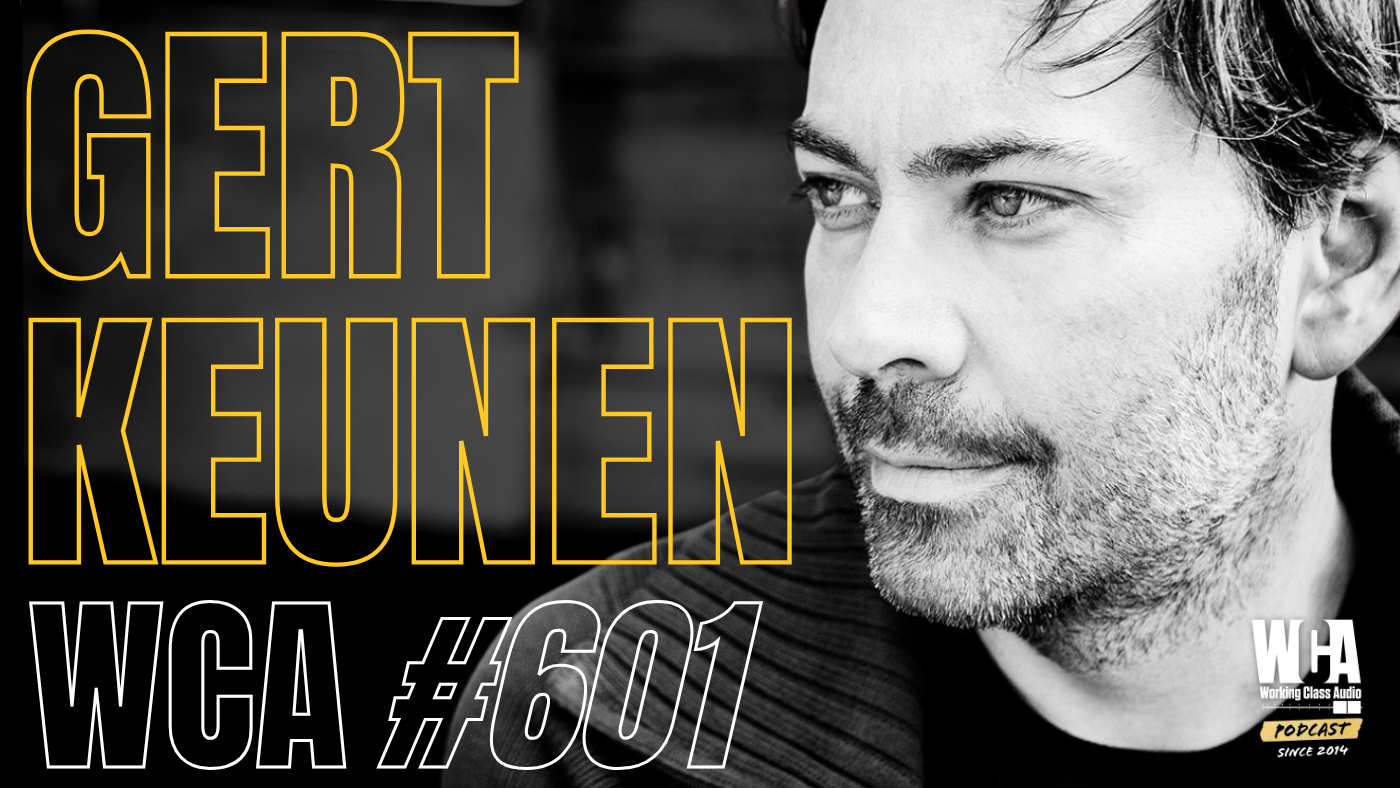
WCA #601 with Gert Keunen – Immersive Audio, “Stereo Was a Nice Try,” a Dozen Careers, and Brewing His Own Beer
For episode 601, Matt sits down with Belgian musician, mastering engineer, and sociologist of music Gert Keunen — recommended to the show by past guest John Greenham. Gert has spent 35 years saying yes to nearly everything music: seven albums of his own, the nu-jazz project Briskey, a PhD in the sociology of music, four books on pop history, stints as a record-label staffer and newspaper critic, teaching at conservatories in Ghent, and most recently a deep dive into immersive audio that produced his book STEREO – Was a Nice Try. He joins from the Flemish countryside — where he also runs a 200-liter brewery and grows his own hops — to talk about how he manages time across all of it, why he learns best by teaching, how ADHD and dyslexia shaped an offline, notebook-driven discipline, and why he believes the future of immersive music is composing in 3D from the very first note rather than upmixing stereo.
In This Episode, We Discuss:
- Living a Passion-Driven Life Across Music, Academia, and Beer
- Managing Time When You Do a Dozen Things (and Cycling to Clear the Mind)
- Growing Up in Flanders: Flute, Pink Floyd, and a Cracked Cubase on an Atari
- Why He’d Rather Create Music Than Perform It
- A PhD in the Sociology of Music and Four Books on Pop History
- Teaching Music History, Sociology, and Production in Ghent
- Going All-In on Mastering for a Year with Friedemann Tischmeyer and Ian Shepherd
- How ADHD and Dyslexia Shaped His Offline, Notebook-Driven Learning
- Why Teaching Is How He Actually Learns
- Discovering Immersive Audio Through Apple Spatial Audio on Earbuds
- Why a Good Immersive Mix Makes the Headphone Experience Better
- Writing STEREO – Was a Nice Try Because No Good Handbook Existed
- “13 Reasons Why Dolby Atmos Sucks” — and His Rebuttals
- Creating Immersive From the Ground Up vs. Upmixing Stereo
- A Format-Agnostic Workflow: Object, Channel, and Scene-Based, Then Choose Atmos or Auro-3D Later
- Teaching Immersive at a Conservatory With a Dolby Atmos Room
- Translating Student Tracks to a Live Immersive System at Ghent’s Winter Circus
- Pricing Mastering, Student Discounts, and Treating Gear as the Real Payment
- Gear Acquisition, Buy-and-Return, and “a Hobby That Pays for Itself”
- Finding Community Online Through Chris Selim’s MCC
- Running a 200-Liter Brewery, Growing His Own Hops, and Why Beer Is Like Making Music
Matt’s RANT!: Time
Links and Show Notes:
- Gert Keunen
- STEREO – Was a Nice Try (book)
- Briskey
- Ian Shepherd on WCA
- Friedemann Tischmeyer / Mastering Academy
- Nuendo (Steinberg)
- Chris Selim on WCA
Credits:
- Guest: Gert Keunen
- Host/Engineer/Producer: Matt Boudreau
- WCA Theme Music: Cliff Truesdell
- The Voice: Chuck Smith
Read the Full Transcript
Matt: Okay, we’re good to go. So here we go. Gert, welcome to the podcast.
Gert: Thank you. I’m very happy to hear you, be here. Yeah.
Matt: Yeah. Great to great to meet you. let’s get started with the state of the state. Who are you? Where are you? And what do you consider yourself?
Gert: Well, I live in Belgium, which is a small country in Europe. and I’m busy with music in a professional way for thirty-five years, something like that. I’m a very passion-driven person, so I always want to do things I love to do and I want to make my job out of it. And my main passion is is. Is you I want to say beer, that’s also a passion of mine, but that’s for something later. Beer and music. and well, I’ve done a lot of things. I’ve I’ve worked for a record company. I’ve was a music journalist for three newspapers in Belgium. I’m teaching for the moment two university colleges. I used to teach at four university colleges.
Matt: Well yeah, we’re gonna talk about
Gert: I have a PhD in sociology of music. That’s also one of my main occupations. I’m a musician mys I I worked for an art venue. I did organize concerts in in Ghenton, Belgium. I’m a musician myself, released seven albums. I had a project in the Nilly’s combination of jazz and electronica called Briskey, with which I also had a big band, which we performed all over Europe. right now I make music all on myself in an immersive way. So I’m very into immersive audio, Dolby Atmos. so I create my music in immersive and then I mix and master. Mastering is also something I do for other people. So I’m a I’m a certified mastering engineer. That’s one of my side jobs beside of of of teaching. So it’s I always know it’s it maybe it sounds impressive, but it’s not for me. I’m I’m just busy with my passion and and that’s music. And and I always want to explore music on different angles. So meeting artists by writing about it, by organizing concerts, then performing myself, meeting other people. So I’m always in the run and and and looking for new challenges in in music and maybe I’m I’m bored. too quickly that I do a lot of different things.
Matt: And but did you mention the brewery?
Gert: Yeah, I I also have a brewery. That’s my my other passion. It’s music and beer. and I live at at the countryside in in the Flemish part of Belgium. and when we moved here, it’s about thirteen years ago, my first thing was I want to do something with my hands too, so I cultivated my own hop plants. so I have a small brewery, two hundred liters, it’s very small, and grow my own own hubs and I make my my different kinds of beer from different sorts, blonde beer, dog beer. I’ve got IPAs, I’ve got I’ve got stout beer, different kind of of beer. So that’s for me it’s a bit like making music. It’s also working with with small ingredients and make something which suits people, which is nice, which is beautiful, which is tasteful. and it’s the same with making music. It’s that’s also a combination of different small parts and and making something which is bigger and and can can can be yeah pleasing.
Matt: Wow, we’re like not even five minutes into the interview and I’m totally inspired by you. That’s fantastic. okay, before we go into the beginning and where you grew up and all that business, I want to know how you deal with time management when you do all these things.
Gert: Yeah. Yeah, that’s a difficult difficult thing. Because I can I can stress out quite quickly because I’ve got too much on my mind. maybe I also they say I also have AGHD, so that’s that’s why I have this this very big energy to to keep on doing things. Maybe that helps. but it’s it’s like yeah, just just get get yourself organized in a way. I’ve got a few things I have to do. So I’m teaching at two university colleges in Belgium. Those hours are are blocked and locked. those days are fixed. But in between I’ve got three days. And then when I have a mastering gig, I just do that. If it if there isn’t a mastering gig, I do some mixing myself. I start composing, work in the the hop yard. So it’s really from from day to day. See if there is time, I will I will do something I I I fancy at that at that time. but sometimes it’s just all all together and and and I have to admit, there are nights that I hardly sleep just because my my head is so so active and I have to do this and this and this. And then one thing which is very important for me, I I really like cycling. so that’s my way to free my mind. like within two days I will do a tour of 80 kilometers cycling. I also go to my my school, which is 40 kilometers one way, I do it by bike. with an electric one of course, but but that’s just to to free my mind. that’s when you have a bit too much energy, but then then I can sleep well. Yeah.
Matt: Amazing that you do all of this stuff. well, my next question would be: do you have kids? Okay. Well, there we go.
Gert: No. No, that’s the reason why you can do it. Yeah. Yeah. Yeah. No kids. And I have a very lovely wife who is really encouraging me and and also she’s also letting me free and and doing the things we do. We do a lot of things together, but but in the meantime I can do whatever I want. And so that’s that that’s very important. I also I all met her when I was thirty. so That was also important that that we have we had already a long history, both of the two of us. She came from from the radio. She she was she she was doing she was a presenter, a host on on national radio in Belgium. and she was hosting a program in which my music was played. So I knew her because she was the host of the program and then we met for the first time and it was yeah, love at first sight. So that that’s important too. Yeah.
Matt: That’s absolutely important. let’s go back to the beginning. talk to me about where did you grow up specifically?
Gert: Mm-hmm Well, you know, Belgium have got has got two parts, a f a French part and a Flemish part. I’m from the Flemish part, which is very crowd. So it’s it’s in in in square meters it’s difficult to explain, but I think you can fit London five times into Flanders, maybe something like that. And there are six million people living there. So it’s very crowdy. and but I was from more of a of a more quiet part of of of this of this country in in a small town with parents singing in a choir my older brother was playing the flute so there was music in the family and so it was easy for me to follow music lessons when i was in in in low low in not in primary school yeah when i was ten years old and because it’s it it’s a small city When I went to study after after college time, went to a bigger city where there was a university there that did sociology. but that city, very beautiful, it’s called Leuven. It’s the biggest university city in in Belgium. but it’s only students. So after that, I moved to Ghent, which is the nicest, one of the nicest cities I know. I’ve lived there for 20 years. It’s just like Bruges, which everybody knows, but Ghent is alive. It’s a very it’s got a medieval castle in the middle of the city center. It’s it’s it’s a it’s like a pig it’s like like a fairy tale. It’s so beautiful city, but it’s alive with a lot of youth, a lot of music, a lot of cinema, theater, also a lot of economy. So it’s a very alive city. And and there I lived for twenty years and and started my whole my whole professional career. but it’s by getting older, and I think we have the same age. I’m from sixty nine.
Matt: Yeah, me too. Yeah.
Gert: Yeah, yeah. I heard you saying in a podcast once that you were fifty-six. that’s the same age age as I am. so but by by getting getting older, I wanted to to have more more a more quiet life. so I went really went to the to the countryside. And if somebody of of of the listeners are familiar with cycling and you know the the famous cobblestone classics in in Belgium, like the Tour of Flanders. That’s where I live. So it’s in in that part of of Flanders with a lot of it’s the hillside. it’s it’s not no mountains, but it’s hilly. Hilly with a lot of cobblestones and and and wadow meadows. So it’s it it’s a nice it’s a nice place, which also brings brings rest in this life.
Matt: When did you get interested in audio or or the creation of you know, the the the recording side, the mixing side, the production side of audio?
Gert: Well, that’s I try to play an instrument first. so I studied the flute when I was a child, because my elder brother was playing flute, and I knew this is the most sexy instrument in the world, so I also wanted to play the flute. but then I became a teenager and I want to impress girlfriend, so I played the guitar and I brought an electric guitar. and I played a lot of guitar. but one day, and that is very important, I because I I’m I’m a big Pink Floyd fan because of my brother, so I played David Gilmour style guitar. And I want to do something else. So I decided I will go to follow jazz lessons. And my jazz guitar teacher, he got one of the first editions of Cubase. I think it’s Cubase two, and I’m talking about ninety ninety one.
Matt: Yeah.
Gert: That time. So it’s really the beginning. And so I went there to to follow some jazz lessons, but I came back with the first cracked version of Cubase. And my brother got an old Atari computer on which you can load in this this Cubase file. And and then I just realized: well, I prefer creating music instead of playing an instrument. And then I st started writing two tunes in in on my my small on this small system. And I also had an old Tascam four track with which I already record some some of my first songs, playing guitar, some flute, some keyboards. I got a rhythm machine, this Bose Dr. Rhythm 500 or 50. What’s the name of it? It’s an old rhythm machine. and that’s
Matt: yeah.
Gert: That’s really the first it was in the nineties, making my own and and I played in a few bands, but I I I realized that playing in a band is fine as long as I could deliver the music. So I’m I’m really an an an yeah someone who who wants to create in even more than just playing together, playing an instrument. so I I I’ve I have my my my biggest moments when I can. make a new tune. And that started in in the 90s. And then I just that’s the reason why I still work with Nuendo today. because I’m working with Cubase since since 90s. So that’s that’s that’s that’s 35 years. So it’s that’s my my second nature. I know the program inside out. and that’s of course important when you create music that it’s an attachment to yourself and it’s not something you have to think about. and
Matt: Yeah.
Gert: And in the beginning I was making music to perform with friends and and to perform live. so in the niles I have I had this band called Briskey. the minimal setup was seven musicians. so and I rich I wrote all the compositions for them and I was doing the sampling and and live electronics and and the conducting because the musicians are mainly professional jazz musicians, highly qualified musicians could play instruments much better than I do.
Matt: Yeah.
Gert: but they played my music and and together we we reshaped it. and then I got this idea to make to turn it into a big band because I was using a lot of big band samples. so I had a 15-piece big band for which I wrote all the arrangements, did a lot of concerts with, and so in the first period was composing tracks, performing live by my musicians. And then there was some yeah this this yeah maybe typical artistic frustration after a while. so after four albums, what what shall be next? shall I make the fifth one, which is more or less the same with the same kind of concerts? I was looking for something new, something fresh, some and and also in in the beginning when I started there w there was this new lounge, new jazz, Saint-Germain hype with which I could profit. so I had my my first gig ever was I even had a live band. My first gig ever was in the Ancien Belgique in Brussels, which is the most famous concert hall in Belgium. And it was just because of my records. The the the guy the programmer listened to my record said do you want to play here? So yes I have to find a band. and that’s how it all started. So I made music myself, but then invited a band and and we grew as a band. but yeah, I was just following my own path and and and my own taste. and maybe maybe that’s different from from another musician or or or normal musician. Is my main profession is teaching. I’m a professor, so I have my income.
Matt: Mm-hmm.
Gert: And that is very important. So I have a job which I really love doing, and I’m I I can share my passion with students, which is so great. But that also means that I don’t have to make any compromise at all in making music. That’s just yeah, I have my income, and that’s that’s important. So I was just doing the things I I wanted to do, but it it it wasn’t that popular anymore because it was my music w went more into a cinematic style, more soundscape, and And then I had this frustration and then I decided, well, one of the universities called asked me, do you want to make a PhD? yes, why not? So I started a PhD and in music sociology. and then I started a brewery. And there was a time around two thousand twelve when we came to the place where we live for the moment, when I really thought I will never make music again in my life. Been there, done that. And I’m a brewer s from now on. So I started the brewery, my own hop yard, and I was brewing beer, beer, beer, beer, and teaching, of course, but no music at all. until Corona gets kicks in. the the time when a lot of people were just r yeah, reflecting, and and the same with me, I was sitting in my studio, I rediscovered my studio and said I I’m I’m going to make a new record. But because of the lockdown,
Matt: Right.
Gert: I decided I will do everything myself. So I do the composition, the whole producing, the mixing, the mastering. Mastering was something new to me, and there was really like this this click, wow, this is something for me. Like digging into details and and and and and and and sorting out how sound is working. So mastering that’s it’s made for me. So then I went studying at the mastering academy in Hamburg with Friedemann Tischmeyer, the guy who invented dynamic range. And then I did let followed lessons with Ian Shepherd in London. He was he was also a guest and at your podcast. he was one of my mentors. and then I started my own mastering service after this afterwards. But the main reason was I want to master my own music. That was my motivation to do mastering. yeah.
Matt: Right. You know, it’s amazing just the the thing you just keep piling up activity after activity. And I I love how how like you know, whether it’s beer or teaching or writing or mixing or mass, you know, like it’s unbelievable. Like I could probably come and spend a week with you and just be exhausted. ‘Cause you’re you’re doing so much. But when it comes to the so I wanna understand a couple of things. the teaching. What what specifically are you teaching?
Gert: Yeah. I’ve three two main things. The first part is is music history because I also I didn’t mention but I I wrote four books about history of popular music. so that’s my main that was my main teaching area since since I started teaching 30 years ago. that was teaching popular music history. and then also music sociology because that was my study. that’s one thing, and the other thing is music production. And I teach a few things. One is the introduction course for all jazz and pop students at the conservatory, who are entering the school because they want to play an instrument, and I’m teaching them creating music in the box. So they have to work in a DAW and with soft sins and etc. And I try to to to help them in in creating demos. And that’s in the first year. in the music production department I also teach mastering and I have my own cars on immersive sound. And that’s of course the cherry on the cake. yesterday we had a presentation of our students, because in our students in in this car’s immersive audio, they have to make an immersive track. We have a Dolby Atmos room in in at the university. so that’s the first part creating a track, but then they have to translate it into live and In the city where I’m teaching in Ghent, there’s a venue called Winter’s Circus. And it’s a fully equipped immersive Eliza concert hall, and then have to they have to translate their then to translate their track into an ELISA immersive music project. And yesterday it was the presentation of those tracks, which was so so lovely. I was I was really I I was riding home with with a big smile. and and and that’s why I get my energy. you want to help students and when you see the results and the students are happy and they they thank you so thank you for helping us. that’s that’s the most beautiful beautiful thing there is. Yeah.
Matt: You know, considering the amount of activities you do, how where do you find the discipline to do like for an example, when you when you wanted to get into mastering, you know, you went to Friedemann Tischmeyer, you went to Ian Shepherd, like you, you, you really focused in to figure out like how does this work? How should I be doing this? What’s the approach? How do you find the discipline to do each of these activities well?
Gert: Well, that’s the strong urge to understand something. I really can dig into something until the very smallest detail. for instance, I have a book, not a book where you write with it with pen and paper, like an empty book. Yeah. Yeah, yeah.
Matt: yeah, like like a journal or or or a notebook.
Gert: Only for the the lessons of of of of of those two mentors. I’ve two of those books written everything down, which I thought which was interesting. And that’s how I do always the translation. So I’m always writing down in in books. I’ve got plenty of them, according to the to the subject. and that’s when I see a YouTube video, when I follow a course, when I see when I heard something new, then I write it down. And time by time I just read all those notes again and and that’s how I memorize it, how how it’s how it’s getting structured inside my head. But that’s really my my my way of of of handling things is by writing it down. in fact I’m very bad in the digital age because internet is too much for me. It’s too much information. and I I really get a lot of stress because it’s too much for me. So I want to slow down and to and that maybe that’s the reason why I focus. Just to have I’m control freak. To have control on different things and and then I can really dig very deep into it. And it’s time by time. So the the the the the year I was studying with with Ian Shepherd and Friedemann Tischmeyer, that was the only thing I did that year. That was one year only mastering from morning until night. and and that’s the same and and afterwards it’s it’s with immersive audio and they’ll be honest. I just wrote a book. on creating and and mixing immersive music. So that means after a lot of reading, but the writing itself was like like four to six months full time, seven, seven, twenty-four, twenty almost w with a few hours of sleep. Yeah.
Matt: So with with Atmos, t talk to me about your journey there and and did you apply the same learning techniques that you did with mastering?
Gert: Yeah. Well, first of all, I I learned mixing by doing mastering. because then finally I understand what a compressor was doing and and other effects because that’s that’s what was a very good perspective just to have the general image and then go into detail. and maybe that’s also my my interest because for for for immersive it started like a lot of people from nowadays When Apple joined the the the the circus and and I could hear specialized audio on on my earbuds. that was my my first encounter. And that’s also one of the maybe the bottom line, because in in my opinion, the when you have a good immersive mix, the headphone experience will be better. And if that’s the only win we have, that’s already worth doing it.
Matt: Yeah.
Gert: So that was a starting point. And then I thought, maybe this can be something interesting. and mastering, I really love doing it, but but also maybe I’m I’m I’m I’m doing too much to to develop it in into a a fully full functioning job, to to get a lot of gigs. I’ve I’ve got some which is fine. but I think maybe there are already enough mastering engineers. I’m very bad in promotion. I’m I’m very good in doing things, but I’m very, very bad at promotion. so so maybe I thought maybe immersive can be can be a big next thing. Let’s let’s let’s dig into that. and then yeah it’s it yeah that’s really one of my my my big problems that I it has to go the all all the way. So only headphones wasn’t enough for me, so that I invested in in small speakers and and that it can can have an immersive setup at home. and from there it all started was just like experiencing and because always say hearing is believing, and once you hear this this immersed sound, then you’re sold. And because of that strong feeling, I th I said no, this is what I want to do. And so I was
Matt: yeah.
Gert: reading and writing and and I I I I think I’ve saw all the YouTube videos on on on immersive and all the atmosphere I I could find. I’ve I’ve I’ve bought all the books on immersive you can find on Amazon for instance. And then I’m studying and writing down and then I think maybe I have to do something with it. So and then the advantages when you when you’re when you work at the at the conservatory music higher music education then it just s suggested to to the school but maybe I can do Cars on immersive audio. yeah, okay, great. well, not from the beginning, but after a while, because I was come on, please, let’s do it. Let’s say finally, yeah, okay. it’s your ball, ballpark, and and just do it. and and that was the the the the urge to or the the motivation also to to write the book because I didn’t find a a good handbook for for the students, so I thought, maybe I’ll write it myself.
Matt: Yeah. Exactly.
Gert: But but that’s that’s how and it it all sounds more special than it really is. I’m just again busy with my passion and and and I want to to dig into things and and I’m I’m happy when I can can explore something and and and find some relationship between things that really gives a feeling of of satisfaction and that’s why I write books and and and I’m teaching. That’s I I’m always looking to to to connect the little the little dots. and and then I just thought, yeah, if I if I spend all this time in in studying immersive sound, maybe it’s good to to to collect everything in in one book. And and if this book can can help people then then I’m I’m very grateful.
Matt: and I do want to talk about the book, but before we do that, I want to ask you when you are researching anything and you’re reading, first off, are you are you do you do you read a lot of books? Okay. I I have trouble if it with certain books, it it depends. Like I get bored really easily, like I can do audio books.
Gert: Yeah. Yeah. A lot.
Matt: like any day of the week because I can it’s that listening is easy for me. Reading the light has to be great and I have to be comfortable and it’s just if there’s any distractions, it it becomes very difficult for me to read. I’ve I’ve discovered and So you don’t have that problem and you can easily read. When you do read, do you take detailed notes like you do okay, yeah.
Gert: Yeah, and and it’s I already told you I have H D H D R D R D H A S D, yeah. right?
Matt: A yeah, well ADHD?
Gert: A D A D H D, yeah, yeah. R D R D A D H D yeah. and
Matt: A attention deficit hyperactive disorder.
Gert: Yes, that’s it. That’s it. And that makes it difficult for me to read books on a computer. Because there’s always flickering and it’s always scrolling and there’s always new information coming in. Maybe an email is coming in. And does it that is very distracting for me. So when I read a book, I’m not online. I’m offline. I’m in my in my in my in my living room and I’m I can concentrate on the things I’m reading. And that’s that’s the only way in which I can yeah really concentrate because otherwise I’m always distracted. I’m distracted by everything. And so I have to close myself and the book is is helpful for for me. And then I take a lot of notes first with a with with a pencil I I I I I make some marks in in the book and then I reread it and sometimes I write it down in a new book with all the all the the most important things and that’s maybe that’s a reason why i love to write books too because it’s very difficult for me i also have got the dyslexia dyslex yeah okay so writing is difficult for me but even then i’ve got the strong urge to yeah just to to connect everything
Matt: Dyslexia, yeah.
Gert: Maybe that’s because there’s so much happening in my head that it w that I want to find ways in which I can structure it for myself. And one way to do it is is is writing a book or or teaching about it. Because when you’re teaching, you have to structure all your thoughts. and I learn most of the things by teaching on it. And because you have to explain it and talk it loud and and there are questions, and suddenly I realize, I didn’t know this, I didn’t know. I have to look it look it up. Sometimes say to the students, well we will discuss this further next week. And in the meantime, I’m I’m studying because I want to know the answer on every question. And that’s my motivation. And and and and yeah, and reading, writing, teaching helps me in in in structuring. And because I need it for myself, for my health. it’s also profit for me as an as a profession, and because I made my living out of doing this.
Matt: I I I think it’s really important that you the fact that you understand that you have dyslexia and ADHD and understand the the potential pitfalls of those two those two diagnoses and understanding what you need to do to make it so that things are organized. And I love that.
Gert: Mm.
Matt: you you go that you go offline to really focus that’s that’s really interesting so let’s talk about your book and because of your fantastic setup there could you flash your book up on the screen for our YouTube viewers look at that stereo was a nice try creating and producing immersive music okay that is great so in creating this book what is the goal
Gert: Mm. Yeah. Here it is.
Matt: for you in this book.
Gert: Well, this the title is is self ex explainable explorable. No. yeah, indeed, that’s the word. Yeah, English is not my mother language, so excuse me for that. Yeah. because when when I’m working in immersive audio and also at school with colleagues of mine and people you meet in the music industry and musicians, there’s a lot of hesitation when it comes to immersive Odolpia.
Matt: Explanatory. Self explanatory. Yes. I I I no, I totally get it, yeah.
Gert: it’s like, yeah, we’ve heard about it, but it’s not let’s wait and see. maybe it will go over, but we’re still fine with stereo. so to begin with, I want to persuade people, well, stereo was a nice try. It’s it’s it was good because we didn’t had any anything that was better. But now there is something which is better. So it’s time to explore that and embrace it. so the first chapter in my book is all the 13 reasons why Dolby Atmos sucks. So all the critique I hear, that’s my starting point. And then I try to give counter-arguments to say, well, maybe, but look at on the other hand, it’s this. And I think the central point in in in everything I do, and also in the book, is W when it’s when it when we’re talking about immersive music, I’m not that much interested in reworking an existing stereophile into a Dolby Atmos project. No. I’m interested in creating music in an immersive way right from the beginning. And I strongly believe that the real future of this format is when artists start to think immersive. And that’s my main goal of the book. Let them think about what is possible. So I’m I’m very interested in in the creation process. So it’s like recording with multiple microphones, but also working with virtual instruments in an immersive way. how can you use those in an in an immersive setup? And and then make a project which is and I’m I’m telling immersive because it’s more than Dolby Atmos. Dolby Atmos is a most well-known format for the moment, for the moment. But it’s one not the best one. And maybe it won’t be the one for the future. We don’t know. But the most important thing is to be future-proof and just make something which is immersive. That means work in multi-channel groups, multi-channel buses, work in in object-based, in channel-based, and scene-based, with with ambisonics. And when a project is finished, then you can decide what you’re going to do with it. You can turn it into a Dolby Atmos. But you also can turn it into Eclipse when YouTube will start broadcasting Eclipse. Maybe that will be the next big thing. Who knows? I don’t know. If you want to have a high quality audio file, well go to Auro-3D, which is a very good format too. If you want to make a live performance and you want to change it into ELISA for a live system in ELISA or in DOB or or mayor sounds, you can do it.
Matt: Mm-hmm.
Gert: So it’s like one project in and and you also can make a stereo file out of it, of course, just like you. I’ll also do the the Atmos or the immersive mix and stereo at the same time. so that’s my goal. And and also in the book, I present a workflow in which you first create an immersive and then make an an mixing with a format agnostic way of working. And when it’s finished, then you decide which format you’re going to do. Of course, half of the book is mixing in Dolby Atmos. let’s be honest, that’s the most important thing. So that’s also the main thing of the book. But it’s just like it it’s it it’s when you talk about channel placement, for instance, it’s the same for Dolby Atmos or Eclipse, for instance. So it’s it’s it’s more general than than only this this this format. And
Matt: Yeah.
Gert: Yeah, one of the reasons is also that that well Dolby Atmos I really love and and I have a Dolby Atmos set up and I work in Dolby Atmos. but it it has got limitations, which is really a pity. And and and they refuse to change it, which is really a pity. And and there are better alternatives. so that’s why I always keep my eyes open on on new developments and and just yeah, we’ll see what a future will will bring, but I think that it’s better to be future proof. So my book is is is an encouragement for people to stop thinking only in stereo, no start thinking in immersive. And from the creation process, how you can place an instrument in in inside a room, how you work with space, how you work with delay in the creation of music. And then when you do the the the mixing, what what is the best way just to to to fill to fill this room? But I’m also discussing the difference between channel based, object-based, what is the the the the pros and the cons. can we is it important to have a lot of movement or not? things like that. and also there’s a chapter about mastering, where I do the comparison between stereo mastering and immersive. It’ll be Atmos master mastering. so this is considered to to Atmos, of course, because you’ve got Wavelap thirteen, which has a
Matt: Mm-hmm.
Gert: Atmos mastering program and also Fidel Audio Mastering Console. You’ve got two very good mastering programs for Atmos mastering. So do the comparison comparison between s stereo and and immersive. And then also the the last chapter is about the the the delivery formats, the D D plus jugs and the the AC fars and and other conversions which take place take place all over in in in in in the whole project process.
Matt: When you’re exploring a particular topic or writing a book, do you feel a sense of time pressure to get it done before, you know, is there a threat that you will lose interest in what you’re doing? Let’s say you’re 50% way through writing a book about immersive, you know, audio. Is there a potential, do you ever worry like, crap, I gotta get this done because I might lose interest and something else might catch my attention?
Gert: Mm-hmm. Well, I I have to give myself a deadline. In the beginning there’s no deadline, and I’m totally free, and that’s the most fun part of all, because then you’re just watching some videos and reading and and and exploring things because I I I I test everything myself in my studio. every plugin I I describe, I’ve tested myself. So those are the the the the fun things to do. but Then there’s this time that that you you have to to to finish it and and and to to to to to finalize everything. And for that I really need need a deadline. And in this case, it was in in in February there was a convention in in Helsinki for European convert conservatories, in which I did a a talk on immersive audio. So I thought that day I will present my book. And that was my personal deadline. And that’s something I need to to really finish it. And then the last month it’s like nonstop working just to to finish it. and I need to have this deadline because I want to do something else also afterwards. Then maybe there’s two months I do do don’t do anything at all anymore with immersive. I’m just doing other things, just to clear my mind and then it comes back. So it’s not I’m not doing everything at the same time. It’s just always
Matt: Right. Because you only have room and and time for so much. So I’m sure that, you know, the minute you discover there’s a new thing you want to explore, you’ve got to like shuffle out or move move aside one other activity.
Gert: Yeah. Yeah. Yeah. Yeah. And there’s always one big investigation at the time. So there’s one big topic I want to explore at at one specific time. So when I’m very into when I’m working busy with mixing in in in in Dolby Atmos that I’m not doing mastering anymore, at that at the same time. So or or or a lose interest. So luckily I’ve got some some mastering gigs just to Keep on going because otherwise I just maybe I forget things after a while. so yeah.
Matt: I know you you you have to do the activity to keep it’s like exercising the muscle.
Gert: Yes, indeed. So yesterday I got a question from from an artist. he he will release three full albums in the next month. will you master it? So yes, of course. So and that’s that’s good just to have have this this this practice, because otherwise I yeah I’m I’m I’m yeah.
Matt: When it comes to the the business part of everything for you, now you’ve got your teaching gig. So that’s that’s your regular income. How do you price yourself for the other activities? How do you establish, like, what’s a fair price for me to charge for mastering, for mixing for other people? what process do you go through to to determine what your value is?
Gert: Well in the beginning it’s like start low and see how high you can go. but there’s also an ethical question in this way that for mastering, when a student asks me to do mastering, I will give a huge discount. because it’s not because it’s a student. I won’t do it for free, but it’s not my regular price. Normally for mastering I’m asking 50 euro for a trick, but for student it’s thirty five. Yeah, and that’s cheap for students. and I can live with it. because that’s good. It’s also it’s an ethical thing. I I can’t charge the the same amount of money. but there’s a lot of things I I you you just do for free. You’ve got a lot of people asking you for advice and I want to give advice, There’s some some commu communities in which I contribute just for free. I’m giving mixing feedback for on on the line communities for friends. I’m just doing that for free because I love doing it. and when I do a talk, then yeah, of course I that that’s that’s see how how high can you go. I say I’ve got my minimum. if I do a talk, so this is my minimum amount. And it’s always like like a typical economic economical game. You you ask much more in the hope that you get a little bit more than than than the basic basic price. but I but I see all those things as as an as an extra extras to buy gear. That’s really the thing. That’s that’s how I I I work. So I do mastering to to to to pay back my my investments.
Matt: On the on the Right.
Gert: the same with immersive. I’ve do visits in my brewery, which also get a little bit of money, which I buy plugins from, because I’m I’ve I’ve got a huge collection. So I I’m that that’s also yeah, I buy too much things and and and also selling and reselling, but I’m yeah, I’m I’m a control freak, but also a controller freak. so I want this is new, I want to try it out.
Matt: Th let me ask you about that.
Gert: And and that’s that’s with all those mastering gigs and and and other gigs that’s yeah for for so at the end I have a free hobby. That’s how I see it.
Matt: You have a hobby that right, that pays for itself, essentially. Let me ask you about the trying things out aspect because there’s things I see that I think I don’t really wanna own that, but I do want to try it. And sometimes I confuse my need for something with the desire to just test it out, just for experiment’s sake.
Gert: Yeah. Yeah. Yeah. Yeah. Yep.
Matt: Do you do you also have a a a desire to just try things?
Gert: Yeah, and that’s that’s all I’m not saying it’s it’s really a sick situation, but but I think there’s a lot of us music engineers have got this this problem. maybe also fear of missing out. so something new. I I I need to know, especially when you present yourself as a as an expert, you you have to know it. so you can’t say, I don’t know that. No, no, you have to know it. So for software I buy too much, really too much. I buy plugins, even it’s that sick. Sometimes I buy plugins and I know I will never use it. But there’s also for my collection, just to to know what it is. It’s that’s stronger than myself. it’s only 20 euros. Okay, I buy it. And and that’s not good. For hardware, it’s something different. well, we all know there is this economical system where you can buy gear at the big shop and then send it back after a month. That’s what I do sometimes. I just try it out. And if it’s no, this this this wasn’t a bad this was a bad mistake, then I send it back. So we have to admit, yeah, I do that. So that helps a little bit without losing that much money. But on on the other hand, I still buy a lot. So it’s it’s justified to to to to work that way.
Matt: You mentioned communities and I realize you participate with my good friend Chris Selim in his his communities. you mentioned you’re a Nuendo user and and he runs, you know, he does a lot of Cubase-centric stuff. do you get a lot of enjoyment from participating in those communities?
Gert: Yep. Yeah, absolutely. Absolutely. And the fun thing is I I started by being a member myself a long time ago, just because I thought that maybe it’s interesting to get some mixing feedback, until I realized that, well, yeah, that’s I’m a teacher myself. And then it’s sometimes difficult to be a student again. and and I told Chris, I say, Well, I will help you, but I’m not just yeah. attending the sessions. And I said, well, join the team. And then I’m on the other side was together with Chess, Chess Roots, we we do the the monthly mixing revisions and and there’s a QA and and I really love doing it for two reasons. One is the same already explained. It also helps me structuring my thoughts because there are questions which are new and which I didn’t know before that makes me think, yeah maybe this is it this this is interesting. but also the second one is is like building a building a community so now i know chris now i know chess now i know some people that’s also interesting because those those are just lovely guys which i otherwise i would never know them and and and and and that’s it’s it’s it’s the same like playing in a band by doing this you’re part of a community so i’m i’m a and Einzelgänger, so I like to play myself on my own in my studio, but I also want to have contact with with people who think the same. And when you meet people with the same passion, the same interests, then that’s that really gives a very warm feeling. so after every session with with the the Chris Selim MCC, it’s called, I’m always smiling. It’s like yeah, and Then this has nothing to do with money or something. No, this is just because you want to share your your passion with with somebody else. That’s why I like to talk with you. That’s that’s the fun thing to do. That’s that’s and we need that. We we we’re we are human beings are very social beings, so we need to have social contacts. And for a modern music producer pr producer working in a in a in a studio, a lot of most of the times we work alone. then it’s important to have this this
Matt: Yeah.
Gert: these meetings. That’s why I love teaching. That’s that’s also my well, keeps me healthy. so
Matt: Yeah, it’s that’s interesting you say that because I I really think what I get out of doing these interviews is I just love to hear what people are doing, what their story is, how they’re you know, like I’m completely intrigued by your whole world and how you’ve structured it and some of the things you’ve learned about yourself along the way. I just find that endlessly fascinating to know. So I I I agree with you.
Gert: That’s also the reason why I listen to your podcast quite a lot, because just to hear these stories. That’s and I I know how how you’re working, so I really like this. It’s like it’s like meeting somebody, somebody which you don’t know. So, this is interesting. And sometimes I I hear podcasts w from people who who doing things which are totally different than my point of interest. But even then I found some things. this is nice, this is good to think about. do it do does it this way, and and that’s That’s that’s important. It’s like an an a window to to the world.
Matt: Let’s talk about beer. Tell me tell me how you got involved in making beer and and you have a proper brewery?
Gert: Yeah. Yeah, small one, but it’s it’s yeah. It’s well it’s it’s the same as as making music. It’s I’m I’m very bad in having hobbies. Let me explain. When I’m interested in something, something gets a passion, and a passion gets almost an obsession. then I’m so intrigued by something that I want to explore it, I want to know it. So music is not just enjoying music, no, that’s making myself and then presenting myself, pre-mixing me. And with beer, it’s the same. It’s like I’m I’m a I’m a a huge fan of of of the the strong Belgian beers. at my parents’ house there were always fifteen different kinds of beer, no lager beer, no industrialized beer, but the artisanal, real strong, heavy, pure beer. we we of for which Belgium is very famous for. we were really a very famous beer country.
Matt: yeah.
Gert: And then I just want to to start reading about how is beer made. And I thought, this is interesting. Maybe I have to try it myself. And then I bought a small kit to brew in the kitchen. And and my first brewing was was so nice to do and and and it tasted well. That’s that thought, this is great. I I want to do this more. And then we we live in the countryside and we’ve got this this like this this workshop place in an old part of the building where used to be horses long time ago before we lived here. and then I renovated one of the one of those spaces into a a full functioning small brewery. and and yeah the same stor story. I studied a lot of because I’m I’m a sociologist, that’s my my thing. I’m not a chemistry guy. I’ve never loved chemistry. But then I start reading books about how to make beer, making notes, studying, and and the same process as with mastering and immersive. And then I just try it myself and and and I can do every anything I want if I have a very strong intrinsic motivation. and if you ask me something which I don’t like, I’m very bad in it and won’t do it. So I’m very difficult with the things which like bookkeeping, for instance, doing promotion, I hate it. I hate the whole economical side of things. That’s not my world. but when I have very strong interest in like this making beer, then I just go into it. And the coincidence was that my grandfather, he was a brewer, and I’m the first person in the in the in the whole family, in the second generation, starting beer again. So he made beer one century ago. and and maybe that’s something unconsciously part of the whole story, because maybe that’s the reason why there were so many good beers at my parents’ place, because it was also part of that that family. and and then yeah, i it’s a nice story to to tell also that the I found some old bottles of my grandfather with his name on it, bottles which are more than a century old. and that was so so so so hard warmful to to to find this also for my father. and and and and this is yeah I I experiment with with with taste and the 10 years that I didn’t make or nine years that I didn’t make any music at all I was only doing my brewery Then was really professional brewery. I sold to all the restaurants and pubs in the neighborhood. at a certain time I had about more than than than 15,000 liters per year selling my beer. But the same thing, I’m very bad in promotion and economy. and the beer world is full of mafia, really. It’s it’s if if you know all those. those shops and and and the in-between persons who take all the money and and and and the the producers are really sometimes don’t have anything. So there was also during Corona I I decided no I don’t want to to waste too much energy in the bad vibes I got from the business part of the beer world. so I go f today I go to another brewery nearby, which is a bigger brewery. And they brew my recipe. So I changed my small brewery into a small labo where I can still experiment with new tastes and and make new recipes because that’s the creative thing about making beer, and the thing I really love doing is being creative. So I want to make recipes and that’s my i enjoyment. But when a recipe is finished and the brewery Brewing process itself, it’s always the same for every kind of beer. It’s always the same steps you have to do. The bottling of the beer, it’s always the same. So at the end, that’s that’s that’s boring for me. and and then it’s really work. unless it’s really paid that well, I can say, okay, I do it for the money. But even that wasn’t the case. because it’s such a small brewery. I couldn’t, I even couldn’t ask the production price from a beer because it’s so expensive.
Matt: Yeah.
Gert: To have a fully functioning official brewery with all the regulations there are, that it’s so expensive that I decided no, that’s it’s not worth doing it. So I still have my and I still do brewery visits. I’ve got one group a week maybe coming and visit me and do my talk. And we do a a tasting which is very nice doing it, and I can I can do my talk on beer, which I enjoy. And it’s still, yeah, something that’s also to to keep balance. maybe that sounds like a contradiction, but sometimes by doing different things at the same time, it it’s a form of to to relax because I’m not too pinpointing on one small thing, so it’s I’m spreading the attention and that’s easier to to to to to relative rel to to to make it more more in balance, that’s the word. Yeah. Yeah.
Matt: More imbalance. what stresses you out?
Gert: Things I have to do which I don’t want to do. people who are not responding or not fast enough, in my opinion. people who are Yeah, too too much information. so for instance, the reason why I go to Ghent, which is again a forty kilometer drive from my home by bike, is because I get too stressed by taking a train and forced To follow conversations which I don’t want to follow.
Matt: because you’ll be on the train and you’ll hear other people talking in that and your mind
Gert: Yeah. Yeah. Especially on the phone and and and even with earbuds with with noise cancelling still coming through and and that’s too much for me. And then I’m so pissed when I when I enter my my school. And that’s yeah, I’m I’m I’m very sensitive to too much information and too much things happening around me. And and one of the really my bad sides is I’m I’m always thinking I’m am I am I doing the the right thing? And I’m always thinking maybe I this wasn’t good what I did. Maybe I said something which wasn’t okay. And during the night that keeps on going in my head. maybe that was wrong, I shouldn’t have done this. and yeah, that’s also part of my psyche is working, I think.
Matt: You know, I completely identify with what you’re saying about the the distractions of because I am super I’m hypersensitive to people like being on their phones and watching a YouTube video in public with the volume really loud, like like at an airport or wherever there’s enough distractions at an airport for most people, but add the cell phone or add the people talking at a movie theater, like I love that you take the the the time to bicycle to work to isolate yourself from all those distractions and to just focus on you and the road ahead.
Gert: Yeah. Yeah. That’s something you you you learn about through the years. because I I used to live in Ghent, which is a city, and I was live living in a in a city life with a lot of concerts and going to pubs and restaurants and a lot of social contacts and a lot of noise. but maybe there are some things which change when you get older and and some things are are more difficult. and I especially experienced this since my 50, 55. So the last couple of years. and it’s more or less like Corona that that time, because I was 50 during the lockdown. and then you just find a find a solution. So it’s always a contradiction. you’re you’re looking for s for some less distraction, but on the on the same time you also need social contact and and you you’re you’re looking for new people. So it’s yeah. Sometimes the balance is is is is is different, but yeah, time by time you you learn.
Matt: Now this part it is gonna escape some of you who are just listening. So if you if you’re on YouTube it’ll make more sense. But can you talk a little bit about your your setup there at home with the different video capability? Because you were telling me that you are set up to fully teach online. Is that is that correct?
Gert: Yeah. Yeah, that’s correct. because I want first I wanted to start my own on online academy. but then I realized I needed to have a YouTube channel and and promote myself to get a lot of subscriptions or something, which I don’t want to do. but I’m I’m still equipped, which is good also for teaching. sometimes when when there’s a a strike or something in the country, then I say, we do the lesson online. And the car of my system is is a roadcaster from road, the roadcaster video. You also got the roadcaster pro, which is the podcast thing with with only audio only. but this is audio and video, so you’ve got inputs from your screens from different cameras as much as you want, and almost. and You can also choose the the outputs. so I also can send my system audio through the same stream without any connection. I can show the screen of my of my main Mac. no problem. It’s just pressing a a button. Because for instance if I and you can have a lot of shortcuts, so I you can show my book, I can show my name underneath the screen. so here is if you’re on YouTube, this is my email address. You always can contact me if you want. this all the things this makes it very easy to do online teaching. even like I can have some sound effects in between, which is also nice.
Matt: That’s and and when did you start to realize that this was something that would augment your your online teaching or was this a part of the initial idea of putting together an online academy?
Gert: Well, it started viewing again during Corona. being a professor, all the lessons were online. And I just realized that these online lessons were so boring because just on Teams with small screens is not the same. so I first I wanted to have something by which the audio quality was better, but also that the video quality was better, just like a YouTube channel with with with 4K video and and a nice camera angles. I wanted to have this too for my online classes, even at at the university for for for for any lesson at all. and that’s why I thought maybe I’ve have to invest in this system. And if I do online teaching, then then I’m set. maybe I will restart the online academy one day, but we we’ll see. the book is first, and maybe the academy is afterwards. But I’m also open for yeah, work with other people. Also when I when I w do these online communities, this is this is easy. For instance, on the MCC if there’s a Chris Selim’s channel, if there’s a question about mastering, I just open my sc I just I don’t have to share my screen. I just show my my DAW. I can say, y this plugin. this is interesting. you’ve got much more possibilities and especially today there’s a lot of things happening online. So being equipped a little bit better is not that bad. It’s very fruitful.
Matt: I would agree. Yeah, because in this day and age, you know, there’s there’s so much that let me let me back up. In this day and age, it’s nice to be prepared because I think that the activities that we do, I mean, you’re y you have a lot of activities going on, and I don’t think everybody has as much going on as you do, but those that do participate in audio in any kind of video or interviews or teaching, the ability to share your screen at at in the most simple way and have a good mic and and talk effectively with people I think is super important. sometimes my wife at her corporate job, you know, I I see you know, maybe I see over her shoulder or something if she’s in a meeting and Like everybody’s just got horrible audio. Horrible audio and mediocre video. So
Gert: Yeah, and it of course it’s an investment and and not everybody is is preparing to do it. For instance, this roadcaster video it’s it’s about one thousand dollar. but yeah, if you use it a lot then and yeah. And and and of course I’m also self employed, so these are are expenses, so I I it’s in my bookkeeping. So
Matt: Which is not your favorite to do.
Gert: No, I have a bookkeeper.
Matt: Well, so your situation is a little bit different than than many of of the guests, but still my question about money that I typically ask is what is your philosophy about how to be I mean, you’re not just an audio professional, you’ve got so many other things going on, a teacher, audio professional, beer, you know, a a beer beer what would you say, a brewer? A brewer. how do you approach survival and and money?
Gert: Well that’s of course very important because it’s part of your survival strategy. you have to be sure that that that that you can live. And once again, maybe it’s difficult different from from from other people because I’m self-deployed as a side activity. It’s not my main job. And really if I don’t if I shouldn’t have a regular job like I have at university, my life would be totally different. This is really the car business for me. And maybe also an advice I can give to other people is like first find a job which is not that bad, but which give you a financial secure basics that you know I’ve got this amount of money every month, this I I need to pay, so I’m safe. I don’t have any financial troubles. And then you can see what else can you do on top of that. And that’s how I step into this life it’s like i I I’ve got some extra jobs and extra gigs for mastering and mixing or whatever. And okay, I’ve got new money to buy gear. And this way I keep this this this balance. But the the the basis is really to have this this this the same amount of money every month. So I know until I’m retired I will have my the same salary every month with which I can pay the house and and pay the bills and and pay my food and and yeah that’s a luxury but when you’re working in in a creative sector it’s it also give you so much freedom for instance if if you only are a mastering engineer just to to pay the bills at the end there’s so much things you have to to take into account and and buy new gear and do promotion and and so that That’s the disadvantage of being an fully self-employed. You have to do everything yourself. If you love doing it, then it’s fine. If you love doing promotion, I love doing bookkeeping, then it’s good. But in my case, I don’t like that. So I need really I need a job. but what a it’s I know it’s really a luxury, but when I do teaching, I don’t need to do any promotion, to be very cruel. If crude, crude, cruel. If I don’t have students, I even get money. So it’s the university who is attracting new students. I don’t need to do that. So every year there’s a new year and there are new students in front of me. That’s that’s wonderful. Because the system is doing the promotion, not myself. And it’s a platform in which I can share my my passion. So if I do a production class and I go home, it’s it’s like big smile, the biggest smile I can and I I always tell my students, just email me a anytime, also during holidays. There’s no problem for me. I answer your questions because I love sharing my my my ideas. So so then I’m not talking about money because I know the basic bills are paid. And that gives without that I don’t think I could live this life. I n really need this security that I know this is this is sorted out. If not, I I think my head would explode. Absolutely. Yeah.
Matt: Yeah, makes total sense. well, I I must thank you for your time. I I know that you you are doing a lot of different things. And so to make time for me, I I know that you know, you had to you you had to stop doing something else to allow the bandwidth for me to come in and and intrude. So appreciated. links will be in the show notes audience for everything we’ve talked about. yeah.
Gert: Pleasures totally mine.
Matt: Great to great to meet you and I maybe someday I’ll be in Belgium and we’ll meet. I’ve last time I was in Belgium I was passing through on a train.
Gert: Yeah, next time you’ll have to stop and we do a beer tasting at my place. That would be absolutely lovely. Yeah. Yeah. Because beer tasting, it’s almost an immersive experience.
Matt: that’s what we have to do. Okay. I’m in. Great, great note to stop on. well thank you again and and you take care.
Gert: Yeah. Take care of you too and very happy to be in the show.
Matt: My pleasure to have you. Thank you.